Community Corner
Farmer's Struggle Over Water Rights Continues
Montville farmer continues battle with township for rights to water usage on his farm. Case now back in appellate court.
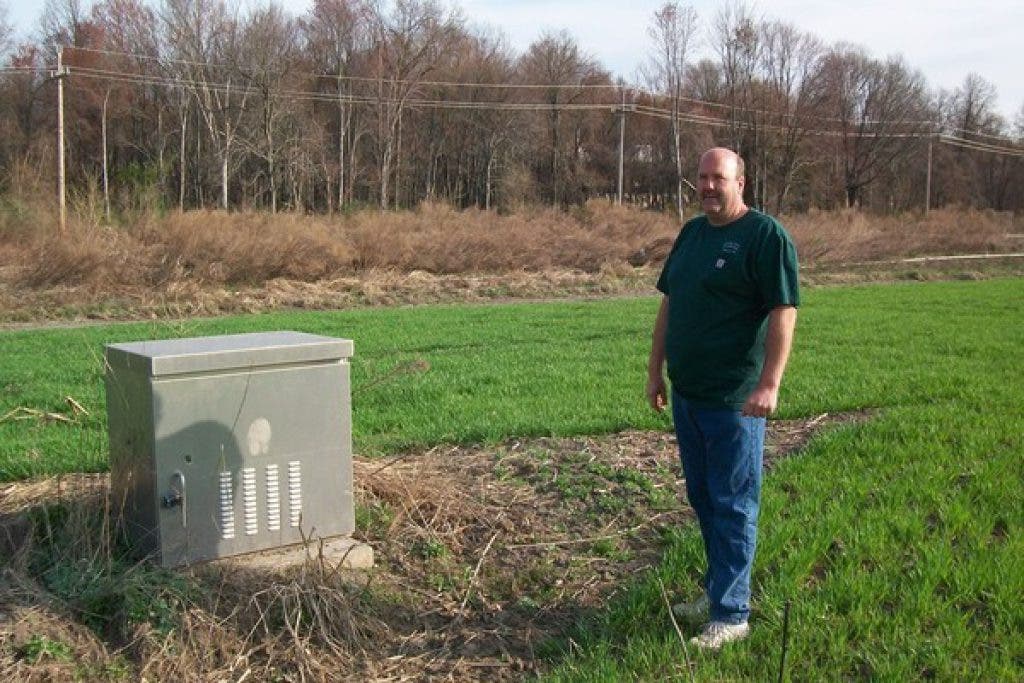
What started as a dream to expand farm operations in Montville quickly evolved into a nightmare for with Montville Township over water rights on his land. Now, with farming season around the corner, the case is yet again in the appellate court system.
“It’s been sheer hell”, said Todd Kuehm, a fourth generation farmer and Pequannock resident.
Kuehm said each generation of farmers in his family, from his great grandfather to himself, had expanded the family farming operation in some way. His contribution was helping the farm become a retail operation, selling everything they grow at their local farm store and expanding the acreage that they farmed. The family’s initial farm property is in Wayne.
Find out what's happening in Montvillefor free with the latest updates from Patch.
Kuehm purchased the nearly 28-acre Montville farm, about six miles from his family's Wayne farm, under the name “Lotta Lettuce Farms” in 2003. Kuehm said he was told that he would be able to use the well that was on site.
The well had been installed by Montville Township under an agreement with the prior owner which allowed the town to monitor the aquifer under the property for a temporary period. Just after Kuehm purchased the property, the township’s temporary license expired and the township was required to terminate its use of the well, yet Kuehm said he was never allowed to use it to irrigate his farm.
Find out what's happening in Montvillefor free with the latest updates from Patch.
On two separate occasions, Kuehm applied for permits to drill two additional wells on the property, which were approved by the New Jersey Department of Environmental Protection, but he said the township blocked both attempts to drill new wells with injunctions.
A padlock was installed on the well, and Kuehm said he was offered $1,000 to turn the property rights to the well over to the township.
Kuehm, still having big dreams for the Montville farm property, hired attorney Anthony Della Pelle of the Morristown firm McKirdy & Riskin, whom he described as a “lawyer with a heart.”
After several years in the court system a decision was reached last spring. Della Pelle said that two separate judgments were issued and that the first order, from May of 2011, stated that the township exceeded its authority by attempting to control the aquifer and Kuehm’s use of the well.
He said this is because it is the state of New Jersey that regulates ground water, not local municipalities. The other judgment, reached near the end of 2011, ordered the township to pay Kuehm’s legal fees.
Della Pelle said that the township filed an appeal, though he is not sure which of the two decisions is being appealed or if it is both. Montville Township Mayor Tim Braden said the township would not be commenting on the case at this time.
With the case back in the appellate court and another growing season around the corner, Kuehm said he plans to plant corn again this year. He explained that corn is the cheapest crop to plant and that if there is a drought, less money will be lost.
Without the ability to use the well, Kuehm pumps water from the river along his property to irrigate his crops, but the water source has run dry three times in the years he has been there. With a majority of the corn picked by the end of August or early September, Kuehm says there is less risk of a drought affecting his profitability.
Access to the well and aquifer beneath his property, would give Kuehm “endless potential.” He said he would be able to grow different crops on the Montville farm property, rattling off a list that included peppers, tomatoes, eggplant and squash. Kuehm said being able to grow a wider variety on the Montville farm would allow his family to give their farm in Wayne a rest.
Kuehm said he does not understand why the township is not allowing him to farm the land to its potential since they had allowed the property to be preserved as farmland. He said if the issue was water usage, the situation would be much worse if instead of farmland, it was zoned residential, which could allow as many as 20 homes on the property. He said that then, the water would be used, but it would be run off, instead of returning to the ground and recharging the aquifer.
He said that once the issue is resolved and he recuperates his legal fees, he will be able to give the farm the attention that it needs, including building a new barn to store equipment. Now he brings the plow six-miles from the Wayne farm because there is nowhere secure to store the equipment, which is expensive.
“I love this place,” Kuehm said. “It gives me great satisfaction. I can do something that most people can’t.”
He said his hope is to one day turn a thriving farm over to his children if they want to continue the family tradition or to be able to sell it to someone who will continue farming the land.