Politics & Government
Burlington County Gets $526K Grant For Historic Prison
The county will receive a $526,500 grant from the New Jersey Historic Trust for the roof replacement of the Historic Prison Museum.


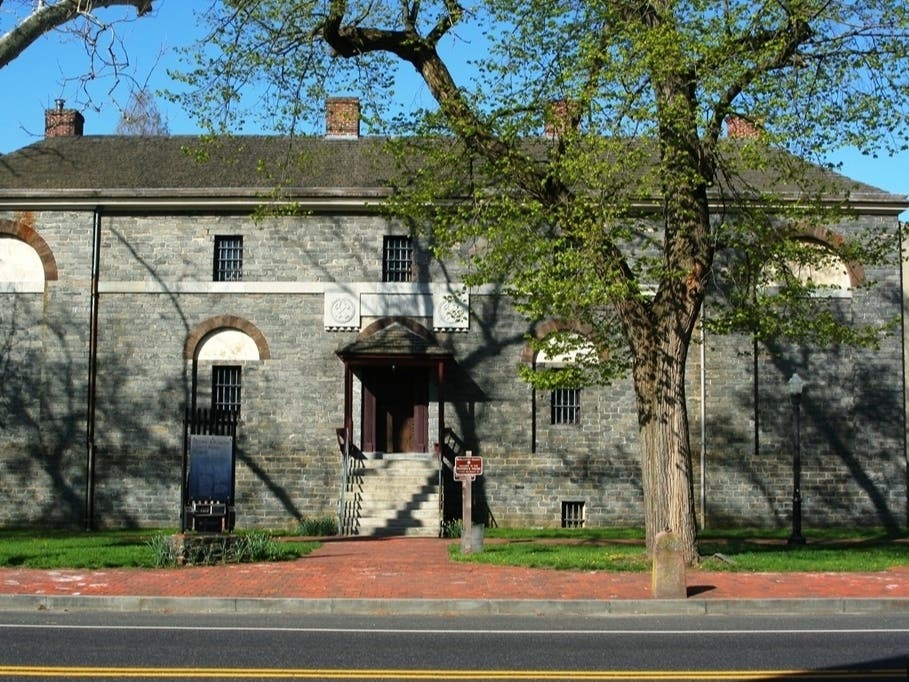
BURLINGTON COUNTY, NJ — One of Burlington County’s most popular historic sites is expected to undergo a major renovation with the help of preservation funds from the New Jersey Historic Trust, officials announced.
The county will receive a $526,500 grant from the New Jersey Historic Trust to help fund the planned replacement of the roof of the Historic Prison Museum, and to contract with Union County-based Netta Architects for the architectural designs, officials said.
The planned $1.1 million project is the first major renovation at the site since 2001, when Burlington County remade the prison’s interior and filled it with interactive exhibits, storyboards and prison-cell recreations.
Find out what's happening in Moorestownfor free with the latest updates from Patch.
“Burlington County is full of history and culture and our Prison Museum is one of our most prized assets,” Burlington County Commissioner Linda Hynes, liaison to the Department of Resource Conservation, said. “Pulling open its oak doors is like stepping back in time.”
The historic stone-and-brick structure on High Street was designed by architect Robert Mills, considered the first native-born American architect and the designer of the Washington Monument, the U.S. Treasury building and the U.S. Postal Service headquarters in Washington, D.C.
Find out what's happening in Moorestownfor free with the latest updates from Patch.
The prison itself was one of the first penal institutions in the United States designed to rehabilitate inmates. It housed prisoners from 1811 to 1965.
Among its most famous inmates was Albert DeSalvo, better known as the Boston Strangler, who spent days in one of the Mount Holly cells on a charge of “carnal abuse” for the alleged assault of a girl from Wrightstown.
The prison is also known for an 1875 escape involving four inmates who broke free by punching a hole through a corridor ceiling to gain access to the roof.
The prison became a museum shortly after it closed in 1965 and was listed on the National Register of Historic Places in 1986. More than 4,500 people visited the prison museum in 2019.
In addition to its historic significance, the prison has garnered national attention due to suspected paranormal activity within its walls, and several teams of researchers have conducted investigations, including a team from SyFy’s “Ghost Hunters.”
“Whether you believe in ghosts or not, the prison is a piece of our history and an important landmark and attraction, and our Board is committed to making sure it remains in good condition so that future generations can visit for decades to come,” Hynes said. “It’s one thing to learn about history from books, television and film, and another to be able to visit, seeing and experiencing it in person.”
Burlington County has also preserved and restored the adjacent Warden’s House on High Street. Built in 1888, the home served as the warden’s living quarters after the prison became too full and could not accommodate the warden and his family comfortably and safely.
The county converted the home into a public art gallery in 2011 and made it the permanent home of a collection of art by Hugh Campbell, a renown local artist whose paintings captured the landscape of the Rancocas and the streetscapes of Mount Holly.
The prison is also next to the Olde Historic Courthouse, which was built in 1796 and is one of the country’s oldest courthouses in continuous use.
Get more local news delivered straight to your inbox. Sign up for free Patch newsletters and alerts.