Politics & Government
Obama Sets Limits on Police Access to Military Equipment
The limits come nearly three months after Moorestown, NJ police explored the idea of obtaining an armored personnel carrier.


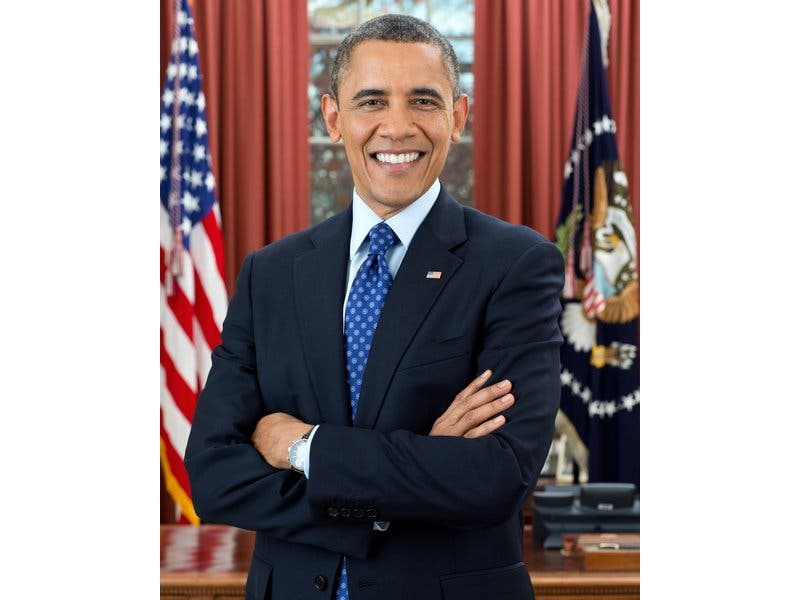
President Barack Obama introduced a new policy that puts a limit on the ability of local police departments to acquire surplus military equipment through a federal program during an appearance in Camden on Monday.
The announced limits, initially released by the White House on Sunday, come nearly three months after the Moorestown Police Department explored the idea of applying for an armored personnel carrier on loan through the program.
The policy includes two lists:
Find out what's happening in Moorestownfor free with the latest updates from Patch.
- A list of equipment that local police departments will no longer be allowed to acquire through the program; and
- A “Controlled Equipment List,” which includes equipment that will have require police departments to take additional steps to acquire.
The vehicle Moorestown Police was considering applying for, but ultimately decided not to pursue, is on the controlled list.
The recommendations also come at a time when police departments across the country have come under increased scrutiny in the wake of the deaths of Michael Brown and Eric Garner, and less than a month after riots erupted in Baltimore after a man died in police custody.
Find out what's happening in Moorestownfor free with the latest updates from Patch.
To many, Brown’s death highlighted the degree to which local police departments have become militarized.
“We’ve seen how militarized gear can sometimes give people a feeling like there’s an occupying force, as opposed to a force that’s part of the community that’s protecting them and serving them,” Obama said on Monday. “It can alienate and intimidate local residents, and send the wrong message.”
Earlier on Monday, the administration addressed concerns about placing restrictions on the access of local police departments to military surplus equipment.
“Part of the good work that was done through this working group making sure that we did balance the needs of law enforcement with the sorts of equipment that we found contributed to unrest in communities,” Principal Deputy Press Secretary Eric Schultz said.
As far as distribution of items on the controlled list, Schultz said the government will “look at more stringent protocols in terms of more transparency and more accountability.”
Since these recommendations were made via executive order, it was unclear if they would expire at the end of Obama’s term in office.
Once the new policy takes effect, law enforcement agencies will be required to take additional steps to obtain equipment on the list, according to the White House.
This includes submitting a detailed justification outlining their need for the equipment and answering whether the equipment will be shared regionally.
Local police departments must also certify that certain training procedures are in place, according to the White House, and will have to follow-up with reports on how the equipments has been used.
The new policy will also impose more strict guidelines for the sale or transfer of military equipment between law enforcement agencies.
Police departments face suspensions of at least 60 days of applying for items on the list if they are found to be in violation of any of the recommendations.
This recommendations will take effect no later than Oct. 1, 2015.
The prohibited equipment list specifies equipment that cannot be purchased by local law enforcement agencies from federal agencies or using federally-provided funds.
Items on the prohibited list will be prohibited immediately, White House officials said.
Moorestown is not the only police department in New Jersey to consider the pursuit of military equipment through the federal program.
Monmouth and Ocean counties have received a combined $5.3 million in military equipment through the program since 2006.In total, New Jersey police departments have taken in $8.8 million in equipment through the program.
New Jersey has been proactive in preventing the militarization of police.
Less than a month after Moorestown Police abandoned its pursuit of an MRAP, Gov. Chris Christie signed into law a bill that requires local law enforcement agencies to gain approval from the municipality before it can obtain military equipment through the program.
As a result, New Jersey became the first state in the country to pass a police militarization law.
When Moorestown Police were considering pursuit of the armored vehicle, they did bring the idea before council despite not being required to do so.
The prohibited equipment list includes the following items:
- Tracked Armored Vehicles
- Weaponized Aircraft, Vessels, and Vehicles of Any Kind
- Firearms of .50‐Caliber or Higher
- Ammunition of .50‐Caliber or Higher
- Grenade Launchers
- Bayonets
- Camouflage Uniforms
- The list takes effect immediately.
The items on the controlled equipment list includes:
- Manned Aircraft, Fixed Wing
- Manned Aircraft, Rotary Wing
- Unmanned Aerial Vehicles
- Armored Vehicles, Wheeled (including the type Moorestown Police were seeking)
- Tactical Vehicles, Wheeled
- Command and Control Vehicles
- Specialized Firearms and Ammunition Under .50‐Caliber (excludes firearms and ammunition for service‐issued weapons)
- Explosives and Pyrotechnics
- Breaching Apparatus (e.g. battering ram or similar entry device)
- Riot Batons (excluding service‐issued telescopic or fixed‐length straight batons):
- Riot Helmets
- Riot Shields
Get more local news delivered straight to your inbox. Sign up for free Patch newsletters and alerts.