Health & Fitness
It Came From Brood II
The inevitable - Brood II cicadas have come to my neighborhood.
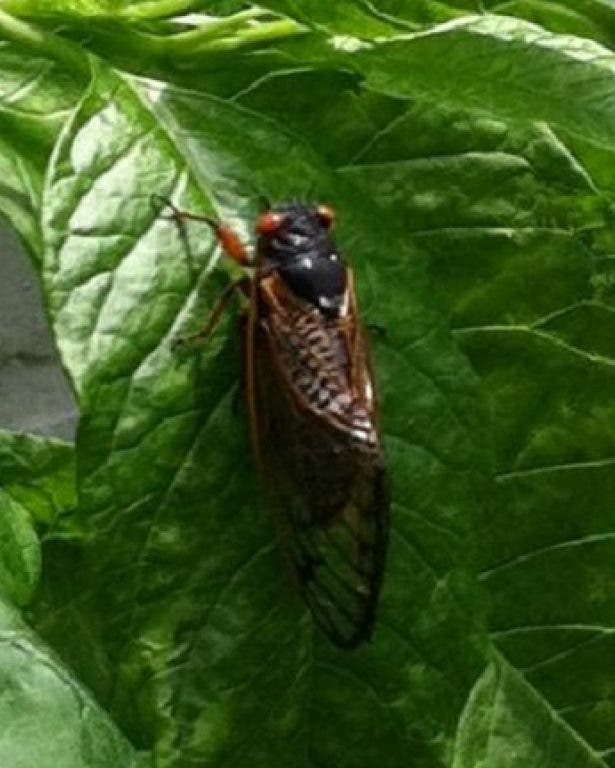
I was hoping my part of Morris Plains would continue to avoid the whirring of the cicadas from Brood II.
These are not the annual cicadas that signify summer is ending. I associate the whirring that suddenly occurs and moves from tree to tree with hot summer days in August (with the katydids and crickets calling at night).
No, these are the larger, uglier cicadas that appear every 17 years from underground. They climb trees, shed their skins, and then fly to an advantageous spot to call for a mate. That's all the males do, mate and die.
Find out what's happening in Morris Township-Morris Plainsfor free with the latest updates from Patch.
The females hang around a little longer, According to Wikipedia, “After mating, the female cuts V-shaped slits in the bark of young twigs and lays approximately 20 eggs in each, for a total of 600 or more eggs. After about six to ten weeks, the eggs hatch and the newborn nymphs drop to the ground, where they burrow and begin another 13 or 17-year cycle.”
That's a lot of cicada exoskeletons underfoot.
Find out what's happening in Morris Township-Morris Plainsfor free with the latest updates from Patch.
Luckily, these relatives of the locust don't bite and don't destroy your plants by feeding on them. They will swarm around the tops of trees in the sun and they will call, loud and continuously.
The birds are having a field day. Mississippi kites are being reported in Morris County and Staten Island, NY - way north of their usual territory - as these insect eaters feast. So are the rest of the birds around here.
And for the human who wants something unusual, there are also recipes and restaurants featuring these cicadas.
The whirring has been very loud for the past few weeks in nearby Morris Township, where I like to go birdwatching along parts of Patriots Path. At Washington Valley Rd., the cicadas nearly drown out the calling catbirds, yellow warblers and house wrens.
They were deafening Saturday afternoon - a dry, hot day after days of rain - as I drove north on Rte. 287 starting in the area of Bedminster. If there is sunshine and warm temperatures, they'll be calling until dark.
Now they are in my part of Morris Plains, in the sheltering trees of the former Greystone property, near the borough's community vegetable garden.
I shouldn't have been surprised they showed up, but I am surprised it took them so long to emerge. Maybe creating and then expanding the community garden destroyed many of the eggs and slowed down the survivors.
All I know is, I can now add the Brood II cicadas to the summer sounds of the lawn service mowers, the leaf blowers, the barking dogs and the singing of cardinals, chipping sparrows and house wrens.
These cicadas should be gone by July.