Politics & Government
Morristown, Morris Twp Should Unite On Pilot Program: Opinion
Morristown Committeewoman Cathy Wilson writes that a vote for a pilot program for a proposed apartment building could be a teachable moment.


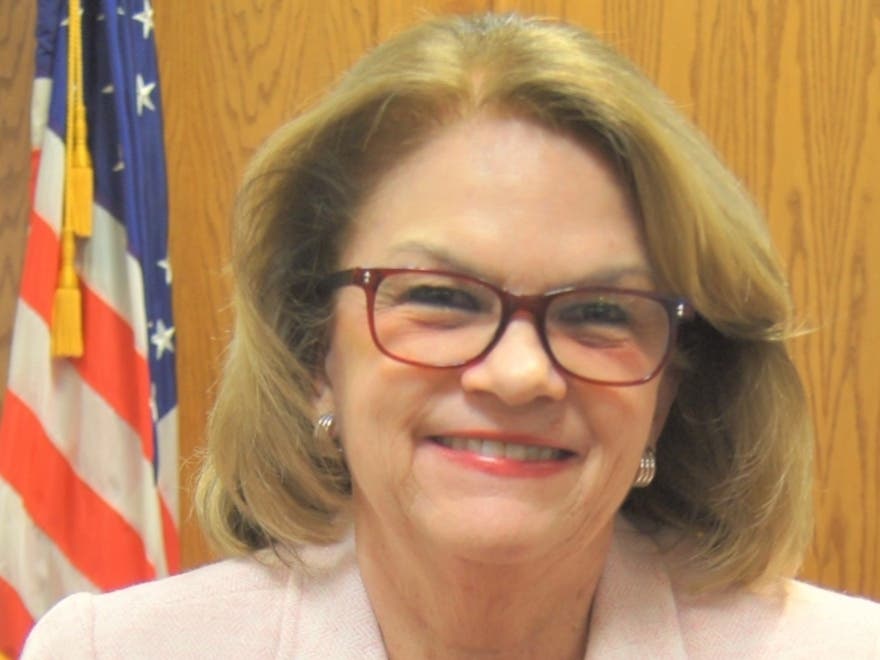
MORRISTOWN, NJ — I know a teachable moment when I see one. When it comes to understanding PILOTs and thinking about creative possibilities for working with them, this is a teachable moment for our community.
At its upcoming meeting on Tuesday, Morristown’s Council will vote on whether to approve a PILOT agreement for a proposal to build an 85-unit apartment building on Morris Street — a project that includes 18 affordable units, 14 of which are supervised apartments for people with special needs.
The addition of these affordable units, particularly for people with special needs, adds an important public benefit to this proposal. Special thanks to Bob Iannaccone for advocating this addition. Kudos to Morristown for including it.
Find out what's happening in Morris Township-Morris Plainsfor free with the latest updates from Patch.
I am definitely not an expert on PILOTs — far from it. But I do know that when it comes to PILOTs in Morristown and Morris Township, there are a few points that I believe merit consideration as PILOT decisions are made in our respective towns, now and in the future.
First off, the basics: PILOT stands for “payment in lieu of taxes.” By substituting an “annual service charge” that’s significantly less than “regular taxes,” a major purpose of PILOTs is to incentivize redevelopment projects that might not otherwise occur.
Find out what's happening in Morris Township-Morris Plainsfor free with the latest updates from Patch.
A PILOT agreement typically lasts for 30 years. 95% of a PILOT’s annual service charge goes to the municipality. 5% goes to the County. The school system receives nothing.
This fact has led to a widely-held (but inaccurate) belief that PILOTs cause school systems to lose money. That is not true. Just like municipalities, school systems undertake an annual budget process to determine the revenue total they need for that year. Taxes are levied to ensure that total is collected.
Thus, in spite of getting no money from PILOT properties, schools DO get paid their full budgeted amount. Any funding gap left by a PILOT property is picked up as part of the “regular taxes” paid by everyone else. In our case, “everyone else” includes all the taxpayers from both towns, not just the town that initiated the PILOT.
Another important feature of PILOTs is that PILOT properties are dropped from the initiating town’s property inventory (i.e. its tax base) for the duration of the PILOT agreement (typically 30 years – a long time).
Dropping the property from the tax base impacts the “equalized assessed ratio” that’s used to determine each town’s proportionate share of the revenue owed to the school district (as well as the library).
Given each town’s present tax base, this current ratio is 67% Morris Township, 33% Morristown. In other words, Morris Township taxpayers are responsible for paying 67% of the total school tax levy, while Morristown taxpayers owe 33% of that levy.
When PILOT properties are removed from one town’s tax base, this ratio shifts and leads to an increase in the proportionate share of taxes the other town owes to the school district (and the library).
These examples illustrate a key characteristic of PILOTs: PILOTs connect us. A PILOT in one of our towns creates tax implications for the other town.
Given the need to speculate on such “unknowables” as what a property’s value and tax contribution might have been if a PILOT had not been enacted on it, quantifying the exact impact of any given PILOT is nearly impossible.
For me, what’s most important is a basic “big picture” generalization: as one town increases the number and size of its PILOT agreements, the tax impact on the other town increases as well.
This is the trend I’m seeing in Morristown. This trend is concerning. The growing imbalance in the number and size of the PILOTs in our two towns is concerning as well. Some examples:
Morristown currently has approximately 7 large PILOT projects already in place. In 2021, Morristown’s budget included over $1,325,000 in PILOT-originated appropriations — none of which went to the school district. Morristown also has several pending PILOTs — including “M Station,” the payment for which is projected to be more that $1 million each year.
Morris Township currently has one PILOT in place: Lennar (the residential units located on the old Colgate-Mennen site). Morris Township also has two PILOTS pending: the Abbey (projected to begin in 2023); and the Marketplace (the retail development located on the old Colgate-Mennen site) - projected to begin in 2022. In 2021, Morris Township’s budget included $360,000 in PILOT-originated appropriations – none of which went to the school district.
From the point of view of an elected official, the key point that stands out to me is the clear need for Morristown and Morris Township to open a dialogue and work together to address the important (and growing) tax concerns that PILOTs are raising for our towns.
One example of a solution option that I think is worth considering: WHAT IF both of our towns agreed to contribute a certain % of our PILOT revenue toward reducing the school tax levy. Say (for discussion) we agreed to contribute 25% of our PILOT revenue for this purpose.
Using the 2021 budget and PILOT numbers referenced above, that would equate to a payment of $331,250 from Morristown and $90,000 from Morris Township. Contributions such as this would help to reduce the school tax portion of everyone’s tax bill.
In doing the research for this piece, I was astonished to learn that this is exactly what Hanover Township is doing. In Ordinance 42-2019, which they passed two years ago, Hanover pledges, among other things, to contribute 19% of their PILOT revenues to the regional school district they share with Florham Park and East Hanover. I think this is an impressive act of leadership on Hanover’s part. Kudos to them for doing it.
Going forward, what’s most important to me is finding a way for Morristown and Morris Township to engage in some serious dialogue and problem-solving regarding ways to address growing concerns about the PILOT issues that connect us. Working together to build mutual understanding and develop creative solution options is so clearly the right thing to do. Let’s do it!
Cathy Wilson is a Morristown Township Committeewoman and chairs the committees on Environment, Energy and Sustainability and Personnel.
Get more local news delivered straight to your inbox. Sign up for free Patch newsletters and alerts.