Community Corner
Pride Month: The State Of LGBTQ+ Protection In New Jersey
LGBTQ+ rights have been protected in New Jersey for years, but some Republican lawmakers are attempting to halt progress.


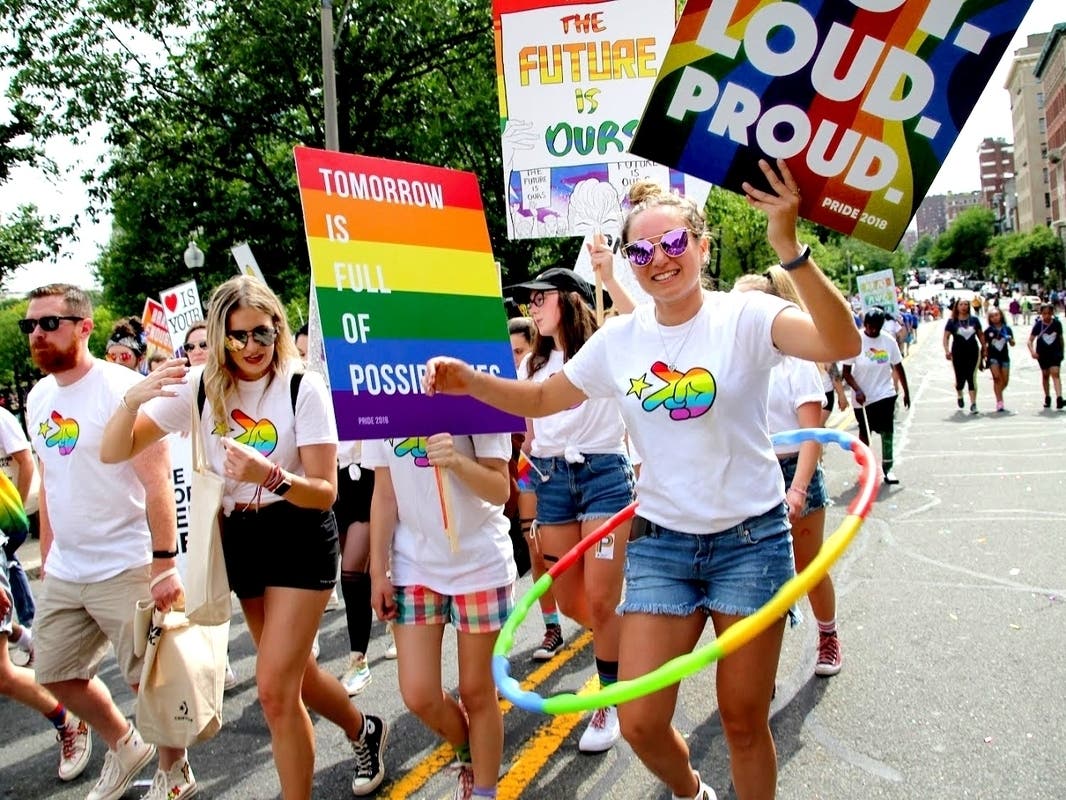
NEW JERSEY — A wave of anti-LGBTQ legislation across the country could add a layer of activism and sense of urgency to June Pride Month celebrations in New Jersey and around the country.
Pride Month, observed June 1-30 nationwide, honors the 1969 Stonewall Uprising in Manhattan. Five days of riots after police raided the Stonewall Inn that became a watershed moment for gay rights. Homosexual acts were illegal in every state but Illinois at the time, and bars and restaurants could be shut down just by having a gay employee or serving a gay patron.
As part of Pride Month, celebrations will be held all over the Garden State, including:
Find out what's happening in Morristownfor free with the latest updates from Patch.
Here are other events planned in New Jersey during Pride Month:
- Collingswood Pride Picnic, Monday, June 20, 315 White Horse Pike, Collingswood
- PRIDE Family Picnic & Dance Party, Saturday, June 25, 2 Railroad Pl, Hopewell
The uneasiness hanging over this year’s celebration stems from a wave of legislation ranging from “don’t say gay” laws — prohibiting public schools from using curriculums addressing gender identity and sexual orientation, introduced in 20 states and now law in Florida and Alabama — to trans athlete sports bans in 15 states.
Find out what's happening in Morristownfor free with the latest updates from Patch.
According to the American Civil Liberties Union, legislation targeting transgender and nonbinary people also bars or criminalizes health care for transgender youth; prohibits transgender persons from using facilities, such as restrooms, corresponding with their gender identity; allows religiously motivated discrimination against transgender people; and makes it more difficult to get identification documents with their name and gender.
In New Jersey, LGBTQ rights have been protected in recent legislative sessions, according to the ACLU. The Garden State became one of the first states to protect people based on their sexual orientation in 1992.
READ ALSO:
- Hoboken To Kick Off Series Of LGBTQ+ Pride Month Events This Monday
- Union County Celebrates Pride Month 2022
However, a New Jersey state senator recently introduced legislation that would prohibit sexual orientation or gender identity instruction from kindergarten through sixth grade. Sen. Edward Durr's (R-3) bill is similar to legislation that has emerged across the country to significantly restrict the teaching of LGBTQ issues in schools.
Durr's bill would also require parental or guardian consent for students in grades 7-12 to participate in lessons involving gender identity or sexual orientation. The bill would allow parents to sue schools that incorporate the topics into K-6 lessons or teach them without parental consent in grades 7-12.
On LGBTQ policy, New Jersey got a high rating from the Movement Advancement Project, or MAP, an independent, nonprofit think tank that researches equality legislation.
That analysis looks at laws and policies that help drive equality for LGBTQ people in all 50 states, the District of Columbia and the five populated territories. The major areas represented in the policy tally covered relationship and parental recognition, nondiscrimination, religious exemptions, LGBTQ youth, health care, criminal justice and identity documents.
LGBTQ advocates' concern about the state stems not only from what has occurred in statehouses, but also from the very real possibility that a conservative majority on the United States Supreme Court will return the issue of same-sex marriage to states to decide, as the court's majority is expected to do with abortion rights, according to a leaked Supreme Court opinion draft of the decision expected later this month or next.
Legal experts are divided on whether the Supreme Court’s watershed ruling legalizing same-sex marriage is in jeopardy, with the expected ruling striking down constitutional protections on a woman’s right to an abortion.
University of Texas law professor Elizabeth Sepper, an expert on health care law and religion, told Reuters that Americans are right to worry.
“The low-hanging fruit is contraception, probably starting with emergency contraception, and same-sex marriage is also low-hanging fruit in that it was very recently recognized by the Supreme Court,” Sepper said.
In his dissent of Obergefell v. Hodges, the case at the center of the 2015 same-sex marriage ruling, Justice Samuel Alito used language similar to that in the leaked draft on abortion.
In his same-sex marriage dissent and the leaked opinion draft, Alito mentioned neither right is guaranteed in the Constitution and both issues should be left to states to decide, Jordan Woods, faculty director of the LGBTQ Law & Policy Program at the University of Arkansas, told The Washington Post.
Opponents of same-sex marriage could use Alito’s logic in attempts to overturn Obergefell, Woods said, noting that judges dissenting against a 2003 opinion striking down the Texas sodomy ban relied on similar reasoning.
"Ultimately, what the court will do, nobody knows,” Woods said. But Alito’s “draft absolutely provides a blueprint for the court essentially eroding or even overturning important constitutional precedents that are in this area of privacy that clearly this draft opinion is hostile towards.”
Katie Eyer, a professor specializing in anti-discrimination law at Rutgers University, told The Post she doubts there’s much appetite even in conservative states to begin the appeal process. Although divisions exist, about 61 percent of Americans strongly favor same-sex marriage, according to a 2019 Pew Research Center poll.
For his part, Alito tempered those concerns, asserting in the draft majority opinion on abortion leaked to Politico that his reasoning was not intended to apply to any right beyond abortion.
“We emphasize that our decision concerns the constitutional right to abortion and no other right,” wrote Alito, who was appointed to the court by President George W. Bush. “Nothing in this opinion should be understood to cast doubt on precedents that do not concern abortion.”
Yale Law School professor Douglas NeJaime, who has expertise in sexuality and constitutional law, told The Post that the precedents in Roe v. Wade — the 1973 case that affirmed a woman’s right to an abortion — the Obergefell same-sex decision and the Texas sodomy ban are “fundamentally different.”
“I think the draft opinion is actually trying to say Obergefell is not a target,” NeJaime said. “And I don’t know that that’s true, but it’s at least saying that.”
Get more local news delivered straight to your inbox. Sign up for free Patch newsletters and alerts.