Crime & Safety
19 Busted In Big $11M 'Medicine-For-Cash' Ring In NJ: AG
A pharmacy operated this big, crazy scheme across New Jersey, according to the Office of Attorney General.


Nineteen people were busted in a big $11 million New Jersey fraud scheme involving life-saving medicine, the state Office of Attorney General this week.
The fraud scheme was run by a pharmacy owner and operated across New York and New Jersey, according to an OAG release.
The investigation resulted in the recovery of more than $6.8 million in diverted prescription medications and more than $4 million in alleged illegal profits from the scheme to defraud Medicaid, according to the release.
Find out what's happening in Newarkfor free with the latest updates from Patch.
“Medicaid is designed to provide much-needed medical care to lower-income Americans, not to line the pockets of fraudsters and cheats,” said Attorney General Gurbir Grewal. “By cracking down on this type of fraud, we’re not just protecting taxpayers, we’re protecting the integrity of our medical system.”
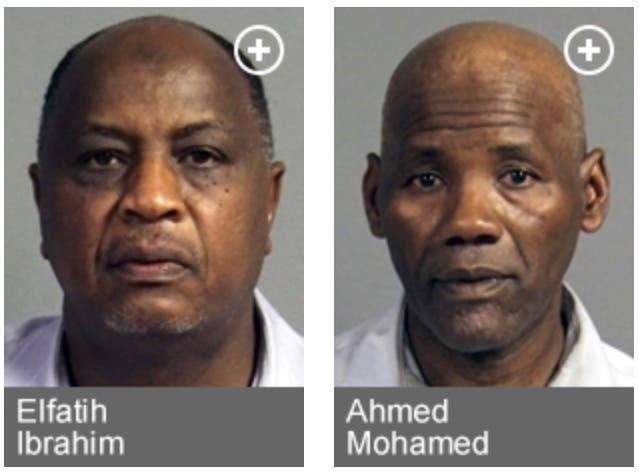
The alleged ringleader of the scheme is Elfatih Ibrahim, 58, of Brooklyn, a New York- licensed pharmacist who owns Maxwell Pharmacy in Manhattan, according to the release.
Find out what's happening in Newarkfor free with the latest updates from Patch.
Ahmed Mohamed, 62, of Jersey City allegedly served as the scheme’s runner who bought and transported drugs to Ibrahim’s pharmacy on a regular basis between January and August 2018 (story continues below photo).
The ring trafficked and diverted an array of prescription drugs, including those used to treat illnesses requiring expensive therapies like HIV, Hepatitis C, pulmonary disease, and type 2 diabetes. These drugs are of little value to street users but are sought-after commodities on the prescription black market, according to the release.
Among the most trafficked drugs in the scheme were HIV medications Atripla and Truvada. According to national wholesale price averages, single 30-day prescriptions of these drugs cost about $2,735 and $1,567, respectively, according to the release.
The most expensive drugs trafficked were Hepatitis C medications Vosevi, Epclusa, and Zepatier. According to national wholesale price averages, single 30-day prescriptions of these drugs cost about $24,920, $24,344, and $18,200, respectively, according to the release.
Five who allegedly collected and sold prescription drugs in the scheme were indicted on charges of second-degree conspiracy and third-degree Medicaid fraud. They are:
- Constance Douglas, 52, of Jersey City
- Kendall Brown, 55, of Jersey City
- Hiram Estrada-Garcia, 37, of Jersey City
- Mohamed Gaafar, 62, of Jersey City
- John Schmalberger, 60, of Morganville
Twelve individuals who allegedly sold their own prescription drugs in the scheme were charged with third-degree conspiracy and third-degree Medicaid fraud. They are:
- Michelle Hazelwood, 50, of Jersey City
- Dawn Jackson, 50, of Jersey City
- Marcus Colon, 38, of Jersey City
- Rhonda Hoffman, 49, of Jersey City
- Julissa Borges, 48, of Bayonne
- Margaret Moore, 47, of Jersey City
- Michael Garland, 49, of Jersey City
- Sobhy Eid, 60, of Bayonne
- Wayne Jones, 58, of Jersey City
- Shawn Morris, 47, of Jersey City
- Alexander Cotto, 37, of Kearny
- Brenda Noel, 60, of Newark
The scheme exploited the fact that pharmacies that get drugs from wholesalers or distributors can return those drugs for a partial refund, according to the release.
That happens if the drugs expire before being sold, the release said. Pharmacies can recoup up to 85 percent of the price they paid for the drugs.
Generally speaking, the alleged scheme worked as follows:
- Medicaid beneficiaries obtained and filled prescriptions for expensive, lifesaving drugs to treat HIV, Hepatitis C, and other diseases. Under the Medicaid program, the patients received the drugs from pharmacies for free, with the government reimbursing the pharmacies for the wholesale cost of drugs—sometimes more than $20,000 for a single 30-day prescription.
- Instead of taking their drugs as prescribed, the Medicaid beneficiaries sold the unopened boxes of pills, inhalers, and other forms of medication, on the street to a “runner,” typically for $20 to $100 in cash.
- The runner delivered the drugs to the scheme’s ringleader, who then held the drugs until their expiration date passed.
- Finally, the ringleader used his status as a pharmacy owner to return the expired drugs to wholesalers and distributors, seeking refunds under the false pretense that his own pharmacy had legitimately purchased the drugs.
- The ringleader typically received refunds up to 85 percent of the wholesale price, allowing him to pocket thousands of dollars for each prescription obtained by the runner.
The criminal enterprise was dismantled after a months-long joint investigation by the Office of the Insurance Fraud Prosecutor. The investigation was conducted with assistance from the US Food and Drug Administration, the New Jersey Office of Homeland Security and Preparedness, and the New York Attorney General’s Medicaid Fraud Control Unit.
Ibrahim and Mohamed are charged with second- and third-degree conspiracy, second-degree possession with intent to distribute prescription legend drugs, and third-degree Medicaid fraud.
Second-degree charges carry a sentence of five to 10 years in state prison and a fine of up to $150,000, while third-degree charges carry a sentence of three to five years in prison and a fine of up to $15,000.
Get more local news delivered straight to your inbox. Sign up for free Patch newsletters and alerts.