Politics & Government
EPA Visits Newark, Proposes Rule Changes For Lead Paint Removal
The EPA called Newark "one of the nation's leading cities in reducing lead exposure," pointing to its own recent battle with contamination.


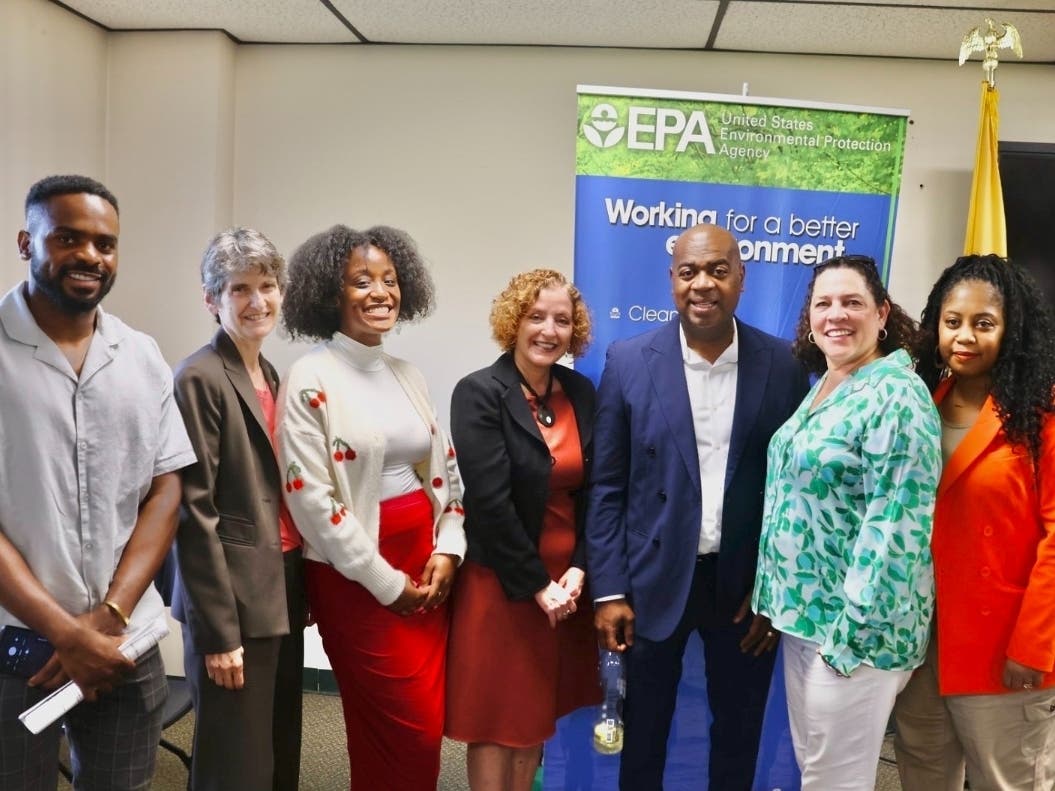
NEWARK, NJ — When the Biden-Harris administration chose Newark to announce a proposal to boost protections against lead exposure, they picked the city for a reason – its own successful battle against water contamination, officials say.
On Wednesday, federal and city administrators gathered for a news conference at the Newark Department of Health and Community Wellness on 110 William Street. The goal? To introduce a new effort to reduce lead paint exposure across the nation, which often has “significant disparities” along racial, ethnic and socioeconomic lines.
The U.S. Environmental Protection Agency (EPA) said the proposed changes to federal policy would strengthen requirements for the removal of lead-based paint hazards in pre-1978 buildings and child care facilities.
Find out what's happening in Newarkfor free with the latest updates from Patch.
If finalized, this rule is estimated to reduce the lead exposures of approximately 250,000 to 500,000 children under age six per year, the EPA stated (see more details below).
According to the EPA:
Find out what's happening in Newarkfor free with the latest updates from Patch.
“Aligning with the Federal Action Plan on reducing lead exposure to children, these stronger standards would go further to protect children from the dangers of lead exposure, in support of the Biden-Harris Administration’s historic investment to reduce lead exposure and EPA’s strategy to address the significant disparities in lead exposure along racial, ethnic and socioeconomic lines.”
The EPA will accept public comments on the proposal for 60 days following publication via docket EPA-HQ-OPPT-2023-0231 at www.regulations.gov.
WHY NEWARK?
EPA administrators called Newark “one of the nation’s leading cities in reducing lead exposure,” pointing to its own recent battle with contamination.
Four years ago, Newark made national headlines when it confronted a lead water crisis. At one point, the lead levels at some points in the city’s drinking water had risen to 47 parts per billion at some sites, more than three times the federal threshold. It prompted an outcry from residents – and a lawsuit from advocates.
In August 2019, federal officials insisted that the city temporarily provide bottled water to many residents, who had been using city-provided filters in their homes as a stopgap measure. Although the U.S. EPA's order was rescinded shortly afterwards, it inspired people to send waves of bottled water donations from across the state.
- Read More:Court Rules Against Newark Activists In Battle Over Bottled Water
- Read More: Newark Mayor On Lead In Water Reports: 'We're Not Flint' (VIDEOS)
Newark eventually identified two sources of the contamination. One was the way the city treated its water, which allowed excess corrosion to take place in aging pipes. The city responded by rolling out a new method of treating its water, which is also sold to several nearby towns and cities in Essex County.
The second issue wasn’t as quick of a fix, however.
Newark officials traced some of the contamination to lead-lined service pipes leading to thousands of local homes. The pipes – which connect local homes and businesses to the local water supply – can potentially leach contamination as water passes through them. A portion of the pipes may be privately owned, complicating efforts to replace them.
Despite the challenges and scope of the project, Newark has since replaced almost 20,000 lead service pipes, a massive effort that was expected to cost at least $120 million by the time it's through.
Normally the work can cost thousands of dollars, but Newark offered it at no cost for residents through a municipal replacement program. There were no tax increases or water rate hikes as a result, city officials say.
The city also got a big boost from Essex County, which helped it to finance the massive pipe replacement project.
In July 2021, Mayor Ras Baraka announced that the average lead levels in Newark water fell "well below the federal benchmark for acceptable levels" for the third straight reporting period – a huge turning point in its battle against lead contamination.
- Read More: Newark's Lead Water Crisis Has 'Effectively Ended,' Mayor Says
- Read More: Newark Turns Page On Lead Water Crisis; Lawsuit Settled
In February 2022, the city’s efforts caught the eye of Vice President Kamala Harris, who visited Newark to offer her congratulations on the progress it has made. Read More: Lead Pipes And Newark: Kamala Harris Returns To NJ To Praise City
Harris called Newark a "role model" for other cities and towns seeking to replace their own lead pipes. She also touted the recently passed federal infrastructure law, which will help pay to replace such lines throughout the nation. Read More: Infrastructure Bill Delivers $169M In Water Funds For New Jersey
Wednesday’s announcement got a strong endorsement from Newark’s mayor.
“The City of Newark is honored to be selected by the EPA as the location for their important announcement of these new actions to protect Americans everywhere – and especially children – from the dangers of lead in paint,” Baraka said.
“We moved mountains in Newark to remove lead from every water line throughout the city because we value the health and wellbeing of every resident and understand that no amount of lead exposure is acceptable,” Baraka added.
Although Newark has reportedly turned the corner with its lead contamination crisis, there are still many other municipalities with lead service lines throughout the state.
In July 2021, Gov. Phil Murphy signed a package of laws that will require hundreds of community water systems in New Jersey to replace these lines within the next decade.
- See related article: New Jersey Is Replacing Its Lead Water Pipes – All Of Them
- See related article: Other NJ Towns Can Learn From Newark's Lead Pipe Project
EPA PROPOSAL: HERE ARE THE DETAILS
After Wednesday’s news conference, the EPA released some more specific information about the proposed changes involving lead paint remediation.
According to the EPA:
“If finalized, the proposed rule would strengthen EPA’s regulations under section 402 of the Toxic Substances Control Act (TSCA) by revising the dust-lead hazard standards (DLHS), which identify hazardous lead in dust on floors and window sills, and the dust-lead clearance levels (DLCL), the amount of lead that can remain in dust on floors, window sills and window troughs after lead removal activities.
“Today’s proposal would reduce the DLHS from 10 micrograms per square foot (µg/ft2) for floors and 100 µg/ft2 for window sills to any reportable level greater than zero in recognition of the fact that there is no level of lead in dust that has been found to be safe for children. Today’s proposal would lower the DLCL from 10 µg/ft2 to 3 µg/ft2 for floors, from 100 µg/ft2 to 20 µg/ft2 for window sills, and from 400 µg/ft2 to 25 µg/ft2 for window troughs, which are the lowest post-abatement dust-lead levels that the Agency believes can be reliably and effectively achieved.
“Property owners, lead-based paint professionals and government agencies use the DLHS to identify dust-lead hazards in residential and childcare facilities built before 1978. If a lead-based paint activity such as abatement is performed, EPA's Lead-Based Paint Activities Program requires individuals and firms performing the abatement to be certified and follow specific work practices. Following such an abatement, testing is then required to ensure dust lead levels are below the DLCL before an abatement can be considered complete.
“Historically, EPA’s DLHS and DLCL have been set at the same levels. This action proposes to decouple the DLHS and the DLCL, which were last updated in 2019 and 2021, respectively. This is being done in accordance with a May 2021 Ninth Circuit Court of Appeals opinion, which explains that DLHS must be based solely on health factors, while the DLCL must consider the additional factors of safety, effectiveness and reliability. Today’s proposal aligns the DLHS and DLCL with the best available science, further strengthening EPA’s efforts to protect children from lead hazards.
“Although the federal government banned lead-based paint for residential use in 1978, it is estimated that 31 million pre-1978 houses still contain lead-based paint, and 3.8 million of them have one or more children under the age of 6 living there, creating health and developmental risks for children. Lead-contaminated dust is one of the most common causes of elevated blood lead levels in children. Lead dust commonly occurs when lead-based paint deteriorates or is disturbed. Due to normal behaviors such as crawling and hand-to-mouth activities, young children are at particularly at risk of higher exposure to ingesting lead-containing dust. Lead exposure can pose a significant health and safety threat to children and can cause irreversible and life-long health effects, including behavioral problems, lower IQ, slowed growth and more.
“Communities of color and those of lower socioeconomic status are often at greater risk of lead exposure because deteriorated lead-based paint is more likely to be found in lower-income areas. Additionally, communities of color can also face greater risk due to the legacy of redlining, historic racial segregation in housing, and reduced access to environmentally safe and affordable housing. Eliminating lead-based paint and the proposal announced today reflect EPA’s commitment to advancing environmental justice.”
Send local news tips and correction requests to eric.kiefer@patch.com. Learn more about advertising on Patch here. Find out how to post announcements or events to your local Patch site. Don’t forget to visit the Patch Newark Facebook page.
Get more local news delivered straight to your inbox. Sign up for free Patch newsletters and alerts.