Neighbor News
HIV, Hepatitis and Drug Abuse
Caution: Both HIV (the virus that causes AIDS) and hepatitis can be spread among people who inject drugs.


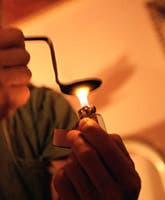
Both HIV (the virus that causes AIDS) and hepatitis can be spread among people who inject drugs (PWID). PWIDs are at a high risk for contracting HIV and/or hepatitis especially if sharing or reusing their “works” (drug preparation and injecting equipment). Blood can get passed from one person to the next if sharing works. Other equipment like cotton balls, rinse water, and cookers can spread HIV and/or hepatitis and therefore should never be shared or reused.
The risk of contracting and spreading HIV and hepatitis must be taken seriously. The safest thing is to use clean syringes and works every time and never to share. Below are some available options.
· Purchase a small quantity of syringes from a local pharmacy without a prescription.
Find out what's happening in Newarkfor free with the latest updates from Patch.
· Trade in your used needles for new ones. Find out if there’s a needle exchange program in your area - call the NJ AIDS/HIV/STD hotline at 1-800-624-2377 and we can direct you to an exchange location.
Reduce risk for infection by:
Find out what's happening in Newarkfor free with the latest updates from Patch.
· enrolling in a drug treatment program
· not sharing needles and works to inject drugs
· using a latex condom correctly every time you have sex
If you do not know your HIV status, don’t wait to get tested. Everyone, at any age, is at risk for contracting HIV and/or hepatitis especially those who inject drugs. The sooner HIV is found the sooner treatment can begin and your life saved! Early testing can help find virus before symptoms show, so treatment can be started as soon as possible; helping to prevent the further spread of infection.
To get help with drug abuse, call the Center for Substance Abuse Treatment at 800-662-4357. The call is free and you do not have to give your name when you call.
If you are looking to find a free, state-funded testing site near you for initial testing, follow-up care or have questions about HIV/AIDS, STDs, or hepatitis, contact us (The New Jersey AIDS/HIV/STD Hotline) either by calling 800-624-2377, text/email at 8006242377@njpies.org, or chat via our site at www.njhivstdline.org; the hearing impaired may also use their TTY and call 973-926-8008. We are always here to help 24hours a day/ 7 days a week! Calls are free and confidential.
Services available 24 hours a day, 7 days a week, every day of the year
- Referrals for free, testing sites and other related services
- HIV/AIDS, STD and Hepatitis Prevention Information
- HIV Counseling and Treatment Locations
- HIV Treatment Information
- Referrals for free, clean needles/syringes
About NJPIES
As New Jersey’s only poison control center, the New Jersey Poison Information & Education System provides information on poison prevention and treatments. Chartered in 1983, NJPIES provides free consultation through telephone hot line services and the Web. Medical professionals such as physicians, registered nurses and pharmacists offer confidential advice regarding poison emergencies and provide information on poison prevention, drugs, food poisoning, animal bites and more. These specialists are available 24 hours a day, seven days a week.
NJPIES coordinates state poison education and research and is designated as the regional poison center by the New Jersey Department of Health and Senior Services and the American Association of Poison Control Centers. It tracks incidences of adverse reactions to food, drugs and vaccines in order to monitor potential public health issues and provide data to the U.S. Food and Drug Administration and the Centers for Disease Control and Prevention. A division of the Department of Emergency Medicine of the New Jersey Medical School of Rutgers, The State University of New Jersey. NJPIES has a state-of-the-art center located on the school’s Newark campus. NJPIES is funded, in part, by the NJ Department of Health and the United States Department of Health and Human Services.
New Jersey residents seeking immediate information about treating poison emergencies, and those with any drug information questions, should call the toll-free hot line, 800-222-1222, any time. The hearing impaired may call 973-926-8008. For more information, visit www.njpies.org or call 973-972-9280.
About Rutgers Established in 1766, Rutgers, The State University of New Jersey, is America’s eighth oldest institution of higher learning and one of the nation’s premier public research universities. Serving more than 65,000 students on campuses, centers, institutes and other locations throughout the state, Rutgers is the only public university in New Jersey that is a member of the prestigious Association of American Universities.
Rutgers Biomedical and Health Sciences (RBHS) is the health care education, research, and clinical division of Rutgers University, comprising nine schools and their attendant faculty practices, centers, institutes and clinics; New Jersey’s leading comprehensive cancer care center; and New Jersey’s largest behavioral health care network.
###