Community Corner
Massive Superfund Cleanup Of Passaic Planned By EPA
The $1.38 billion project to remove toxic sediment from Passaic River was criticized by the NJ Sierra Club.


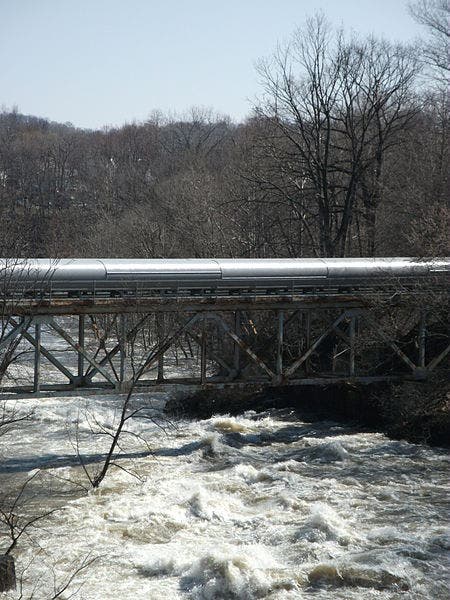
One of the largest projects in Superfund history is planned for New Jersey, as the EPA announced a $1.38 billion project to remove 3.5 million cubic yards of toxic sediment from the lower eight miles of the Passaic River.
The lower eight miles of the Passaic is the most heavily contaminated section of the river, containing 90 percent of the volume of contaminated sediments, according to the EPA. Contamination includes dioxin, PCBs, heavy metals, pesticides and others.
During the cleanup, the EPA plans to remove the contaminated sediment by dredging the river bottom, bank-to-bank, from Newark Bay to the Belleville/Newark border.
Find out what's happening in Newarkfor free with the latest updates from Patch.
“Sediment will be dewatered and transported likely by train for disposal. Dredged sediment will be sent to licensed, permitted facilities designed to accept the type of contaminants in the sediment,” the EPA said.
After dredging, the entire lower eight miles of the river will be capped bank-to-bank to isolate the remaining contamination, according to the EPA.
Find out what's happening in Newarkfor free with the latest updates from Patch.
“The Passaic River has been seriously damaged by over a century of pollution. Extraordinarily high concentrations of dioxin, PCBs, heavy metals and pesticides have robbed the people of New Jersey from being able to use this natural resource. The EPA’s cleanup plan will improve water quality, protect public health, revitalize waterfront areas and create hundreds of new jobs. This plan is one of the most comprehensive in the nation and will help restore a badly damaged river,” said Judith A. Enck, EPA Regional Administrator.
Meanwhile, not everyone was as enthusiastic about the project. The NJ Sierra Club, in a statement released Friday, was critical of the plan, saying the cleanup didn't go far enough and would only perpetuate the problem.
NJ Sierra Club Director Jeff Tittel said the EPA settled on a plan that calls for about 20 percent less contaminated river mud to be removed so the project cost would be reduced from $1.7 billion to $1.38 billion.
"The EPA's clean-up plan will not work because it will only cap the pollution," said Tittel. "We have waited for almost two years for the EPA to come up with a final plan and now this plan has been weakened. This is too little too late. This plan makes absolutely no sense. A cap will not work in a moving river. When the River floods, it will erode and cause the cap to fail washing toxic sediments into the river."
The Passaic River is one of the most contaminated in the nation, experts say. Fish and shellfish in the lower Passaic and Newark Bay are highly contaminated with mercury, PCBs and dioxin.
The EPA said it will pursue agreements to ensure that the cleanup work in the lower eight miles will be carried out and paid for by those responsible for the pollution as required by the Superfund law.
RELATED: Eating Fish From THESE N.J. Places Can Get You Very, Very Sick
PHOTO: The Passaic River in New Jersey Doug Kerr
Get more local news delivered straight to your inbox. Sign up for free Patch newsletters and alerts.