Community Corner
The Baraka Paradox: A Mayor’s Ambition, A City’s Neglect
Mayor Ras Baraka's protest arrest raises questions about political ambition, local neglect, and a double standard on free speech.

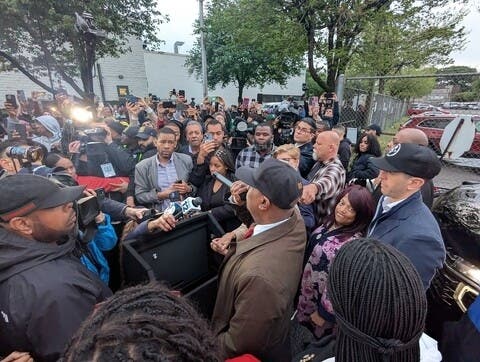
Newark, NJ – On May 9, 2025, Newark Mayor Ras Baraka stood before the gates of Delaney Hall, a newly reopened federal immigration detention center. His subsequent arrest, broadcast and debated, was framed by some as a courageous act of defiance against inhumane immigration policies. However, for a significant and increasingly vocal segment of Newark’s population, particularly within its Black communities, the mayor’s performance was not a stand for justice, but a calculated step in his gubernatorial campaign – a move that starkly contrasts with his administration’s record on free speech, accountability, and, most critically, its attention to the pressing needs of its own citizens.
The question echoing through Newark’s neighborhoods, from the South Ward to the West, is not whether Baraka’s protest was justified, but for whom he was truly fighting. As one YouTube commenter, reacting to news of the arrest, poignantly stated, “Funny how they never ever advocated for FBA’S [Foundational Black Americans] in this drastic and performative manner. Let alone go to jail for us.” This sentiment captures a deep-seated frustration: a mayor perceived as chasing national headlines while local crises fester.
A Tale of Two Protests: Federal Spectacle vs. Local Suppression
Find out what's happening in Newarkfor free with the latest updates from Patch.
The irony of Mayor Baraka’s arrest for trespassing at a federal facility is not lost on those who have witnessed or experienced the heavy hand of his administration when it comes to dissent within Newark’s own borders. While Baraka and his political allies are quick to condemn actions like the January 6th Capitol riot as threats to democracy, his administration’s response to local activism raises serious questions about his commitment to the very principles he claims to champion.
Consider the case of Munirah El Bomani, a veteran housing activist. In February 2025, she was forcibly removed from a Newark City Council meeting and subsequently banned for criticizing a city official. Her lawsuit, alleging violations of the New Jersey Civil Rights Act, has been allowed to proceed by a Superior Court judge – a clear indication of the seriousness of the allegations. This is not an isolated incident. Council President LaMonica McIver, who notably joined Baraka at the Delaney Hall protest, has overseen numerous meetings where residents have been removed and silenced for actions as minor as “rolling her fist” during public comment. The message is chillingly clear: in Baraka’s Newark, free speech is a conditional privilege, not a right, selectively granted to those whose voices align with City Hall’s narrative.
Find out what's happening in Newarkfor free with the latest updates from Patch.
The Carefully Managed Narrative of Newark’s Past
Baraka has also been lauded for Newark’s response to the 2020 George Floyd protests, which remained largely peaceful while other cities erupted in violence. But that narrative is more complex than it appears. Baraka’s Newark Community Street Team (NCST), which includes individuals with known gang affiliations, played a key role in “controlling” those protests—sometimes using physical force to stop outsiders from sparking unrest. Reports described bottles thrown, flags burned, and agitators tackled. No arrests were made. The city tightly managed the message: Newark had succeeded where others failed. But that success came by tightly controlling the conditions under which protest could occur. It was allowed when it reinforced Baraka’s image, not when it threatened to hold his administration accountable.
Misplaced Priorities and Forgotten Neighborhoods
The Delaney Hall protest also exposed what many Newarkers already feel: their mayor has forgotten them. While Baraka focuses on national issues, local concerns mount. “HEY RAS… NO PERMITS ON 325 AND 327 SO. ORANGE AVE… YOU RALLYING ON THIS PROPERTY?? I DIDN’T THINK SO,” one frustrated resident posted online, highlighting the hypocrisy of Baraka decrying permit issues at a federal facility while similar problems plague his own city. Others pointed to neglected housing at Georgia King Village, unsafe buildings on Elizabeth Avenue, broken infrastructure on Chancellor Avenue, and growing public safety concerns on Sussex Avenue.
As one resident bluntly put it on Facebook: “Would the elected leaders of Newark stop the counterproductive activism and focus on their jobs: keeping local taxes reasonable, fixing roads and municipal infrastructure, making sure emergency services are there, cleaning the parks, and enforcing municipal ordinances?” Baraka’s response to these local cries for help? A deafening silence.
While he stood at a detention facility in front of news cameras, Newarkers back home continued to deal with sanitation failures, housing code violations, and city departments that are underfunded or unresponsive. What’s more, the building code violations he cited at Delaney Hall are a common issue across Newark itself—where code enforcement often falters, and dangerous structures remain occupied. The question lingers: why the outcry at a federal facility, and not in his own wards?
Protest or Performance? The Gubernatorial Gambit
There’s no denying that Baraka’s stance on immigration may resonate with progressive voters statewide. But let’s be clear: this protest didn’t happen in a vacuum. It happened in the middle of a high-stakes political campaign. Protesting Delaney Hall might have made headlines, but the facility has operated off and on for years—without major intervention from City Hall. As one resident asked, “Why now?” Why stage a confrontation after detainees have already been moved in? Why not use the city’s permitting authority before federal operations began?
The answer, it seems, lies not in principle—but in optics. Baraka and McIver stood at the gates of Delaney Hall, but they weren’t just confronting federal agents. They were presenting a carefully curated image to the rest of New Jersey: that of fearless, progressive champions of justice. The problem is, their records back home tell a very different story. The focus on national issues, while local problems persist, suggests a politician more interested in building a statewide profile than in addressing the immediate concerns of the people he was elected to serve.
Newark Deserves Leadership, Not Just Symbolism
Ultimately, leadership isn’t about performative activism or strategic arrests; it’s about tangible improvements in the lives of constituents. Newark’s residents don’t need more press releases or photo ops. They need clean streets, safe housing, reliable emergency services, functional city departments, and elected officials who listen rather than silence, who act rather than posture.
If Ras Baraka truly wants to be seen as a champion of civil liberties and justice, the path forward is clear: address the pressing issues within Newark first. Fix the broken permitting system at home before grandstanding about it elsewhere. Ensure that the voices of Newarkers are heard and their needs are met. Only then can claims of fighting for justice ring true, rather than sounding like the calculated maneuvers of an ambitious politician. The people of Newark deserve a mayor focused on their city, not one whose eyes are already fixed on the governor’s mansion.