Community Corner
Museum Provides Link to City's Jewish Past
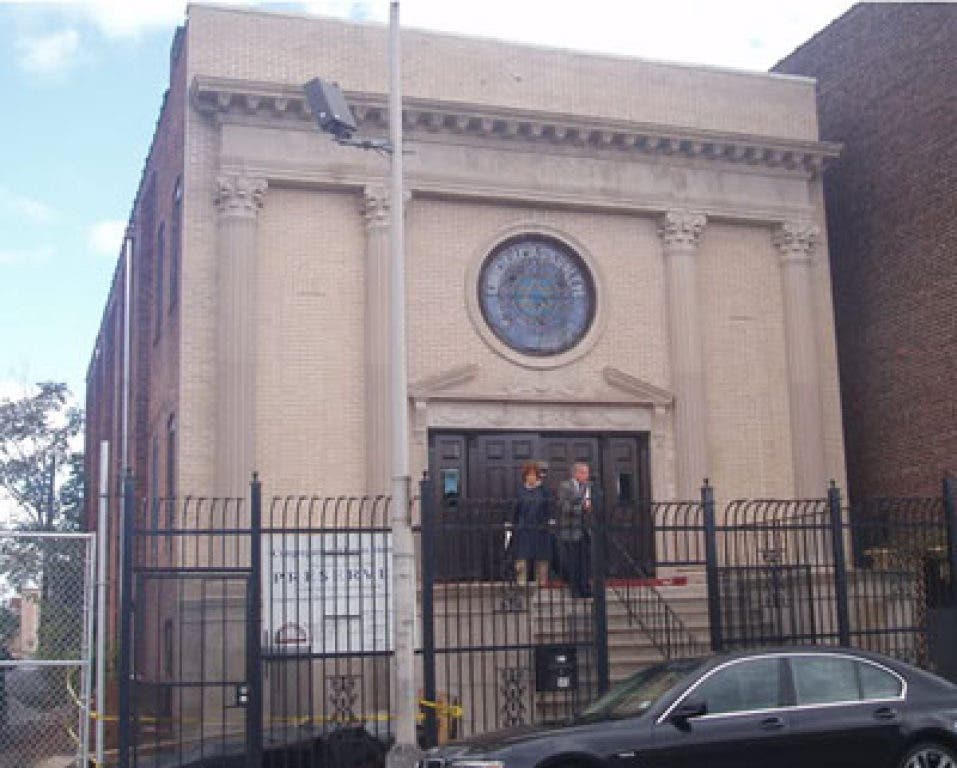
City's last synagogue houses a trove of history.
Correction appended July 16.
The Jewish Museum of New Jersey is dedicated to teaching Newark’s youth about the city’s rich Jewish past.
While today, Newark’s Jewish communities have certainly dwindled, in the early to mid-1900’s, Jewish communities flourished in the city. In the 1940’s, Newark reached the height of around 70,000 Jews out of a population of about 420,000. Post World War II, in the late 1940’s, Jews, like many other ethnic groups at the time, began leaving the city for the suburbs.
Find out what's happening in Newarkfor free with the latest updates from Patch.
Not immune to “the American Dream”, the greenery and houses of the suburbs called to many of Newark’s Jews, resulting in a decline in their population. Attracted by low mortgage rates, available through the Federal Housing Administration and Veterans Administration, Jews settled in neighboring suburban towns.
In the 1930’s and 1940’s, Newark was still primarily an industrial city, housing factories like General Electric and Westinghouse as well as several breweries such as Ballantine Ale and Pabst Beer.
The city was also a major center for the insurance industry, with companies like Prudential, which is still here today. The city’s diverse population was made up of many different ethnic groups, with populations coming from Italy, Poland and Czechoslovakia, among other countries.
Find out what's happening in Newarkfor free with the latest updates from Patch.
Newark’s Ironbound, which today is largely Portuguese and Brazilian, at the time was mainly comprised of Czech, Hungarian and Eastern European Jews.
Philip Roth’s novel, The Plot Against America, provides a vivid portrayal of what Jewish life was like in Newark at that time. Describing his Weequahic neighborhood, the narrator says, “All were Jews. The neighborhood men either were in business for themselves -- the owners of the local candy store, grocery store, jewelry store, dress shop, furniture shop, service station, and delicatessen, or the proprietors of tiny industrial job shops over by the Newark-Irvington line, or self-employed plumbers, electricians, housepainters, and boilermen -- or were foot-soldier salesmen like my father, out every day in the city streets and in people's houses, peddling their wares on commission.”
There were also more affluent Jewish professionals who worked as lawyers and doctors in Jewish corporations. A lesser-known fact chronicled in Barbara Kukla’s Swing City, Newark was also a major hub for jazz, blues and R&B music recorded at Jewish-owned recording studios. Less famous than their Italian counterparts, Jewish gangsters even had their own little underworld in Newark.
Back in the 1930’s and 1940’s, Newark had more than 30 synagogues, mostly situated in its Central and South wards. Today, Ahavas Sholom, founded in 1905 and present-day home of the Jewish Museum of New Jersey, is Newark’s last remaining synagogue.
Newark’s main Jewish congregations such as B’nai Jeshurun, B’nai Abraham and Oheb Shalom have all moved to the suburbs and many of Newark’s synagogues have since closed.
Many former temples, like Oheb Shalom’s original synagogue, which is in the process of being repurposed into the Main Building at the Greater Newark Conservancy, have been converted into churches.
The Jewish Museum was created out of the desire to provide Newark’s youth with an educational resource for learning about Newark’s Jewish history. The Jewish Museum was founded in 2003, born out of a desire to highlight the contributions of Jewish people in the city of Newark and the state of New Jersey at large. It opened with its first exhibit, “L’Chaim”, a celebration of Newark’s and New Jersey's Jewish History.*
Since then, every year, the museum provides local students with Holocaust education as well as a host of exhibits – most recently including an exhibit of art created by Newark’s school kids as well as world-class artists. Its next exhibit, “Memoria Assissi”, telling the story of Catholic priests who rescued Jews in Italy during the Holocaust, opens on Oct 14th.
Accompanying the exhibit will be a film series running through December, featuring films like Life is Beautiful concerning the Holocaust in Italy.
The series is open to the public and will open at the synagogue with The Assissi Underground – the remaining films will be screened at various Italian venues around the city.
For more information click here.
*Correction: The exhibit concerns not just Newark Jewish history, as originally reported.