Community Corner
My Trip to Kemet (Egypt), Africana Studies, and Black Liberation
The need for Africana studies and Black liberation.

My education tour in Afrika’s Nile Valley is Sunday on July 11, 2021. By the time this commentary is published, I will be in Kemet (Egypt). However, my trip to Afrika marks the beginning of my two-week journey to study Kemet (Egypt). I will finally get the opportunity to physically see Black people's contributions to the world’s civilization and religions through the eyes of Kemet. Evidence suggest that Afrika is the birthplace of humanity, the progenitor of civilization, and the root of the world's major religions (i.e., Judaism, Christianity, and Al-Islam). Many historians and scientists argue that on the world stage of human progress, civilizations began in the Nile Valley, and there were many major civilizations in that area of Afrika. However, ancient Kemet reflected humanity's march toward creating the world's first highly advanced civilization in times of antiquity. It played a central role in the development of mathematics, philosophy, medicine, science, government, architecture, a written language, art, monotheism, education, ethics, morals, and religion. Many cultures and nations borrowed from the knowledge and wisdom of the ancient Kemites to push their civilization forward towards the foundations of modern society. Unfortunately, white supremacy has made ancient Kemet a European or Arab civilization. When in fact, Kemet began as a Black civilization. This is because racists cannot accept the genius of Kemet coming from Black people. They had to put a non-Afrikan face on Egypt to justify its greatness being white or Arab. Some white supremacist scholars even went further to completely deny Kemet’s role in the foundation of western and modern civilization. Therefore, we as anti-racist educators and activists must work to create curriculums and history departments that include Kemet as the cornerstone of ancient and modern-day history. And must also boldly tell the truth about the original Kemites being Black. Every year, there is an Africana studies trip to Afrika by respected Egyptologist and history Professor Ashra Kwesi. Professor Kwesi was a 14-year student of the late and great Afrikan Egyptologist Dr. Yosef A.A. ben-Jochannan. Dr. Ben, as he was affectionately called by the masses of people in the world, died on March 19, 2019. He was 97 years old. Although Dr. Ben has passed, he authored many widely read books before his death, such as Africa: The Mother of Western Civilizations, Africa: The Mother of the “Major” Western Religions, We the Black Jews, and The Blackman and His Family of the Nile. In all, Dr. Ben has published 49 scholarly books and articles. Inspired by the academic works of Dr. Ben, Professor Kwesi has spent nearly 40 years taking people from all around the world to the Nile Valley to teach and tour the Afrikan histories and cultures of Kemet, Ethiopia, Sudan, and Kenya. The name of his educational tour is called Kemet Nu Man know Thyself Tours. Brother Kweisi is assisted by his wife Merira. But most importantly, Kwesi’s educational tours reinforce the need for Africana studies and Black liberation.
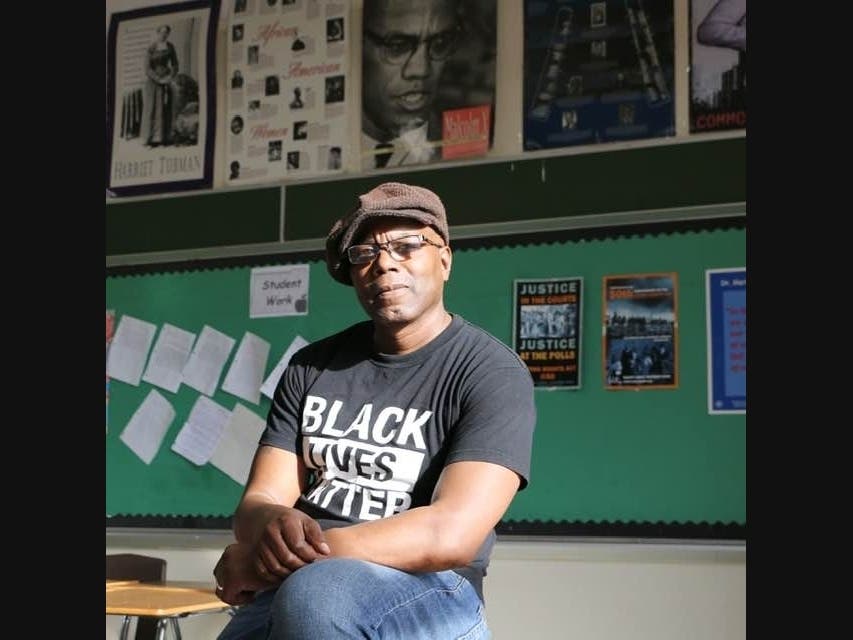
I am familiar with Professor Kwesi's work. Brother Kwesi's educational tour of Kemet will help me expand my lessons on Kemetic (Egyptian) history and Kemet’s impact on the world's cultures and religions. Additionally, learning about Kemet will help me adequately teach Afrikan history and culture to my students at Weequahic High School in Newark, NJ.
Unfortunately, white supremacy, and the system of racism, consistently disseminates distortions about Afrika (Kiswahili for Africa) and Black people, especially Kemet (Egypt). Kemet is the Afrikan name for Egypt, which means the land of the Blacks. White supremacy and the system of racism promotes false beliefs that Black people did not contribute to modern civilization, Afrika is not cradle of humanity, American democracy was not made a reality by Black people, and Kemet was not a Black civilization.
Find out what's happening in Newarkfor free with the latest updates from Patch.
But African Studies refutes all false notions about Afrika and Black People. We have treasures of knowledge on Afrikan history and culture written by Black scholars.
For example, some of the bedrocks of Africana Studies are the works of Dr. W. E. B. Dubois’ The World and Africa; Dr. Carter G. Woodson’s-The Negro in History; Drusilla Dunjee Houston’s-Wonderful Ethiopians of the Ancient Cushite Empire; Frank Snowden’s-Blacks in Antiquity; J.C. DeGraft-Johnson’s -African Glory; William Leo Hansberry’s-Pillars in Ethiopian History; Dr. John G. Jackson's books-Introduction to African Civilizations and Christianity Before Christ; Dr. George G. M. James’-Stolen Legacy; Okot P’Bitek’s-African Religions in European Scholarship; Dr. Chancellor Williams’-The Destruction of Black Civilization; Dr. Maulana Karenga’s-Introduction to Black Studies; Dr. Molefi Kete Asante’s-Afrocentricity; Dr. John Henrik Clarke's-African People in World History; Professor Anthony Browder's Nile Valley Contributions to Civilization, and Dr. Cheikh Anta Diop's books-African Origins of Civilization: Myth or Realty and Civilization or Barbarism. Just to name a few in a long list of scholars and intellectuals that wrote about Afrikan history and culture.
Find out what's happening in Newarkfor free with the latest updates from Patch.
As a side bar note, another great book called, Abu Simbel to Ghizeh, written by the late revolutionary Black Egyptologist Dr. Yosef Ben-Jochannan, is an awesome text about his educational tours of Kemet in the 1980s and 1990. Man, I do not want to get too spiritual folks, but this is the work of the Creator and our Afrikan ancestors working to help Afrikan people develop a collective consciousness!!!
When you opened the book up to the glossary page of Dr. Ben’s book. The first word is Ta-Nehisi. Someone in brother Coates' circle was Black and conscious (woke for you millennial heads). They must have been inspired by Africana studies and the movement for Black liberation. Brother Coates’ first name is Ta-Nehisi. His first name is one of the original Afrikan names for the country called Sudan.
Ta-Nehisi Coates is considered one of our best and brilliant new Black writers in the world of literature. A few years ago, he published a series of commentaries called the Case for Reparations in The Atlantic. He recently spoke sternly and eloquently on capitol hill in Washington, DC urging the United States Congress to create a committee on reparations to help repair the long-lasting damages done to the Black people due to American slavery and segregation on June 19, 2019 (Juneteenth).
But I digress. Let me get back on track.
When it comes to Africana Studies, we even have white scholars that speak to the facts about Afrika and Black people. They have documented Afrikan people’s contributions to humanity as the progeny of the world’s civilizations. For example, Charles Darwin's book-The Origin of Species; Dr. Louis S. B. Leaky’s- The Progress and Evolution of Man in Africa; Herodotus'-The History of Herodotus; Martin Bernal's two volume book-Black Athena; Count C Volney’s Voyages on Syrie ET EN Egypte; Leo Frobenius' Histoire de la Civilization Africaine; Diodorus Siculus’-Diodorus on Egypt; Gaston Maspero's-The Dawn of Civilization; and Gerald Massey's two volume book Egypt: The Light of the World, all explain Afrika and Kemet being the center of human progress. Just to name a few in a long list of scholars and intellectuals that wrote about Afrikan history and culture.
In the new millennium, America, and our world, are still struggling to establish Africana studies in colleges and universities. This is not good.
The struggle for a Black identity and the rebuilding of Afrikan culture are rooted in Africana Studies in America and in the world. Africana studies inspires Black people on several levels. It helps to build positive self-esteem in Black people. Africana Studies provides needed factual information on our history and on our cultural traditions in the world. But equally important, Africana studies challenges white supremacist pseudo-scientific notions about Afrika history, Afrikan culture, and Black people. Africana Studies creates an overarching framework for Black liberation.
Case in point. The 1619 Project founder Nikole Hannah-Jones said it was Africana studies classes she took, as a teenager, at her high school, that inspired her to establish her mission to speak truth to power as a journalist. Sister Jones said, “studying trail blazing Black journalists, like Ida B. Wells-Barnett, in her African Studies classes, inspired her to become an investigative journalist. Ida B. Wells-Barnett was a great women's rights and civil rights activist. She reported on lynchings and racial violence consistently directed at the lives of Black people in America.” Ida B. Wells-Barnett co-founded the NAACP. When sister Jones became an adult, she became a respected journalist. Her investigative journalism, and her inquisitiveness in Africana studies, led her to see the racist deliberate negation of Black people's contribution to American civilization, particularly American democracy; and Black people's enduring struggle to rebuild African culture despite United States slavery and segregation. When the opportunity presented itself, sister Jones boldly went to her supervisors at the New York Times to pitch a project to include the missing pages of Black people's history to American history for the new millennium. Her project successfully became the 1619 Project. The rest is Black history.
As I begin reaching elder-hood, I am thoroughly convinced that the Creator, and my Afrikan ancestors, have called me to Afrika, particularly Kemet. I must now complete my mission to document and share all this great information in Africana studies with the next millennial generation while I am still alive. Our next generation of young people must be inspired through Africana Studies to continue to help liberate Black people, and humanity, from the ills of white supremacy and racism!!!
Hotep (Medu Neter for Peace)!
Bashir Muhammad Akinyele is a History and Africana Studies teacher. He is also the co-coordinator for ASCAC's (the Association for Study of Classical African Civilizations) Study Group Chapter in Newark, NJ. (https://ascac.org/)
Note: Spelling Afrika with a k is not a typo. Using the k in Afrika is the Kiswahili way of writing Africa. Kiswahili is a Pan -Afrikan language. It is spoken in many countries in Africa. Kiswahili is the language used in Kwanzaa. The holiday of Kwanzaa is celebrated from December 26 to January 1.
Medu Neter is the original Afrikan language of ancient Kemetic people. When the Europeans and Arabs invaded and conquered Kemet, they changed the name Medu Neter to Hieroglyphics.
For More information on Ashra Kwesi's annual trip to Kemet can be found in his website at this link: https://www.kemetnu.com/egypt_tour.htm


