Schools
Newark Prof Earns Fulbright, Will Research 'Biological Clocks'
Casey Diekman, an associate math professor at NJIT, earned a prestigious Fulbright U.S. Scholar award. Here's what he'll be studying.


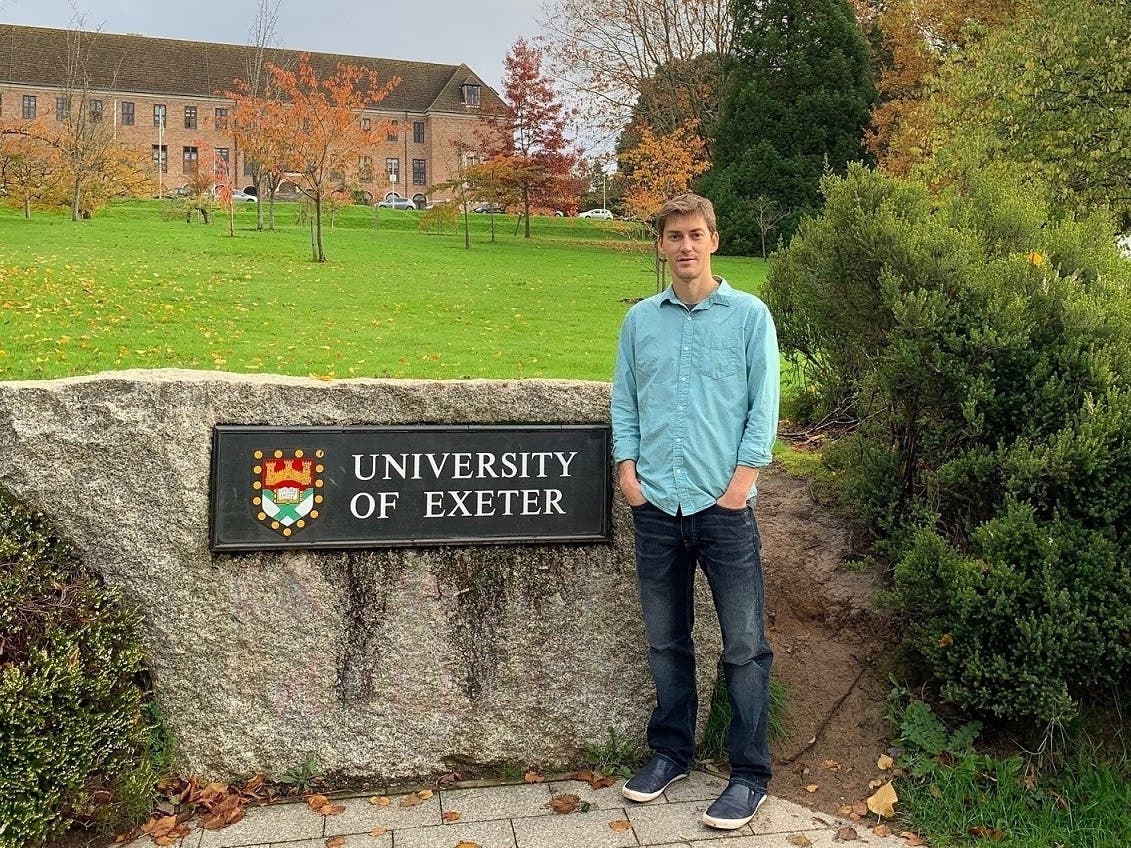
NEWARK, NJ — A math professor at the New Jersey Institute of Technology (NJIT) has earned a prestigious Fulbright scholar award.
On Wednesday, NJIT administrators announced that Casey Diekman, an associate professor of mathematics at the university, has been named recipient of a Fulbright U.S. Scholar Program Award to the United Kingdom in mathematical biology.
Through the iconic U.S. Department of State program, Diekman will partner with biologists, mathematicians and computer scientists at the Living Systems Institute to develop new models of the “circadian clock” that regulates the human physiology.
Find out what's happening in Newarkfor free with the latest updates from Patch.
This fall, Diekman will join nearly 800 U.S. citizens who will teach, conduct research and provide expertise abroad for the 2019-2020 academic year through the Fulbright program.
Recipients of Fulbright awards are selected on the basis of academic and professional achievement, as well as record of service and demonstrated leadership in their respective fields.
Find out what's happening in Newarkfor free with the latest updates from Patch.
- See related article: Montclair State Professor Earns NJ's Only 'Genius Grant' For 2019
“I’m honored to participate in a program with such a rich history of promoting intercultural understanding and global academic exchange,” Diekman said. “This award will give me the opportunity to work with some of the U.K.’s leading experts in computational neuroscience and form new long-term international collaborations.”
While in the United Kingdom, Diekman will collaborate with the laboratory of Mino Belle, an electrophysiologist at the University of Exeter Medical School, to study how the electrical activity and membrane excitability of SCN neurons is linked to circadian rhythms in gene expression produced by intracellular molecular clocks.
“This phenomenon is difficult to study through wet-lab experiments alone due to the drastically different spatial and temporal scales involved, from transcriptional regulation inside the cell nucleus on a time scale of hours to networks of neurons with membrane dynamics on a millisecond time scale,” Diekman said. “Multiscale modeling and computer simulation can connect data obtained from experiments at each scale to gain insight into how the circadian timekeeping system operates as a whole.”
Ultimately, Diekman said the models may be used to help understand how the clock synchronizes to the daily light-dark cycle under normal conditions, and what goes wrong when the clock is disrupted due to night-shift work, old age or neurodegenerative disease.
Send local news tips and correction requests to eric.kiefer@patch.com
Don’t forget to visit the Patch Newark Facebook page. Learn more about posting announcements or events to your local Patch site. Sign up for Patch email newsletters.
Get more local news delivered straight to your inbox. Sign up for free Patch newsletters and alerts.