Crime & Safety
Newark's Elected Leaders Don’t Seem To Have An Answer To Gun Violence
Local Government Has An Important Role To Play In The Fight To Keep Communities Safe

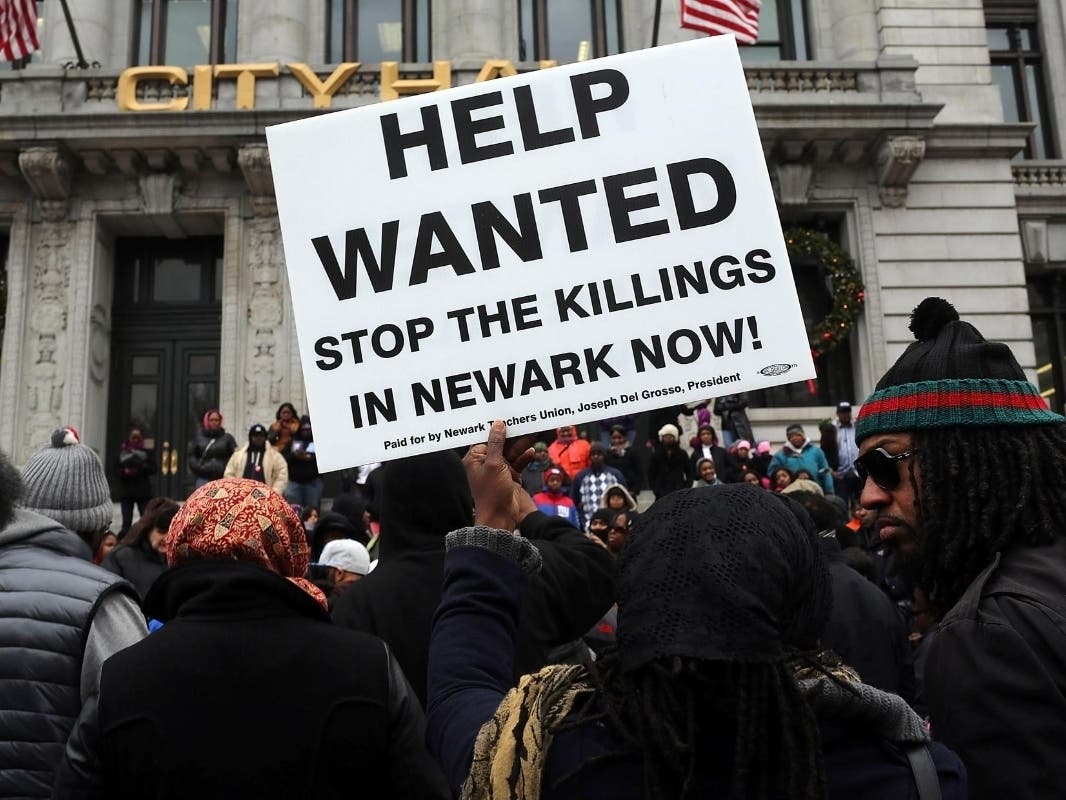
Gun violence is a persistent public health issue in the United States. This crisis impacts the well-being and health of us all. According to data released by Centers for Disease Control and Prevention (CDC), in 2020, deaths from gun violence reached the highest number ever documented. There were more than 45,000 casualties due to gun violence in the U.S. As the nation battled with the COVID-19 pandemic, another public health crisis escalated.
Gun homicides increased dramatically across the country, increasing by 35% in only one year. Nearly 5,000 more lives were lost to gun-related homicides in 2020 compared to 2019. Gun-involved suicides remained at historically high levels as well. Moreover, guns were the leading cause of death among children and teens in 2020, accounting for more deaths than car crashes, COVID-19, and cancers according to a report by John Hopkins University.
Nowhere are the issues of gun-related violence more palpable than in the City of Newark, New Jersey. Last year, the number of murders rose slightly in the city, and so did the number of non-fatal shootings, while the total number of crimes is about the same. The 57 homicides recorded represents a 6% increase over 2020, and there were also 221 non-fatal shootings that year, an increase of 13%.
Find out what's happening in Newarkfor free with the latest updates from Patch.
This year, Newark is experiencing a surge in gun-related violence incidents during the hot Summer months. On June 30, a person driving a stolen white Honda Pilot drove up to a bodega on the corner of Clinton Place and Shephard Avenue and opened fire. During this incident, a total of nine people were shot, including a juvenile. All the injuries were non-life-threatening, and none of the victims suffered anything more serious than minor injuries.
Nevertheless, of all the damage done by gun violence in these communities, it may be the trauma related to the exposure to violence that leaves the most lasting mark. These survivors won't show up in any official tally of the murdered or maimed. But they, too, are injured. Their wounds are often invisible, too deep to bandage, stitch or count.
Find out what's happening in Newarkfor free with the latest updates from Patch.
Last week, two men were killed and seven people were injured in five-weekend shootings that occurred over a 24-hour period in Newark, authorities said. The first fatal shooting was at 6:15 p.m. Saturday on the 700 block of South 20th Street. The other happened just after 4 p.m. Sunday when a man was gunned down on the 200 block of South 10th Street.
Early the next evening, there were two more shootings where two 14-year-olds, a 15-year-old, and a 17-year-old were wounded in a shooting on the 700 block of Broadway. About twenty minutes later, a man was shot on Avon Avenue.
Every year, especially during the summer months, the City of Newark experiences rising temperatures coinciding with an uptick in gun violence. The latest incidents show signs that the warm-weather violence spike may be beginning, with gun violence incidents continuing to proliferate in the city. Just this week, RLS Media reported that a group of brazen gunmen shot a man dead while he walked with his child on a Newark street. When police responded to reports of shots fired near the intersection of Hillside and Clinton avenues, officers found an unconscious and unresponsive male lying on the ground bleeding heavily. The victim was reportedly walking with a child when armed suspects wearing dark clothing began firing at him. The victim was pronounced dead at the scene.
Although it would seem as though increased levels of violence in cities like Newark are normal for its residents, no one can truly get used to seeing dead bodies or hearing gunfire, and those stressors have a profound effect on a community's ability to function. The obvious psychological effects of exposure to violence are chronic and expansive. As we see, community and gun violence affect not only those who are directly involved, but also individuals, families, and communities who endure the constant threat of violence and grieve the unexpected loss of their loved ones.
As a community, we are tasked with urgently seeking ways to reduce the myriad overlapping risk factors for violent behavior and symptoms of trauma. In doing so, we cannot casually claim we are going to address direct violence but also the trauma symptoms that have a profound impact on human lives.
Until we recognize and truly realize the cyclical effects of neighborhood disorder, violence and its after effects, the open wounds in our city will never fully heal. Stopping these cycles of trauma starts with an acknowledgment of community violence not as a mere crime problem but rather as a collective social trauma — both a public health scourge and a moral issue.
It is obvious that the city’s current “public safety” strategy is not only failing to reduce gun violence, it’s also further destabilizing the communities most directly impacted by them.
These failed policies and their rhetoric are damaging to our collective efforts to attain true community safety.
Our elected leaders have an obligation and must be held accountable to work together to move Newark forward, beyond the cycles of bloodshed and irresponsibility, and into progress toward a future where we all can truly thrive. Please rise to the occasion so that our city can rise as well.