Politics & Government
NJ Activists Will Remember 1967 ‘Newark Rebellion’ With Rally, March
The brutal beating of a Newark cabdriver triggered "one of the most important urban uprisings in the modern era," activists said.


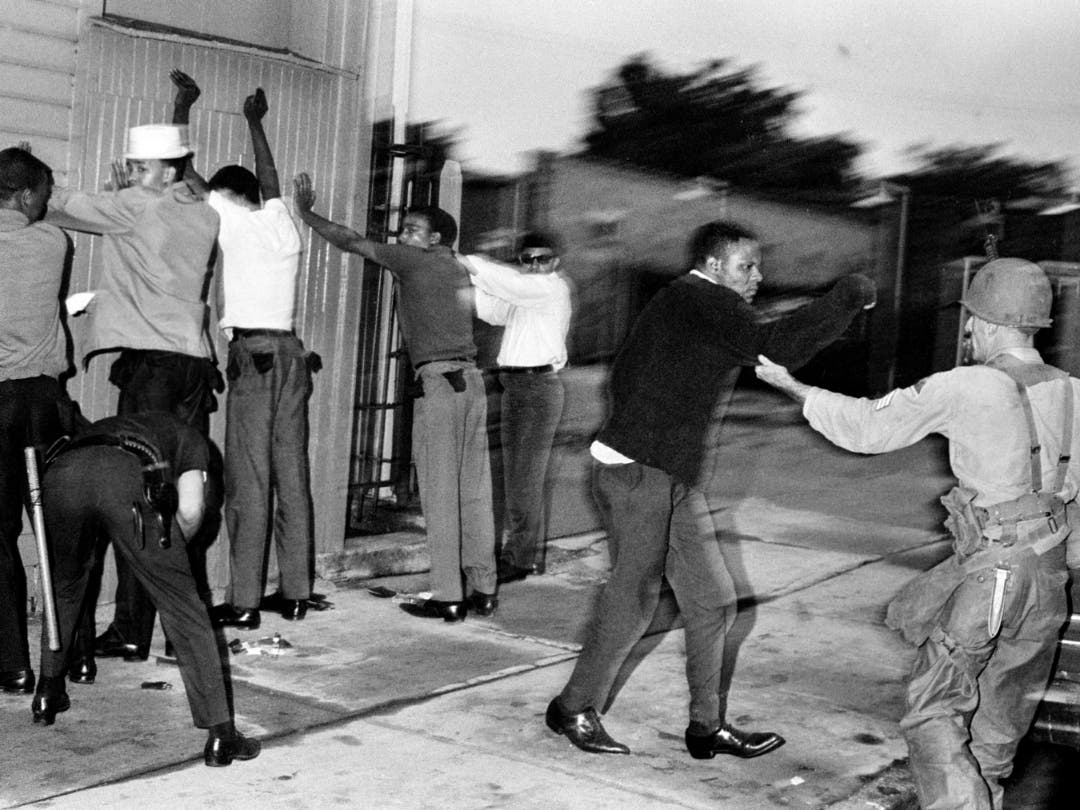
NEWARK, NJ — In 1967, the brutal beating of a Newark cabdriver named John Smith triggered “one of the most important urban uprisings in the modern era.” And even today, the memory of that fateful day echoes in New Jersey’s largest city, activists say.
Newark-based advocacy group, the People’s Organization for Progress (POP), will hold an annual march and rally again in 2023 to mark the 56th anniversary of the infamous riots that many activists are now calling a “rebellion.”
The POP rally will take place at 5 p.m. on Wednesday, July 12. It will begin at the Rebellion Monument, 250 Springfield Avenue, and will march to the former 1st Precinct – ground zero for the events of 1967.
Find out what's happening in Newarkfor free with the latest updates from Patch.
According to the POP, here’s what people will be marching in remembrance of:
“On July 12, 1967, the brutal, near fatal police beating of an African American Newark cabdriver named John Smith triggered one of the most important urban uprisings in the modern era. It would ignite over 100 uprisings around the country including the largest uprising in Detroit on July 25th. It would continue on until July 17th when occupying federal and state military forces finally withdrew from the beleaguered city. Although the historic uprising would take 26 lives, it would also ignite a wave of protest and organizing that would forever change the political landscape in segregated American cities, leading to the elections of a new generation of Black elected officials in largely Black communities by the full use and mobilization of a new access to the ballot and more.”
In Newark, that would mean electing Ken Gibson the first Black mayor of a major eastern seaboard city, and displacing urban gangster apartheid that brutally chained local politics prior to that groundbreaking election in 1970, activists said. Read More: Newark Renames Street In Honor Of Beloved Late Mayor, Ken Gibson
Find out what's happening in Newarkfor free with the latest updates from Patch.
According to the POP, Newark would become the epicenter of the new national Black Power Movement, with the late Amiri Baraka helping to lead pivotal organizations such as the Committee For A Unified Newark and the Congress of African People, as well as launching the Black Arts Movement. Read More: Newark Activists Decry Attempts To 'Stifle' Black History In Schools
Another national expression of the organizing that emerged from the Newark Uprising is what is known as “The Gary Convention,” or the National Black Political Assembly and Convention. Read More: Newark Will Host 2022 National Black Political Convention
POP chair Lawrence Hamm was one of the youngest delegates at the now-storied gathering, which “marked the full mobilization of the new emergence of the Black Vote,” activists said.
The POP said the spirit of change that erupted with the 1967 uprising can still be seen today in the Brick City:
“Recent years have seen Newark in the national conversation on the matter of police reform and community-based violence intervention. Mayor Ras Baraka, the radical icon’s son, who initiated a protest intervention of street violence that was sustained for 155 consecutive weeks with the emergence of the Newark AntiViolence Coalition, has taken five percent of the Newark police budget and invested in the development of a community-based violence intervention ecosystem made up of wraparound social services and the use of professionally trained community-based violence interventionists to address street violence at its source. Since the launch of those efforts, violent crime has been reduced to a 60-year low. The 1st Precinct, the site of the uprising’s beginning and once well known for police abuse, is now the city’s Office of Violence Prevention and Trauma Recovery.”
Meanwhile, the push for a stronger civilian review board in Newark continues, the group added:
“The People’s Organization of Progress and Mayor Baraka have also been taking on the same question of police brutality and corruption when the mayor sought to implement the strongest Civilian Review Board in the country upon his election in 2014, one with full subpoena power, one with the authority to do independent and concurrent investigations, one with genuine community character and one with a solid discipline matrix.”
In 2020 – after a bitter legal fight with the local police unions – the New Jersey Supreme Court upheld some of the board’s powers, but put the kibosh on others. Read More: NJ Supreme Court Limits Newark's Power To Probe Police Abuse
“The People’s Organization for Progress and the mayor are both a part of a statewide movement to have several major police reform bills passed into law, including the CCRB Bill (A-1515), that would mandate Civilian Review Boards with full all of the authority sought for in the original Newark effort for any municipality seeking one,” organizers said.
Send local news tips and correction requests to eric.kiefer@patch.com. Learn more about advertising on Patch here. Find out how to post announcements or events to your local Patch site. Don’t forget to visit the Patch Newark Facebook page.
Get more local news delivered straight to your inbox. Sign up for free Patch newsletters and alerts.