Business & Tech
NJ Women Still Earn Less Than Men, And COVID Made It Worse: Feds
There's an ugly gender wage gap in the Garden State. Here's how bad it is – and what's causing it, the U.S. Department of Labor says.


NEW JERSEY — New Jersey’s working women are still earning significantly less than men, and the coronavirus pandemic has made a longstanding problem even worse, a federal report says.
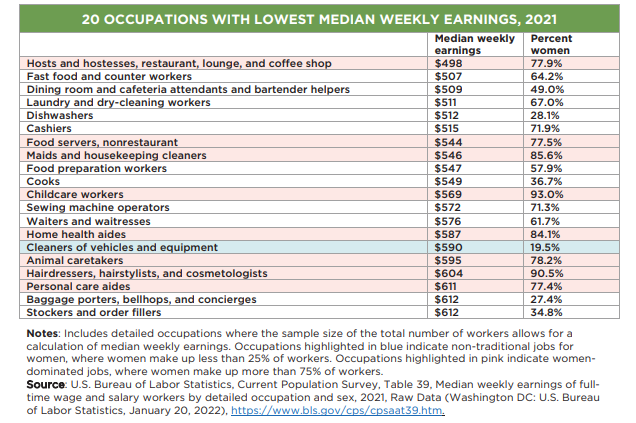
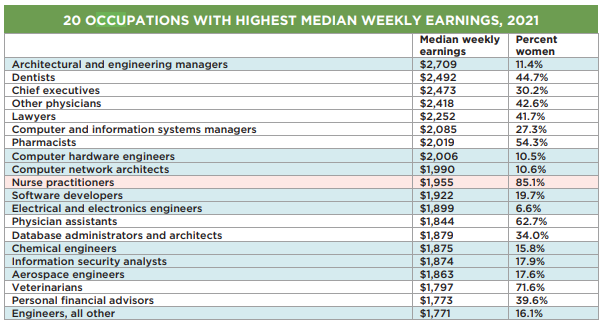
The U.S. Department of Labor recently released a report that examines the employment impacts that women across the nation have experienced during the coronavirus pandemic. The report also took a look at “occupational segregation” by gender: being overrepresented in certain jobs and industries and underrepresented in others.
How bad is the gap? Nationwide, a full-time working woman made about 83 percent of the median wage of a man in 2020 – about 83 cents to every dollar. Many women of color were paid even less. Black women were paid 64 percent of what white non-Hispanic men were paid, and Hispanic women were paid about 57 percent.
Find out what's happening in Newarkfor free with the latest updates from Patch.
Things aren’t any better in New Jersey, according to Nicole Neri, a regional director with the agency’s Women’s Bureau.
In 2020, New Jersey women who were full-time wage and salary workers had median usual weekly earnings of $1,041, which came to just 82.2 percent of the $1,267 median usual weekly earnings of their male counterparts. The wage gap was much wider for Black women in New Jersey, who earned about 56 percent of what men were paid, and for Hispanic women, who made an average of 44 percent.
Find out what's happening in Newarkfor free with the latest updates from Patch.
“There’s clearly a lot of work to be done,” Neri said.
But according to Neri, it may be possible to “level the playing field for working women” in the state by increasing transparency around wages, opening higher-paying jobs to more women, and expanding access to paid leave and child/elder care.
It’s a story that’s similar for other working women across the United States, where job segregation is the biggest factor behind the wage gap, the agency says.
“Of the portion of the wage gap that can be explained, by far the biggest factor is the types of jobs that women are more likely to have than men … and these are jobs that tend to pay less,” bureau spokespeople told Patch.
- See related article: Latina Workers In NJ Face One Of America's Ugliest Pay Gaps
- See related article: Here's How Much Less Women Make In New Jersey Gender Pay Gap
- See related article: Work Or Kids? NJ Parents Find Tough Choices Amid COVID Pandemic
EFFECTS OF THE PANDEMIC
Since the pandemic hit, things have gotten worse for working women in many areas, the labor department said in its latest report.
Here’s the problem, researchers said:
“Women are a critical part of the U.S. labor force and contribute significantly to their families’ economic security and the U.S. economy. Yet women, especially women of color, have experienced longstanding disparities in the labor force that exacerbated the problems caused by the COVID-19 pandemic. Women have persistently lower wages and fewer workplace benefits than men, disparities that are even more significant for Black, Hispanic and some subsets of Asian American and Native Hawaiian and Pacific Islander women. Decades of underinvestment in social safety net policies – like child care and paid leave and declining unionization rates – left women with few supports to manage work and their unpaid family caregiving responsibilities amid the pandemic.”
The report continues:
“When the pandemic hit in March 2020, these vulnerabilities worsened its impact on women’s employment. The nature of this national public health crisis forced widespread shutdowns in industries such as in leisure and hospitality and child care; left students to learn at home remotely; and created stark lines between essential work and remote work. For the first time since data began being collected in 1948, women lost more jobs than men during the depths of the COVID-19-related economic crisis. More women also left the labor force entirely during the pandemic, and at its worst point in April 2020, women’s labor force participation was the lowest it had been since 1985. Women also experienced a greater decline in work hours than men. While some women had jobs that allowed for telework during the pandemic, many also had to care for their children and supervise remote learning. Other groups of women became unemployed when nonessential businesses shut down or laid off workers. Women in essential jobs, such as those in grocery stores and hospitals, continued to work in-person and at personal risk while also struggling to manage new caregiving challenges.”
The cumulative effect of these challenges became apparent during the early months of the pandemic. Women lost 11.9 million jobs compared to 10.1 million for men between April and February 2020, the report stated.
During the pandemic, two primary factors contributed to women experiencing more negative employment impacts than men, researchers said:
“First, women — who have always performed the majority of unpaid family caregiving — coped with greater challenges managing work and care, with children home from school and disabled and older family members losing access to critical care services. For example, mothers were more likely than fathers to spend more time caring for children, even if they were also working for pay at the same time. Second, women were overrepresented in industries that experienced the pandemic’s worst job losses. This industry and occupational segregation of women — where women are over or underrepresented in certain jobs — means that women were very likely to be working in sectors like leisure and hospitality or education and health care where the most jobs were lost.”
Read the full report here.
Send local news tips and correction requests to eric.kiefer@patch.com. Sign up for Patch email newsletters. Learn more about posting announcements or events to your local Patch site.
Get more local news delivered straight to your inbox. Sign up for free Patch newsletters and alerts.