Community Corner
Paying Homage to 'Miss Jane Pittman' at Newark Museum
The Newark Black Film Festival screens "The Autobiography of Miss Jane Pittman", the fictional account of a former slave as she survives to the Civil Rights era.
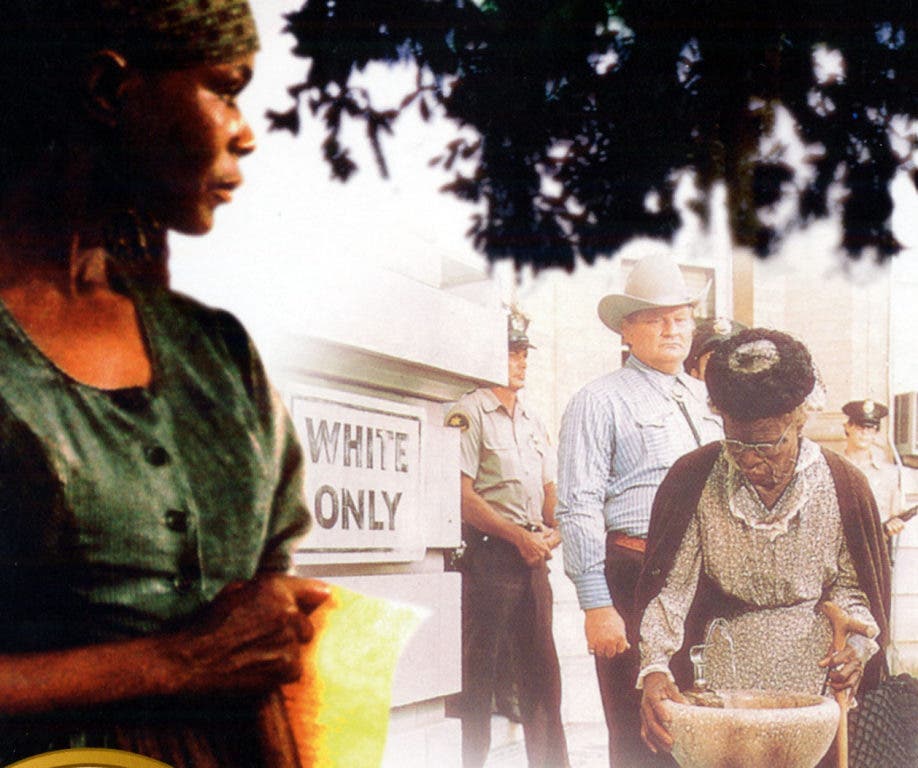

Classic films often lose their impact over the years. Audiences find their subject matter and style to be foreign, inconsequential or antiquated as time passes. The film that can hold an audience year after year is a true rarity. In this sense, "The Autobiography of Miss Jane Pittman" is a near complete success.
The movie, which screened at the Wednesday, opens during the beginnings of the Civil Rights Movement with a reporter reaching out to 110-year-old ex-slave Jane Pittman for an interview. Meanwhile, a young man named Jimmy also asks for Pittman's limited time so that she may help in a protest he's staging. The plot of the film is conveyed through the stories Pittman tells the reporter about her long life.
This story's power hinges almost totally on Cicely Tyson's performance as Pittman. She takes the character from a 19-year-old meek girl, all downcast eyes and shy words, to a dynamic young woman coping with the deaths of loved ones, and finally, as a strong-as-an-oak matriarch guiding her descendants into the next era.
Find out what's happening in Newarkfor free with the latest updates from Patch.
Tyson seems to craft each period in Pittman's life as a separate character as she ages and is shaped by the tragedies and wonders of being.
Additionally, the movie demonstrates the potency, terror and shock of tragedy with impressive skill. More than once in her life, Pittman's loved ones are killed. Each time the horror is thrust upon Pittman with devastating rapidity and graphic violence. The danger in trying to live during the post-Civil War era is felt in every frame.
Find out what's happening in Newarkfor free with the latest updates from Patch.
However, the film does have its faults. One is that too much time is given to the reporter who goes to interview Pittman (the book does not make reference to him after Pittman begins to tell her tale). Like "Glory" and "Last King of Scotland," the filmmakers were, once again, not content to let an African American tell her own story. This is an especially egregious mistake given that the reporter's character lends almost nothing to the film. He has literally no impact on the other characters in the picture. He is a framing device and nothing more.
The make-up and the television production values are problems for this motion picture, as well. Although created by the legendary effects master Stan Winston, the "revolutionary at the time" make-up effects are quaint by today's standards. They can even become a distraction when "old" Pittman is on-screen for extended amounts of time.
But these minor quibbles are forgotten by the time the film reaches its climax. Pittman goes to drink from the "white" fountain in a wordless scene that perfectly encapsulates who this powerful woman is - even if she is fictional.
Fiction or not, the evidence of the lasting power of Pittman can be found in the spontaneous applause erupting from the audience at Newark Museum during that final scene.
Dr. Clement A. Price led a brief discussion following the film, raising the point that although films can help shed light on some little known corners of history, they cannot replace active searches for the truth.
The Newark Black Film Festival will continue next week with "I Will Follow." The film will screen Aug. 3 at the Newark Museum at 7 p.m.