Politics & Government
Rutgers Study: Media Driving Wedge Between Cops, Black Men
Negative news media portrayals may be influencing how police treat black men in the United States, Rutgers University researchers said.


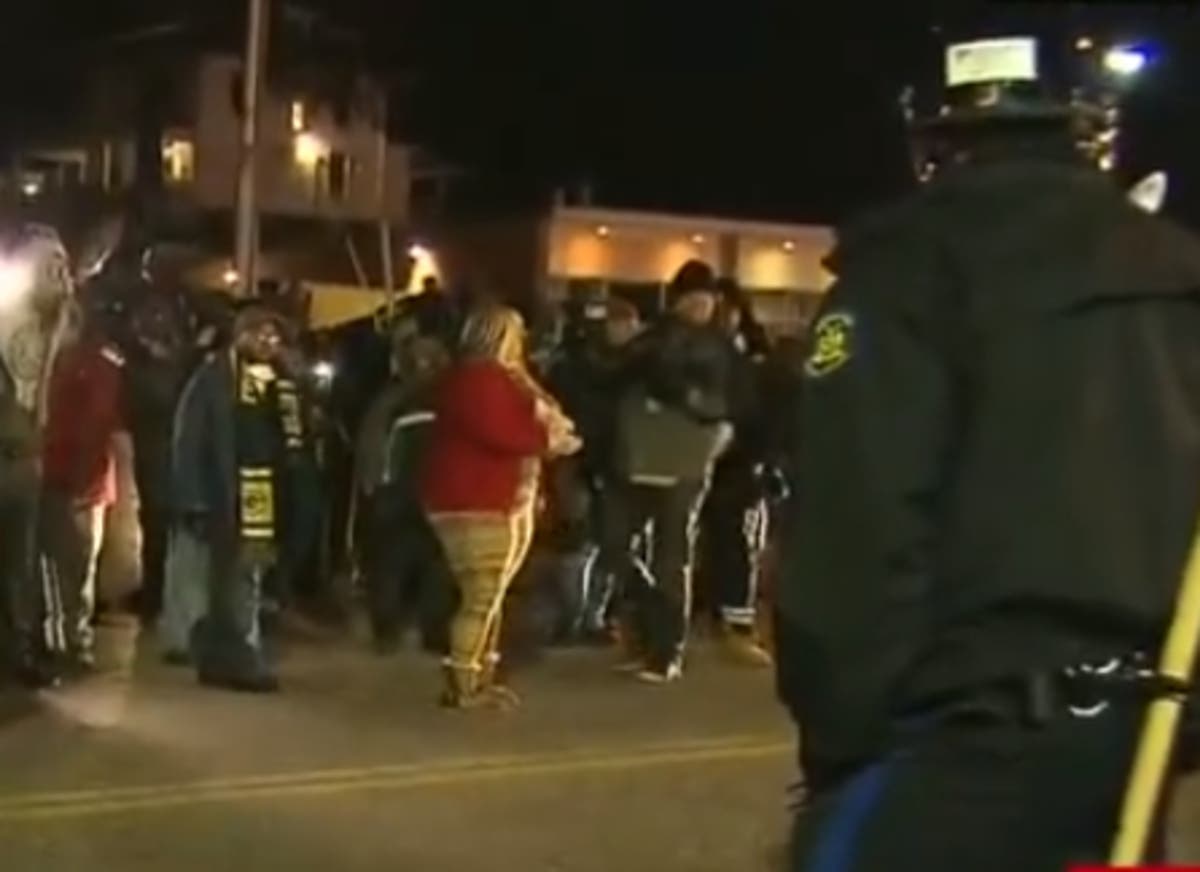
NEWARK, NJ — Negative media portrayals and stereotypes may be influencing how police treat black men in the United States, a recent Rutgers University study claims.
On Monday, the Rutgers School of Public Health announced the results of a study recently published in “Research in Race and Ethnic Relations.”
As part of the study, researchers put the microscope on three iconic newspapers’ coverage of the shooting of Michael Brown, an unarmed black teenager in Ferguson, Missouri, who was shot to death in 2014 by Darren Wilson, a white police officer.
Find out what's happening in Newarkfor free with the latest updates from Patch.
The newspapers — The New York Times, Los Angeles Times and The Washington Post — were selected due to their “high potential to impact public opinion,” Rutgers researchers stated.
According to Rutgers:
Find out what's happening in Newarkfor free with the latest updates from Patch.
“The research analyzed how the race, physicality and masculinity of Brown and Wilson were presented in media coverage of Brown’s death and Wilson’s testimony. The researchers analyzed 40 articles from the three newspapers, taking into account which voices were given space in each article. On subsequent readings, a codebook was developed containing codes that capture the masculinity, physicality, class and race of Brown and Wilson. It concluded that negative race-based perceptions perpetuated by the media may have contributed to Brown’s death.”
Rutgers added:
“The researchers examined how the media framed the perceived masculinity of Brown and Wilson in covering the case. In particular, they examined how the three newspapers used Wilson’s account of the event in their descriptions of Brown. The newspapers depicted Brown through Wilson’s testimony as a man of large physical size with uncontrollable aggression, but neglected the fact that the two men were of comparable size. For example, one account describes how Wilson compares himself holding on to Brown’s arm to ‘a 5-year-old trying to hold on to Hulk Hogan.’”
The researchers also analyzed the words used to describe Brown and Wilson’s socioeconomic class and neighborhoods. According to Rutgers, Brown’s status was framed by descriptions of his neighborhood: “trappings of a working-class haven” with an “edge of frustration and anger.” Conversely, Wilson was portrayed as having overcome a troubled childhood to make a life in a suburban neighborhood with “brick ranch-style homes” and “manicured lawns.”
- See related article: NJ Senator On Black Parents, Kids And Police: 'The Conversation'
“Newspapers use sensational words to get hits,” said the study’s lead author, assistant professor Pamela Valera. “However, the words they used depicted Brown as a monster.”
According to Rutgers, the study was based on the premise that “public perceptions of male dangerousness are a factor in influencing police action and the public’s willingness to accept an officer’s deadly actions as legitimate.”
Researchers also said that black masculinity is often equated with hypermasculinity, criminality and hypersexuality.
“Unarmed black Americans are five times more likely to be shot and killed by police than unarmed white Americans,” Valera said. "We believe that media may play a significant role in these disproportionate deaths. The stereotypes held, consciously or unconsciously, about the criminality and ‘dangerousness’ of black men influence the rates at which they are stopped and engaged by the police.”
- See related article: Don't Publish Names In Mental Health-Related Crimes, Task Force Leader Says
Photo: YouTube / CNN
Get more local news delivered straight to your inbox. Sign up for free Patch newsletters and alerts.