Neighbor News
$2.24M Grant Awarded to Rutgers Cancer Institute of New Jersey Researchers
A $2.24M grant to Rutgers researchers will support identification of nutrients critical for growth and survival of aggressive cancers.

New Brunswick, N.J., June 19, 2017 – Tumors require fuel for growth and must obtain this nutrition from the body of the patient in which they reside. Most of the nutrients that support tumor growth come from circulating blood. Cancer cells need this fuel, which can come in the form of proteins, amino acids, lipids, sugars and other metabolites, to synthesize the building blocks for new cancer cells and to maintain normal cellular functions. The demand for fuel is most likely higher in cancer cells than most normal tissues, which has led researchers to the following questions: What specific fuels are important for cancer cells? Where do they come from? What are they used for? Can the dependency of tumors on nutrients supplied from the host be therapeutically exploited?
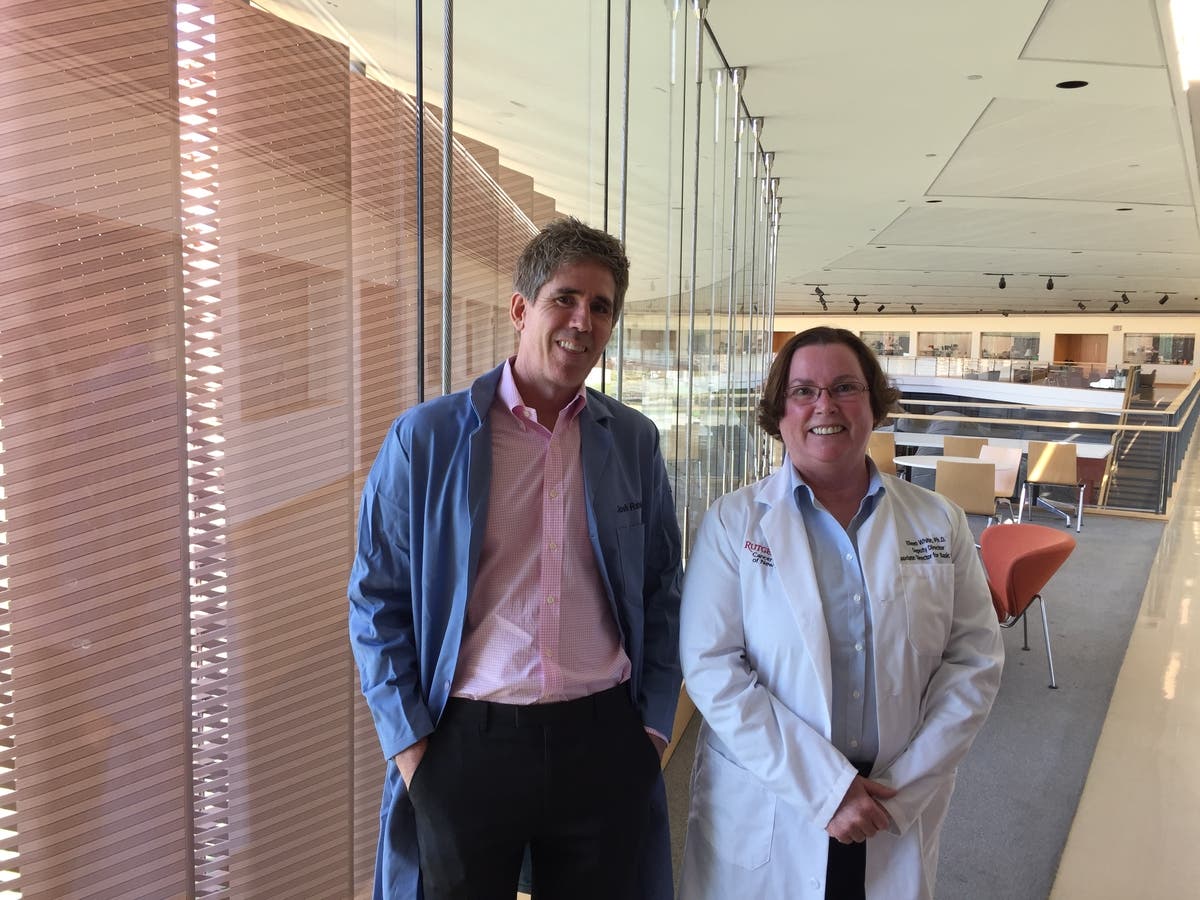
The laboratories of Eileen White, PhD, deputy director, chief scientific officer, and associate director for basic science at Rutgers Cancer Institute of New Jersey; and Joshua D. Rabinowitz, MD, PhD, professor in the Department of Chemistry and Lewis-Sigler Institute for Integrative Genomics at Princeton University and a research member at Rutgers Cancer Institute aim to answer these questions with the support of a $2.24 million competing renewal of grant (R01CA163591) awarded from the National Cancer Institute (NCI).
The research will focus on melanoma and lung cancer caused by mutations in genes known as K-ras and Braf. Using the analytical method of mass spectroscopy to measure molecular compounds by mass, investigators aim to identify the circulating nutrients that are consumed by tumors and determine why they are important for their growth and survival. The therapeutic utility of cutting off the supply and use of specific nutrients to tumors will be tested by eliminating them from the diet or by blocking their production or availability.
Find out what's happening in New Brunswickfor free with the latest updates from Patch.
“This is an exciting new area of research with great potential to develop new therapeutic approaches to fight cancer,” notes Dr. White, who is also a distinguished professor of molecular biology and biochemistry in the School of Arts and Sciences at Rutgers University.
The award period begins July 1 and runs through June 2022. The work will build on research supported over the previous five years by a $2.3 million NCI grant (R01CA163591).
Find out what's happening in New Brunswickfor free with the latest updates from Patch.
###