Schools
Rutgers Professor Finds Higher Rate Of Underwater Glacier Melting
A Rutgers marine science professor used robotic kayaks to monitor melting water from glaciers in Alaska, and her findings were surprising:


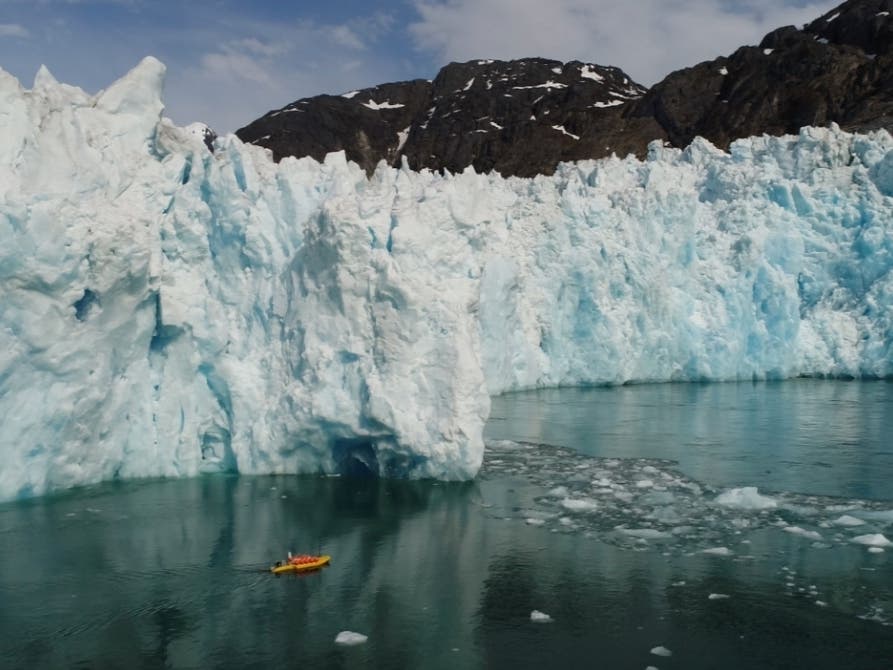
NEW BRUNSWICK, NJ — Tidewater glaciers, the massive rivers of ice that end in the ocean, may be melting underwater much faster than previously thought, according to a study co-authored by Rutgers University that used robotic kayaks.
The study, which was published in the journal Geophysical Research Letters in November, surveyed the ocean in front of the 20-mile-long LeConte Glacier in Alaska. The robotic kayaks made it possible for the first time to analyze plumes of meltwater, the water released when snow or ice melts at the point where glaciers meet the ocean. It is usually dangerous for ships or humans to get near these glaciers because of ice "calving," which is when falling slabs of ice that break from glaciers crash into the water and spawn huge waves. So the robots came in handy.
“With the kayaks, we found a surprising signal of melting: Layers of concentrated meltwater intruding into the ocean,” said lead author Rebecca Jackson, a physical oceanographer and assistant professor in the department of marine and coastal sciences at Rutgers.
Find out what's happening in New Brunswickfor free with the latest updates from Patch.
Jackson led the study when she was at Oregon State University.
The study follows one published last year in the journal Science that measured glacier melt rates by pointing sonar at the LeConte Glacier from a distant ship. The researchers found melt rates far higher than expected, but couldn’t explain why. The new study found for the first time that ambient melting is a significant part of the underwater mix.
Find out what's happening in New Brunswickfor free with the latest updates from Patch.
Jackson's findings challenge current frameworks for analyzing ocean-glacier interactions. Her work also has implications for the rest of the world’s tidewater glaciers, whose rapid retreat is contributing to sea-level rise.
Researchers at Oregon State University, University of Alaska Southeast, University of Oregon and University of Alaska Fairbanks contributed to the study.
Get more local news delivered straight to your inbox. Sign up for free Patch newsletters and alerts.