Arts & Entertainment
Field Trip To An Enchanted World
Three gardens in bloom among works of art at the Cloisters in NYC


The word Cloisters refers to a place of religious seclusion, such as a monastery or convent, as well as the covered walkways and courtyards that were included in the design of these holy places.
The Cloisters at Fort Tyron Park in New York City is a replica of a medieval monastery, which sits high up on the cliffs overlooking the Hudson River. Go a mere few minutes from Midtown Manhattan (and less than 30 minutes from our area) and you will feel as if you stepped off the grid into an enchanted world, where peace and quiet resound.
In the early 1900s, sculptor George Grey Barnard found himself in debt and began investing in medieval antiquities. He purchased ruins from the Cuxa Cloister in France, pillaging the countryside for more historic treasures.
Find out what's happening in New Milfordfor free with the latest updates from Patch.
Bernard was hauling so much stuff out of France that the French government passed laws restricting speculators from removing historic pieces. He hurried home to the States and built a gallery in Washington Heights to show off his collection.
In the 1930s, John D. Rockefellar bought Bernard’s Cloisters on behalf of the Metropolitan Museum of Art and began to create the monastery. The great Frederick Law Olmstead designed the walls surrounding the park as well as the battlements and other structures.
Find out what's happening in New Milfordfor free with the latest updates from Patch.
The building is a conglomerate of many architectural styles, from Romanesque to Gothic. The large Cuxa Tower contains Barnard’s Cuxa Cloister from France. There is also a reconstructed cathedral that boasts 14th-century stained glass and 13th- and 14th-century tomb monuments and sculptures.
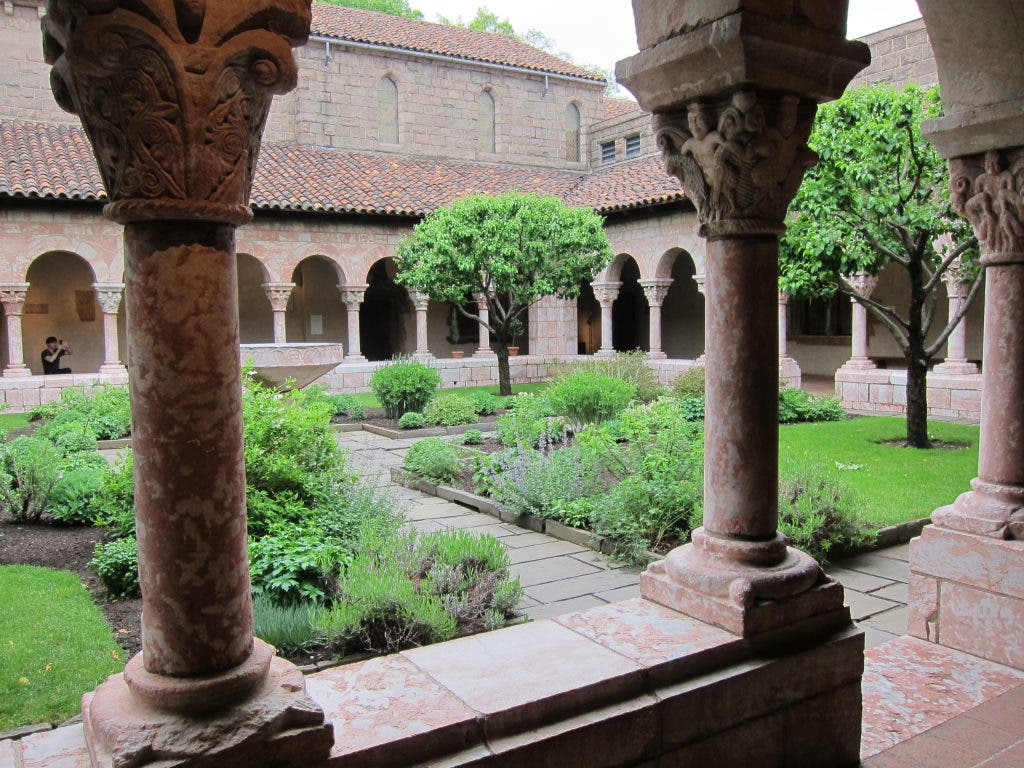
Inside are several European Cloisters and a series of “garths,” which are yards enclosed within arcades, surrounded by covered passageways. These garths, or open-air courtyards, were usually on the south side of the church, providing private sunny spots for nuns or monks.
A typical medieval monastery garth or garden is symmetrical, with crossed paths and often a fountain or statuary at the center. The garden was divided into four quadrants, with a grassy square (designed by scientist and philosopher Albert Camus) and had a crabapple or quince in each.
In the winter, the arcades were sealed with glass, creating conservatories, which were filled with potted bulbs and plants, such as acanthus, oranges, jasmine, rosemary and bay.
The rooms surrounding the arcades are cavernous and cool, made of great stone slabs of granite. You can almost feel the presence of industrious monks gliding by, long robes brushing the stone floors.
This extension of the Met is filled with more than 3,000 works of art from medieval Europe, dating from about the 9th to 16th centuries. Delicate pages from manuscripts, painstakingly hand-colored illumination by talented monks, a dark tomb, paintings, and hand-carved or sculpted statuary line stone walls.
There are enormous tapestries depicting pastoral scenes whose images symbolize the hunt. There are lion-like creatures with sharp teeth and claws and are tamed and live in harmony with man and nature. The “Unicorn In Captivity” is part of seven tapestries in which the “beloved tamed” is tied to a tree surrounded by a fence. He could clearly escape if he wanted to, but appears content surrounded by a lush garden in which a very full pomegranate is close enough to drip on his side. Wild orchids, thistle and a mischievous frog echo a theme of marriage and procreation. King Arthur appears in yet another tapestry, which was created not only as decoration but hung for warmth, reducing drafts is castle homes.
There are three recreations of historic gardens within the Cloisters: all meant to depict the idealized version of the beautiful and practical garths of the time period. Poets and artists in the Middle Ages often included these gardens as metaphors for life and wrote about Paradise and the Garden of Love.
And although records of gardens dating to that time are rare, there survived meticulous drawings and plans for the 9th-Century Monastery at St. Gaul in France. Archaeologists today continue to discover more evidence of specific plants and pots used in medicinal and kitchen gardens.
The Cuxa Cloister Garth Garden is a formal garden with stone pathways and framed on four sides by an arcade that leads to various rooms for reflection. There are manicured shrubs, perennials and potted topiary made from Rosemary and Boxwood.
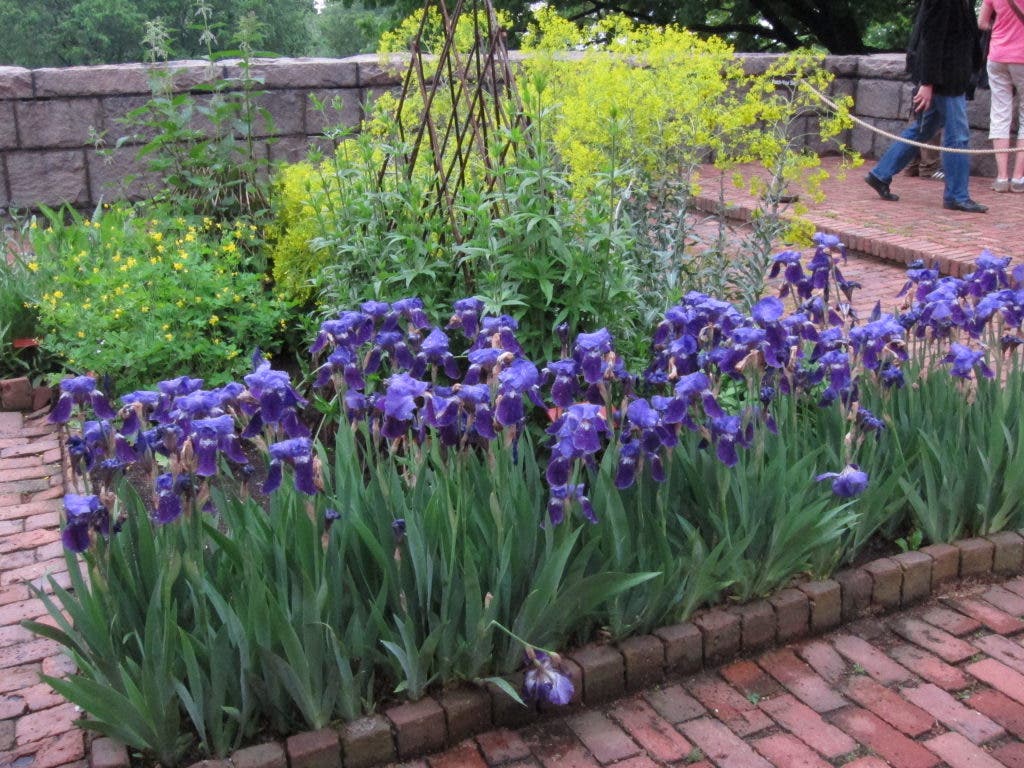
The Trie Cloister Garden is less formal and filled with plants native to “meadows, woodlands and stream banks of Europe.” Meant to create a sense of the wild, this garden is representative of the flowers and plants of the tapestries. Mostly spring-blooming plants, such as hellebores, periwinkles, snowdrops, narcissus, violets, wild pansies, daisies, then bluebells, columbine, dame’s rocket and iris. Next comes foxglove, clary, meadowsweet and ox-eye daisies that bloom from late spring into early summer.
The Garden Café surrounds this delightful garth, where diners may enjoy delicious sandwiches, pastries, and hot and cold drinks as they watch small birds frolicking in the fountain at the garden’s center. In the fall, acanthus, royal fern and flag are a backdrop for the fading blooms of summer.
The Bonnefont Herb Garden, overlooking the Hudson, contains four raised areas that the monks would have tended for practical uses: both cooking and medicinal. Most of the known plants in a medieval garden come from the 9th-century edict of the emperor Charlemagne, who named 89 species to be grown on his estates. These records are supplemented by the herbs named by monks and as a result of archaeological digs.
This garden represents some of the 400 known species of plants grown in the Middle Ages and are surrounded by wattle fences that were also common. Each of the four beds is grouped according to its medieval use, many overlapping between medicinal, culinary, art, even magic. Many of the herbs and plants were considered to have medicinal and symbolic uses.
Four quince trees anchor the beds, which are surrounded by walls with espaliered fruit tree, figs, even an impressive display of vining hops. Pots of lemons and limes and other tender plants are perched along the walkways, which also have benches for artists or visitors who wish to reflect on the spiritual presence of an ancient world.
Monks were tidy, hard-working and industrious, and evidence of examples of their many hours of meditative reflection that often produced inventive uses for small spaces serve as inspiration for our own gardens.
The Cloisters is a lovely place for a Sunday afternoon, a place to take a tour or participate in periodical hands-on activities for families and those who wish to learn about topics such as women in the medieval garden.
Concerts are performed in the three storied halls, whose acoustics magnify the sounds of period instruments. The well-stocked gift shop has many garden-inspired items as well as unique pieces of jewelry, educational toys for kids and many, many lovely books.
Easy to get to (Route 208 to Route 4, over the George Washington Bridge, north on the Henry Hudson and less than two miles to the exit for the Cloisters and Fort Tyron Park), the Cloisters is also home to an annual Medieval Faire in the spring.
There is plenty of parking and room for picnics as well as leisurely strolls along the Hudson River. Open Tuesdays through Sundays from 9 a.m. to 5:15 p.m., the admission is modest; however as with the Met, one can enter with any donated amount. It is not uncommon to make a $2 donation, as the museum is funded by wealthy patrons to allow accessibility to all.
The Cloisters is a place to think and dream and imagine the artists of the Hudson River School painting the golden light of the landscape along the river, capturing flora and fauna on canvases that today can be seen in the Met.
Take a break from the chores of your garden and wander around at the Cloisters’ remarkable recreation of the lives of mysterious monks--the gardens alone are worth the trip.
For information, call 212-923-3700 or find it online at www.metmuseum.org/cloisters .