Arts & Entertainment
Get a Head Start Now on the Spring Garden
Bring in the houseplants and take some cuttings before the first frost.


The Frugal Gardener likes to make the most of what he has in the garden and thinks twice about automatically tossing spent annuals into the compost. Likewise, he or she eyes overgrown houseplants as potential candidates for procreation in the attempt to utilize favorite plants.
Oh sure, you can drag in pots of this and that, make room for containers on sunny windowsills or the corner of your dining room table. Some plants like geraniums will bloom faithfully on and off during the winter, cheering up a snowy day with their fantastically colored petals. But not everyone has the time, inclination or room for cumbersome pots and thirsty plants. Starting smaller, newer plants that will grow to be a good size by winter’s end couldn’t be simpler or cheaper!
Seed saving is another way to save money in gardening, especially from plants with shorter germination times like marigolds and zinnias. But salvias, coleus, begonias, lantanas, verbenas and many others are a snap to root. By following a few simple directions, you will have a plethora of plants to re-pot just in time for spring.
Find out what's happening in New Milfordfor free with the latest updates from Patch.
Gather Your Tools
You will need:
Find out what's happening in New Milfordfor free with the latest updates from Patch.
Sharp garden snips or a pair of multi-duty scissors or shears
Spray bottle filled with a solution of water and 10% bleach
Small bottle of rooting hormone (a powder available at most local nurseries)
Enough small pots to use for up to four cuttings in each. (To save room, you may also start cuttings in shallow aluminum pie plates or catering trays.)
It will be helpful to also have on hand the lid of a small jar in which to pour small amounts of rooting powder.
Spray tools and pots with the bleach mix, rinse thoroughly and allow to dry. This procedure helps to eliminate piggy-backing pests and diseases which may contaminate the new plants you are striving to grow.
Select Plants Carefully
Next, examine plants in the garden (or from containers) that you wish to grow. Choose candidates from the largest and healthiest plants, checking leaves and stems closely for insects. Stay away from those with discolored leaves-yellow may signal rotting whereas browning or wilting may be signs of disease.
Prepare the Cuttings
Take 2-4 inch cuttings that include at least one node towards the bottom of the stem and several leaves at the top. Remove the leaves from the nodes while cutting the leaves on top in half with a pair of scissors. Nodes are necessary for producing roots while the leaves at the top are needed for photosynthesis. Too many leaves at the top will divert energy needed for growing strong roots.
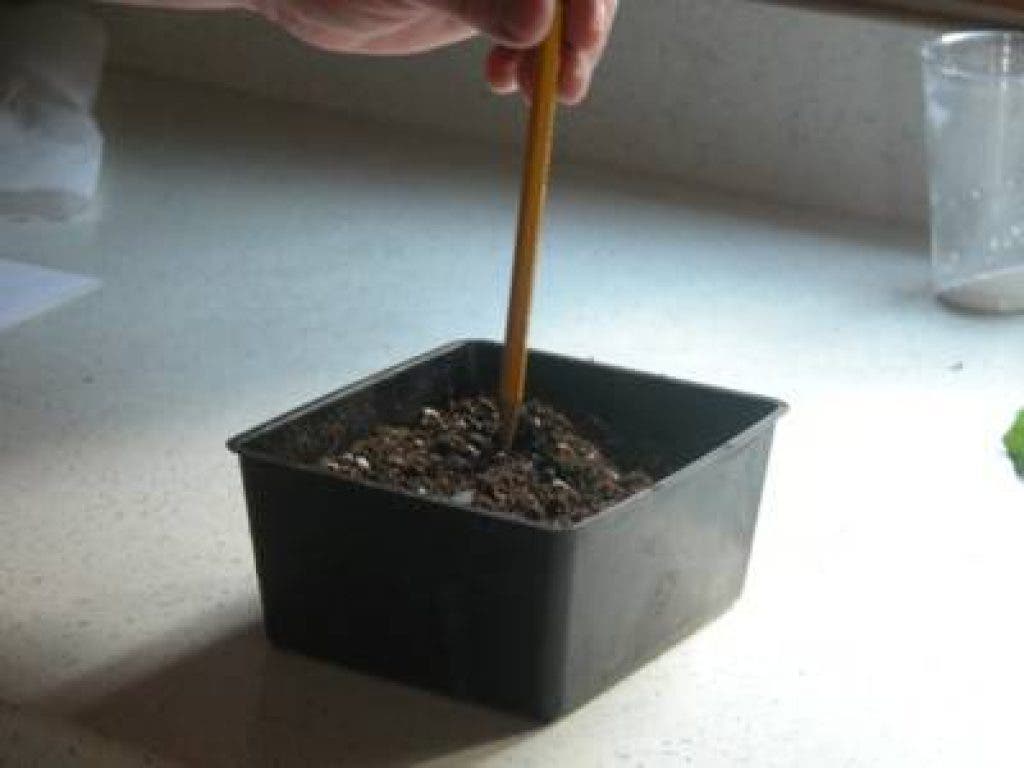
Fill the pots or trays with potting soil, making small holes in the dirt with a pencil or chopstick. (Making holes in advance of stem placement will prevent the powder from being scraped off during planting.) Dip the bottom of the stems into the rooting powder and place one in each hole, pressing the soil gently but firmly.
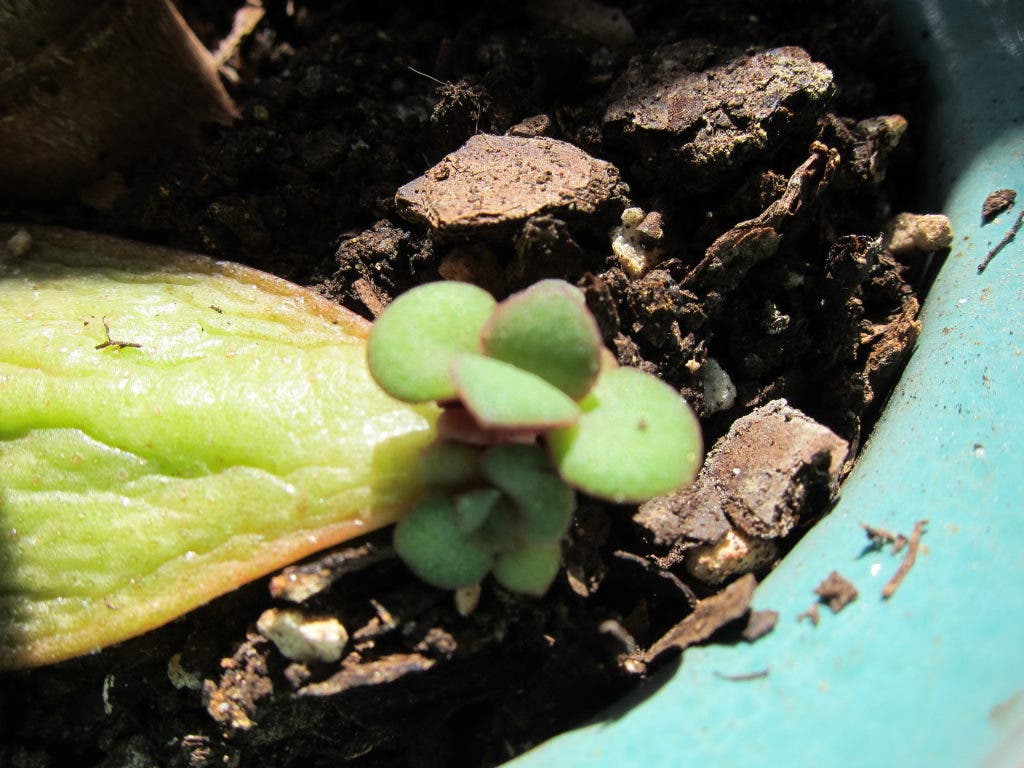
Houseplants such as African violets can be rooted in this same manner, by using whole leaves and inserting their hormone powder dipped stems. Jade plants and other succulents are rooted by taking whole leaves or stems with nodes and leaves and laying them down directly on pre-moistened soil, pressing firmly into the dirt to insure good contact.
Snake plant can be rooted by cutting one of the long leaves into 2-inch pieces, keeping track of tops and bottoms. Dip the bottom of each piece into the rooting powder and press powder side down into soil.
Geraniums are another easy to root plant. Look on the "mother plant" for tiny baby plants-preferably those with at least three small leaves. Pinch the babies carefully from nodes, taking care not to disturb fragile stems. Dip the bottom into rooting powder, placing each into individual pots for each future plant. Firm the surrounding soil gently.
Rooting Plants in Soil or Water
Plants can be rooted in water, however, the resulting roots may be weaker-that is longer, thinner and more easily snapped when being transplanted to soil. (Thin and spindly roots absorb less water and extract fewer nutrients in the soil than chubbier ones.) If you would like to try both ways, use green glass to root plants in water as it enhances photosynthesis.
General Care
Not all cuttings are created equal-some may not root so make sure to start a few extras. Keep cuttings moist during the rooting process, which may take a few weeks by spritzing with water and do not fertilize at this time. Transplant the cuttings to slightly larger pots when they appear to “take”. You will notice that cuttings seem to stand up a little taller in their pots and give slight resistance when given a gentle tug.
Make sure to bring in all houseplants and cuttings once night temperatures dip into the 40s.