Politics & Government
Alcoholic Beverages Absent From Agenda, But Not From Public Scrutiny
Council members defended their decision to remove the Alcoholic Beverages Ordinance from the agenda at the April 25 council meeting.
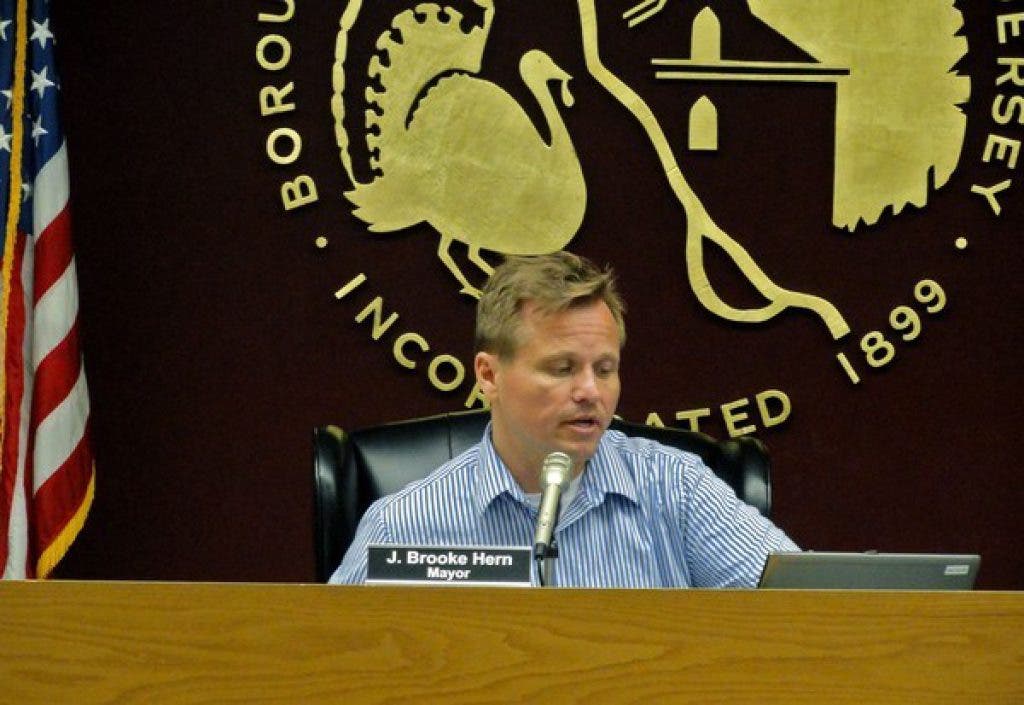
Though the much-discussed Alcoholic Beverages was not on Monday’s agenda, the topic managed to spark a spirited discussion among members of the board.
Resident Mary Donaleck addressed the Council during the public comment portion of the evening,
Donaleck read from an email she intended to send to the Council Tuesday, stating her disappointment in the Council members voting to remove the Alcohol Ordinance from the agenda at the last meeting. Donaleck went on to say that she expects her government officials to be open to discussion and debate.
Find out what's happening in New Providence-Berkeley Heightsfor free with the latest updates from Patch.
“There is no place for end-around maneuvers,” she said. “That is unprofessional, it does not demonstrate good behavior, and it sets a poor example for our children.”
She believed that not listening to the presentations of Deputy Police Chief Scott Torre and New Providence Alliance to Prevent Alcohol and Drug Abuse Chair Tracy Beckerman showcased a close-mindedness that stunts healthy discussion.
Find out what's happening in New Providence-Berkeley Heightsfor free with the latest updates from Patch.
“It is not just about having your own opinion,” she said. “It’s about being receptive to the ideas of others so that your vote is an informed one after having conducted the appropriate due diligence.”
Donaleck also stated that she was in favor of the ordinance to ensure the safety of New Providence residents, and to enforce the legal drinking age.
Borough Council President Michael Gennaro thanked Donaleck for her input, but thought that her comments were based on incorrect information.
“My responses are meant with no disrespect, but I think you’ve been somewhat misinformed about what has transpired relative to this ordinance and it’s history. I’m not sure if you had been fully informed that you would be able to make such a statement as ‘this council shut down debate,’ or this council did not consider alternate opinions.”
Gennaro detailed that the ordinance has been thoroughly discussed on at least three separate occasions over the past seven years. He recounted two presentations given by the police department in 2004 and 2009, stressing that the Council gave careful consideration to all of the information given. The research that went into the decision included reaching out to other towns, organizations, and county prosecutors.
Gennaro stated that the ordinance was placed back on the agenda at the last meeting unbeknownst to them, and did not see an adequate reason to discuss it further.
“What we’re talking about here is very fundamental rights of homeowners,” he said. “Fundamental rights that are defined both in the state constitution and the federal constitution. Fundamental rights that govern very carefully when the state in the form of a police department can enter people’s homes, and look and see what’s going on in those homes.”
Gennaro added that the borough’s laws on underage drinking, particularly those that make it illegal for homeowners to provide alcohol for people under 21, was more sufficient protection than the ordinance would provide.
Mayor J. Brooke Hern stated that he returned the ordinance to the agenda because he found there was something fundamental missing from the discussion.
“There’s an idea here that this ordinance and therefore the state law that authorizes us to pass it somehow violates the constitutions of the United States and the state of New Jersey,” he said. “The law was enacted by the state legislature… I know of no constitutional challenge, successful or otherwise, to that law.”
Hern also said that concerns of police abuse could have been addressed with a sunset provision—if worst case scenarios came to fruition, the council could take no action whatsoever and allow the ordinance to expire.
Councilman Alan Lesnewich, who was not a member of the council when the ordinance was introduced, said that he heard nothing supporting the idea that the police were unable to complete their jobs because of the ordinance.
“If there were facts and statistical evidence that was going to be put before us, I assumed it would have happened on March 11,” Lesnewich said. "I didn’t hear anything. I saw no reason to change an ordinance that permitted the police from doing what they needed to do for the benefit of the underage citizens in town. They can go into the house, they can do what they have to do. There is absolutely nothing they cannot do under the existing ordinance in terms of entering a house to take care of a kid who’s had too much to drink.”
Councilman James Cucco voted for the ordinance, but voted it off the agenda two weeks ago.
“We were not aware that the Alliance and the Deputy Chief had been invited to present new information,” he said. “We have no additional information, why do we want to rehash something that’s already been voted on?”