Politics & Government
Cape-Atlantic Businesses Get Clean Energy Funding
Fifteen awardees in Cape May and Atlantic counties received USDA funding to implement clean energy projects.


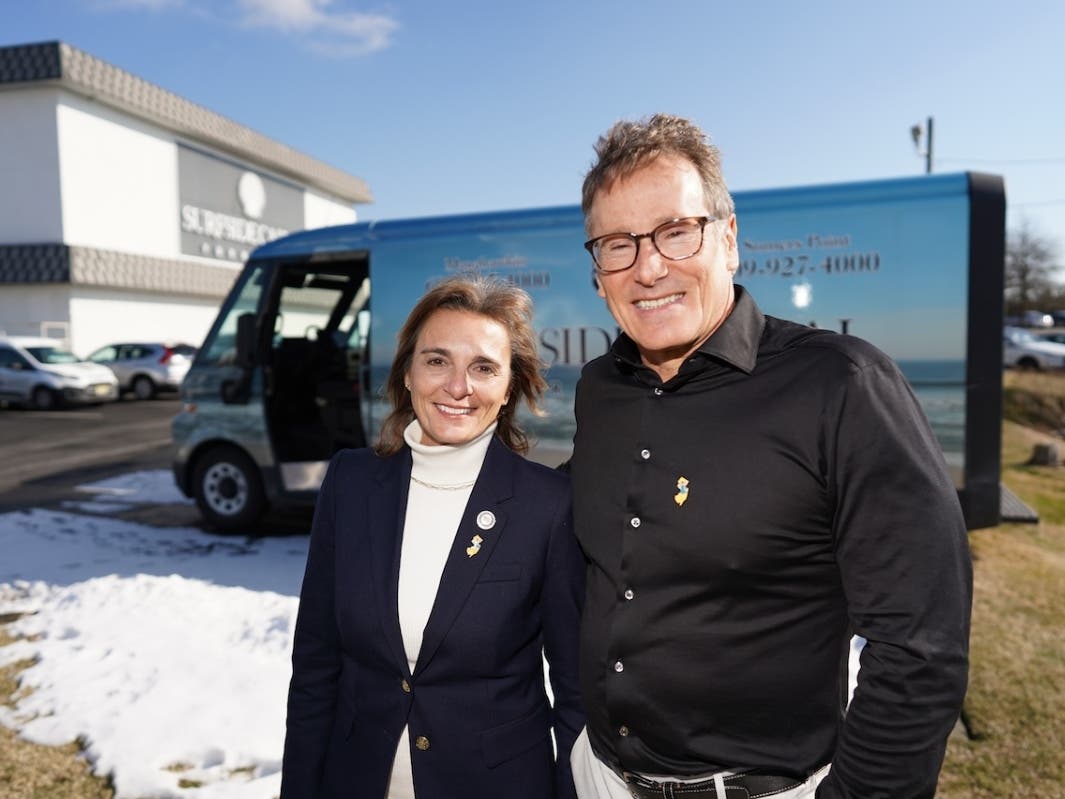
SOMERS POINT, NJ — Fifteen businesses in Cape May and Atlantic counties received funding for clean energy projects through the Inflation Reduction Act and Rural Energy for America Program (REAP), the U.S. Department of Agriculture (USDA) Rural Development New Jersey announced.
The announcement took place at Surfside Casual Furniture/7Mile Design in Somers Point, one of fifty New Jersey businesses and farms to receive REAP grant funding for clean energy projects.
The projects, some of which are already underway, create jobs for New Jersey small businesses, farmers, and agricultural producers in 14 counties across the state, reduce energy costs, and improve bottom lines.
Find out what's happening in Ocean Cityfor free with the latest updates from Patch.
“New Jersey typically receives around $500,000 annually for the Rural Energy for America Program, which can support 3 or 4 projects a year. However, because of President Biden’s Inflation Reduction Act, we received an influx of funds into that program and as result, provided 50 grants totaling over $16.2 million,” said Jane Asselta, New Jersey State Director of USDA Rural Development.
“We’re here at Surfside Casual Furniture/7Mile Design to highlight their project, which went beyond the standard solar panel installation to include battery storage and vehicle chargers – further insulating the business from the rise of gas prices,” said Asselta. “I encourage future applicants to consider similar project scope.”
Find out what's happening in Ocean Cityfor free with the latest updates from Patch.
Surfside Casual Furniture/7Mile Design, the largest full-service custom furniture design and home furnishing store in the Cape-Atlantic area, received approximately $790,000 to implement a comprehensive project that includes the installation of solar panels, battery storage, and electric vehicle chargers, the USDA said. This project has allowed Surfside Casual Furniture to convert to an electric vehicle fleet while increasing their bottom line and reducing their projected energy consumption by 91 percent, according to the USDA.
“At Surfside Casual Furniture/7Mile Design, we take pride in being a third-generation family business, deeply rooted in our community since 1981. Demonstrating our commitment to sustainability, we’ve harnessed the power of renewable energy by installing an off-grid solar and battery system to energize our warehouse. Additionally, we’ve introduced a new fleet of solar-powered electric delivery vans. Despite challenges from utility grid limitations, our commitment has driven us to develop clean energy solutions for generations to come,” said Robert Himmelstein, Surfside Casual Furniture/7Mile Design President.
According to the project consultant, Josh Lewin of Helios Solar Energy, the project utilizes a 250,000 kilowatt-hour solar panel system on the roof of the distribution warehouse to completely bypass connection to the electrical grid and create a self-sustaining system. In total, the project is estimated to save Surfside Casual Furniture/7Mile Design $55,000 per year.
Surfside Casual Furniture/7Mile Design utilizes two types of vehicles as part of their fleet. According to Himmelstein, these vehicles are rare: one of the vehicles is one of 191 sold in the United States last year. “That’s how cutting edge we are—to actually produce the electricity and use battery storage to charge these vehicles,” he added.
Surfside Casual Furniture/7Mile Design is one of 15 awardees in Atlantic and Cape May County who have received REAP funding from the Inflation Reduction Act. In total, Rural Development’s investment totals over $3.3 million for clean energy projects.
This includes:
- In Cape May Court House, Burke Chevrolet, Buick, Cadillac, GMC, Inc. used a $182,320 grant to install a roof-mounted solar array that will save them over $25,000 a year in energy costs and generate over 240,000 kilowatt hours of electricity per year.
- In Hammonton, J Berenato Farms, a family-owned farm that has been in operation since the 1930 and produces a variety of fresh, seasonal produce, used a $165,880 grant to purchase and install a 114.4 kilowatt solar array. This project is expected to reduce the farm’s energy usage by 105% per year.
- In Avalon, Windrift Avalon, LLC received a grant for $127,160 to install a 115 kilowatt solar array that is expected to lower Windrift’s energy costs by nearly $30,000 a year.
Get more local news delivered straight to your inbox. Sign up for free Patch newsletters and alerts.