Business & Tech
Is 'The Avenue' Still Viable in a Town With 'The Boardwalk'?
Ocean City's shopping district on Asbury Avenue offers an wide array of goods and services but struggles in the shadow of the resort's landmark attraction.


If you want to buy a shower curtain, a custom-made cake, a diamond engagement ring, a surfboard and a handsaw, where could you go? Asbury Avenue in Ocean City.
If you need a sweater for your dog, a get-well card for your mother, flowers for your daughter's dance recital, a bicycle for your son's birthday and an outfit for a newborn baby, you could get it all in an hour on Asbury.
Body need a workout? Car need new tires? Suit need dry cleaning? Grandma need a ride to her doctor's appointment? Nails need manicuring? Hit "the Avenue."
Find out what's happening in Ocean Cityfor free with the latest updates from Patch.
Embroidered sweatshirts, prescription eyeglasses, fancy soaps, homemade chocolates, dolls and toys, second-hand clothes, used books, expertly fitted bras, knickknacks and tchotchkes, upscale ensembles and designer-brand handbags, pottery lessons, jewelry-making classes, fine art, vinyl record albums, beach chairs, barbecue grills, Band-Aids, bathmats, crabcakes, interior design, flat-screen TVs, name-brand refrigerators, amateur theater, financial planning – and, until recently, even religion and bridal gowns -- are all available on Asbury Avenue.
The greatest thing about Asbury Avenue, some merchants say, is its diversity. The worst thing about Asbury Avenue, other merchants say, is its diversity. What helps the avenue just as often hurts the avenue.
Find out what's happening in Ocean Cityfor free with the latest updates from Patch.
Like many traditional downtowns struggling through a difficult economy, Ocean City's is experiencing its difficulties. Unlike others, though, the issues of Ocean City's downtown – parking, hours of operation, building uses and its timeworn appearance – are further complicated by seasonal population swings and by its closest competition, a Boardwalk that naturally attracts attention because of its enviable location next to the ocean.
"Asbury Avenue, as a whole, isn't definitively retail," says Colin Devine, manager of , mentioning one drawback to the shopping district between Sixth and 11th streets where service industry and commercial businesses discourage foot traffic and door-to-door browsing. "It's real eclectic, but I like having the flavors each shop has."
But Debbie Guerriero, who, with her husband, Anthony, owns five clothing stores in the 900 and 1000 blocks of Asbury Avenue, thinks diversity is what makes the Avenue work.
"You need these certain stores that will be destinations for people to come downtown," Guerriero says. "You need a dry cleaner, a gym, a bakery, a jewelry store. Most downtowns have those kinds of stores."
Asbury Avenue offers a staggering variety of goods and services, along with some confounding inconsistencies that discourage foot traffic: Single- and multi-family residential properties in the 600 and 1000 blocks, the anchoring of the shopping district with at the beginning of the 600 block, a vacant lot in the 600 block, and the vast emptiness of two bank parking lots at the start of the 1000 block. Arguably, a real estate agency, a self-storage facility, a home entertainment business, an awning business, a financial advisor, two window-treatment businesses, an interior designer, a home health care provider, and two City Hall buildings also thwart browsers in their quest to roam door-to-door along the Avenue.
"Studies show when you come to an empty space like that (bank parking lots), people stop and turn around," says Marcia Shallcross, for seven years executive director of Main Street Ocean City, which represents the businesses between Sixth and 11th streets on Asbury Avenue, along with the businesses from the foot of the Ninth Street Bridge to Asbury. "That's why we do events in the bank parking lot: to draw people to that area."
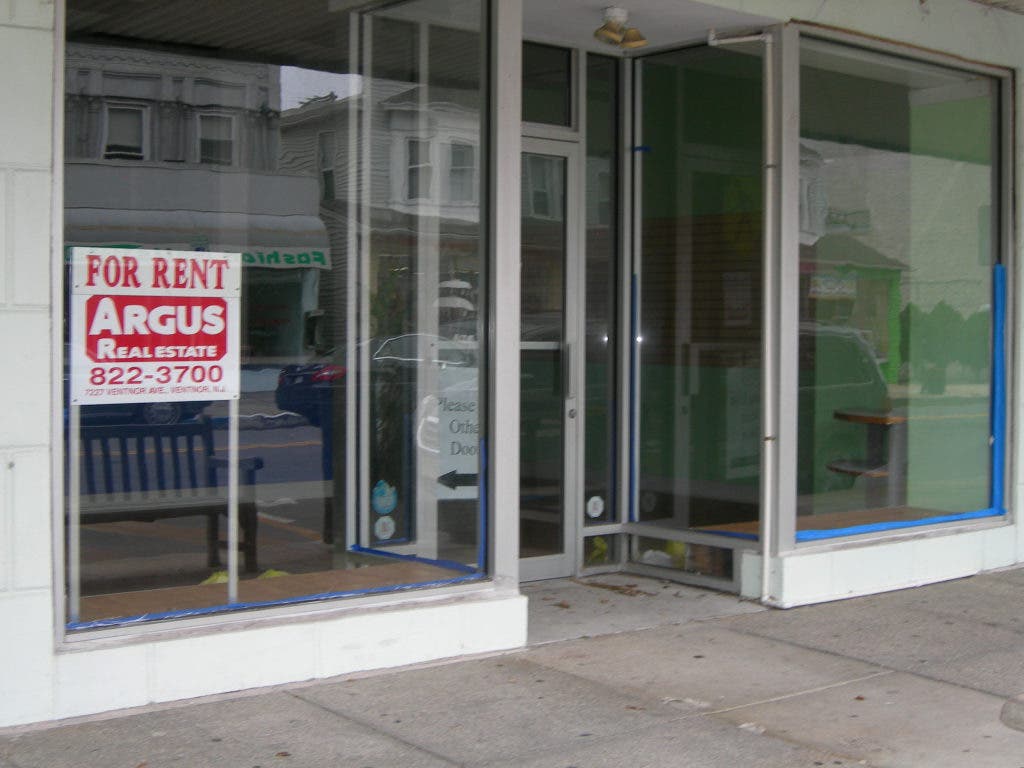
Still, -- the bank parking lot to which Shallcross refers -- takes up the equivalent of seven lots. It is no wonder that the buildings that recently housed Claudette and Pizza Hut on the east side of the 1000 block are closed and for sale. A casual stroller looking south and eyeballing the bank parking lot, the bank building and the bank rear parking lot could easily conclude there is nothing more worth walking toward. On the west side of the 1000 block, again looking south, after a parking lot and , three stores with sporadic business hours and one shuttered storefront round out the offerings.
The addition of mixed-use buildings in the 2000s -- commercial on the first floor, residences on the upper floors -- failed to achieve its intended purpose, that of delivering an available and immediate population of consumers to the Avenue. Instead, the outcome was stores that were crammed into barely 800 square feet, an area so small that the use of those commercial spaces was automatically limited in scope. The wishes of the residents living above, since such mixed-use buildings are classified as condos and are subject to condominium association, not individual, rule, also restricted the use of the commercial spaces.
As an example, at 1046 Asbury Ave. is set back farther from the curb than other buildings on the block, which further reduces its already restricted interior space. Such a floor plan is less conducive to a food establishment offering table service than one operating by appointment only, as The Cake Studio does. Ta-Dah!, celebrating its 20th anniversary this year, divided its merchandise into five categories -- accessories, juniors, dressy, contemporary and cruisewear -- because there were no large enough spaces available on Asbury to allow everything to be displayed under one roof.
"It's hard to find a 3,000-square-foot store," Anthony Guerriero says. "That's why we have five."
Those five are all located on the first floor of mixed-use buildings and all have opened in the last eight years. The original location at 1033 Asbury, which opened in 1991, was knocked down in the building boom of the 2000s and moved to 1026 Asbury in 2003.
While some lament that the permitted uses along the avenue are too broad in scope, most agree that the bigger problems the shopping district faces include:
PARKING
There is no question there is a parking problem, though some merchants, like Julie Gunn of , think it's a problem worth embracing. "Having a parking problem is a good thing," she says. "It means we have customers."
Others feel differently. In their experience, the limited number of spaces forces vehicular traffic off the Avenue and elsewhere in summer. The fact that meters are enforced only to 6 p.m. encourages visitors to take advantage of the free parking along Asbury and walk to the Boardwalk in the evening, and free metered parking on Sunday mornings, designed to accommodate churchgoers, has a negative impact on businesses.
Also, too many employees short-sightedly park directly in front of or adjacent to their place of work, running out to the street every two hours to feed the meters, a practice that effectively takes legitimate parking spots out of circulation. This behavior is not limited to the summertime; it continues off-season, too.
Ease of parking does make difference. "My customers bring in bags and boxes of books," says Woody Robinson of , "and finding parking around 11th Street is easier for them. That's one of the benefits to being on the periphery of the downtown."
Robinson knows of what he speaks: A second Bookateria that he opened in the early-1980s in the 800 block of Asbury -- supposedly "the heart" of the shopping district -- closed after three years. His original location at 1052 Asbury celebrated its 35th anniversary this year.
Most merchants do not embrace "the periphery" as warmly as Robinson, though. "Our goal was to be between Seventh and Ninth streets," says Holly Buck, an owner of , which marked its one-year anniversary at 854 Asbury earlier this month. The downtown location gives Buck and her partners a year-round presence in town, something their , completing its 35th year on the Boardwalk this year, cannot.
"The downtown is supposed to be Sixth to 11th," says Devine of 7th Street Surf Shop, voicing an unspoken secret about the five-block stretch, "but it's really Seventh to 10th."
HOURS
Most merchants operate their stores on a schedule that resembles that of the corporate world: 9 to 5. A few -- Gabrielle & Co., 7th Street Surf Shop and Ta-Dah! -- are notable exceptions to the majority of shops that close between 4 and 6 p.m., even in the summer. As Shallcross of Main Street says, "If you are open 9 to 5, you are marketing to the unemployed."
"Seventy percent of business is done on weekends and after 5," says Gunn, who 14 years ago decided to open Gabrielle & Co. at 810 Asbury because she, as an Ocean City customer, could not find a downtown store open in the evenings. At the end of the month, she is relocating to 715 Asbury, moving into the space recently vacated by Calico 'N Cotton. "Twenty percent of the people spend 80 percent of the money. You have to be here for those people."
Some businesses, especially in the 1000 block, do not even have regularly scheduled hours. In addition to The Cake Studio, which is open by appointment only, keeps very inconsistent hours and , at the end of the block at 1054 Asbury Ave., has a sign in its window that refers passers-by to a website.
"You have to be consistent," says Debbie Guerriero of Ta-Dah! "You can't be open today and not tomorrow. You can't close at 3 o'clock. Having three stores open when someone comes to town to shop means you might get their business that day, but they won't come back. They won't come back for three stores."
APPEARANCE
As Devine at 7th Street Surf Shop puts it, "Asbury Avenue is very bland to look at."
"One of the things sorely not done is the enhancement of the downtown," says Skip Tolomeo, who in March will mark 30 years as owner of , a children's clothing boutique at 710 Asbury. In addition to being a business owner, Tolomeo is on the executive board of the Chamber of Commerce, is president of the Retail Merchants Association, and is serving his first two-year term in an appointed position on the Tourism Commission. In other words, he meets with many people from many walks of Ocean City life and as such is privy to their frustrations with and their aspirations for the Avenue.
"In seashore communities like Stone Harbor and Avalon, taxpayer money is put into their downtowns. Even Sea Isle has an enhanced appearance downtown," Tolomeo says. "We have an avenue that looks tired. It needs new sidewalks, benches, plantings, street lights and Christmas lights. We need an organized plan that deals with the uses of downtown."
THE CITY'S STEPCHILD
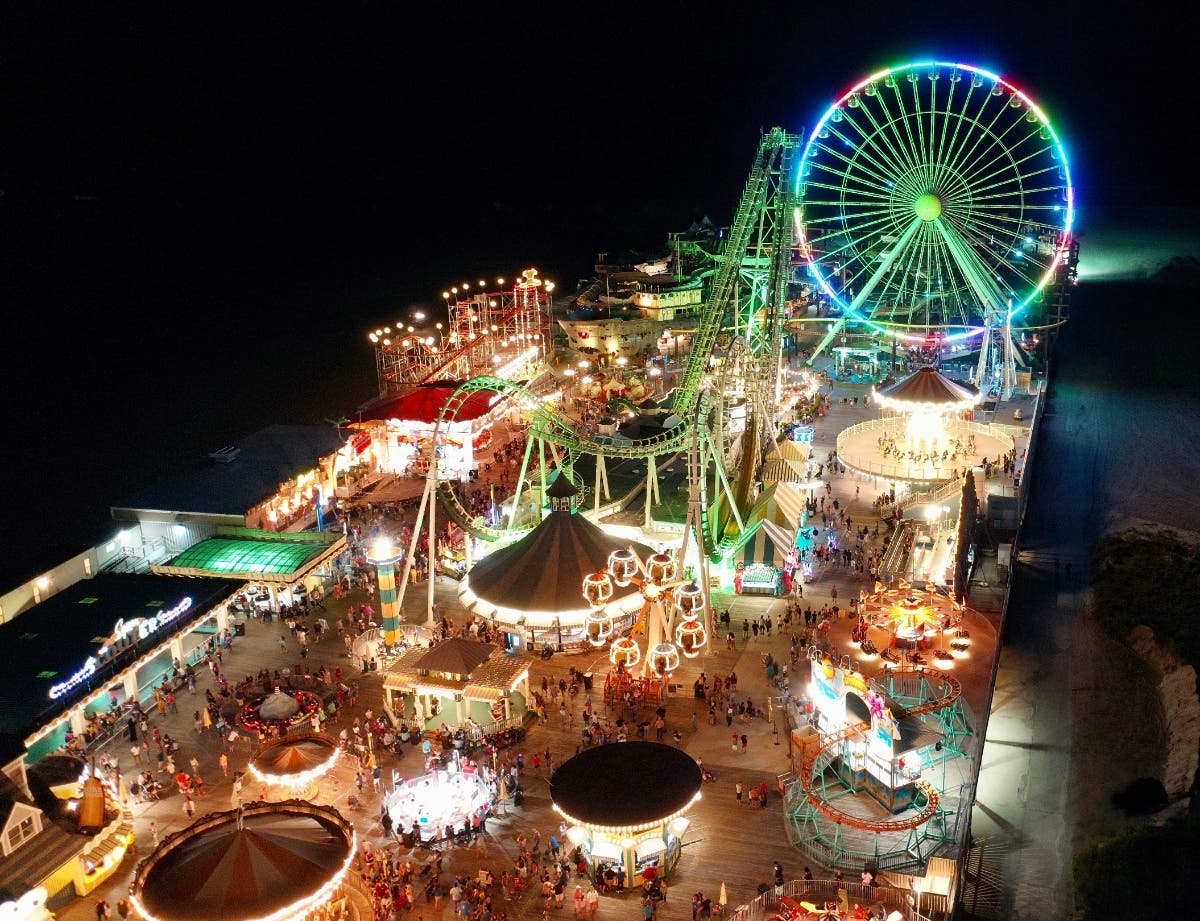
Asbury Avenue lives in the very long shadow of the Boardwalk, where businesses along the 2.5-mile-long wooden way are concentrated between Sixth and 14th streets. There are few things all the downtown merchants agree upon, but this is one: Asbury Avenue constantly plays second fiddle to the famed attraction located five blocks to the east.
"It's frustrating we're open year-round and the Boardwalk is not, but the Boardwalk gets all the attention," says Steve Pittinger of Gabrielle & Co.
"The masses don't realize Asbury is here," says Devine of 7th Street Surf Shop. "It doesn't get enough recognition. Asbury has to be advertised more. It needs more recognition to become more viable."
"Every parade starts here and ends on the Boardwalk, and then they dissipate up there," said a 25-year employee of the , which recently closed on the southeast corner of Seventh and Asbury after 40 years on the avenue. "Plus Ocean City people don't support the downtown."
"It's not that year-round Ocean City residents aren't shopping downtown," Pittinger says. "It's just that there are fewer of them."
That's true. In the last decade, sky-rocketing property values induced 25 percent of the island's year-round population to sell and leave.
Regardless of their feeling that the Boardwalk enjoys favored-son status, Asbury Avenue merchants must acknowledge an inescapable truth: "The Boardwalk," Tolomeo of Sea Oats says succinctly, "is an essential element to Ocean City memories."
COMPETITION
"As an advocate of the downtown, I think we should be open year-round," Tolomeo says. "We have a uniqueness here that isn't found up and down the East Coast. But economically, the most prudent thing to do is close at Thanksgiving and open at Easter.
"Christmas isn't as strong as it used to be. Second homeowners don't come down and shop as frequently as they used to. Thirty years ago, there was no mall, no Sam's Club, no BJ's, no Costco. The quaintness of the downtown is disintegrating. We're all dinosaurs -- specialty shops are a dying breed."
The Kitchen Connection was once a specialty shop. But it lost its niche when so many other stores started stocking kitchenware and appliances, and bid a bittersweet farewell to the avenue last month. "Everybody wants to be a kitchen store," said a disillusioned and disappointed employee in the store's final days at the end of September. "TJ Maxx, Marshall's, Kohl's, QVC, the Internet, Walmart, not to mention everyone else on the street."
WEATHERING THE WINTER
Many visitors to Ocean City think there is one season to the shore: Summer. If only it were summer all year long, some merchants say, they would still be in business.
"My business is based on volume," says Dave Brace, who closed Downtown Dollar Plus at 741 Asbury in September when his 15-month lease expired. "I need volume and with the winter population decreasing 25 percent, that's 2,500 people who aren't shopping here."
After 14 years in the 800 block of West Avenue, Brace moved to Asbury in spring 2010, seeking smaller quarters. "The space on West Avenue was a big space," he says. "As the population decreased, it came to a situation where I couldn't handle it anymore. The last three winters were too slow. The volume was not there anymore."
The anemic winter business climate also factored into Pizza Hut's decision to depart the 1000 block of Asbury Avenue in early September. When the store closed, Ed Herron, director of operations, said that five years on the northeast corner of 11th and Asbury proved to him that he could not sustain a year-round business on Ocean City's decimated off-season population.
SUGGESTED SOLUTIONS
"We could be marketing ourselves as an off-season destination," says Gunn of Gabrielle & Co. "We should be marketing to homeschoolers. There are 2 million of them in the U.S."
"We should recruit businesses to town," says her partner, Pittinger. "We should only recruit people who are serious about it, not doing it as a hobby."
"More attention needs to be paid to Asbury Avenue," Devine of 7th Street Surf Shop says. "There could be more action. The city could help out a lot more. Asbury Avenue could be very viable."
As someone who works on both the Boardwalk, where 7th Street Surf Shop is celebrating its 25th year in business, and on the Avenue, where 7th Street Surf Shop expanded to larger quarters in the 700 block almost three years ago and turned its 600 block store into an outlet, Devine sees first-hand the disparity in the way the city's two business strips are treated.
"On the Boardwalk, every pole has a flag," he says. "Why not have every third one a flag about shopping on Asbury? Why not have flags on Asbury?"
Spring and fall have their built-in boosts to business; the "shoulder" seasons have been helped by two annual block parties that draw tens of thousands to Asbury Avenue, in addition to the Halloween, Christmas and Doo-Dah parades, and horse-drawn carriage rides with Santa. Devine sees those city-sponsored events on Asbury as a start, but not a solution.
"Table sales," he says of another idea. "Why not allow shops to do them every week? The two block parties, Merchants in Venice (seafood festival in the street in July): Why not have something like that once a month even? The city is very restrictive with what it allows merchants to do."
BYO: HELP OR HINDRANCE?
In the last year, a movement to allow patrons to bring their own wine or beer to restaurants took hold. Those in favor hoped a BYO policy would do two things: First, retain diners who leave town for dinner in restaurants that allow the consumption of alcohol, and second, attract more and higher-quality restaurants to the island.
"Main Street, as an organization, has not and cannot take a position on BYO because, as a quasi-government organization, we cannot have political involvement," Shallcross says. "But at a meeting before the petition was withdrawn, 95 percent of the merchants were supportive. Obviously, the downtown wants people to stay in Ocean City."
While most merchants have an opinion on the topic, almost all are unwilling to comment publicly on their stance. Even Kevin Scull, vice president of the Ocean City Restaurant Association and the previously outspoken pro-BYO owner of Scully's Asbury Cafe at 955 Asbury Ave., did not return a request for comment for this article.
Currently, instead of being on the November ballot, the BYO issue is out of the news while supporters retrench after voluntarily removing the petition as written due to potential legal ramifications.
ALLURE OF THE AVENUE
A drive down the Avenue shows that contrary to the perception that Asbury has gasped its last breath, there are plenty of people injecting new blood into the downtown.
This year, more than a half-dozen new businesses debuted on the avenue. Kathy Johnson, an award-winning decorator, opened two stores -- one in the 700 block and the other at the start of the 1100 block -- on Asbury in the summer of 2011. She says it took her 10 days in business in July at 709 Asbury to decide to take a second location four blocks south. That one, Kathy's Holidays, opened in August.
In the 900 block, three newcomers joined the business community: Trixie & Ruby, specializing in contemporary clothing; , capitalizing on the national craze for gourmet cupcakes; and , finally rolling open its massive doors at the end of September.
opened at 714 Asbury in mid-August. Repeated phone calls requesting comment from the owner were unreturned; however, an employee said the store aims to fill the void left by the 2009 departure of Thomas Jewelers from the downtown. In the same block, Nonna's Trattoria is poised to take the place of the short-lived and recently vacated La Buona Vita.
Without revealing exact figures, Shallcross of Main Street says the number of businesses that closed on Asbury in 2010 was about equal to the number that opened. At the end of September 2011, the Avenue -- home to 130 storefronts -- had 16 empty spots, one vacant lot, and a handful of businesses with such sporadic hours it is hard to justify labeling them as open. That works out to roughly 12 percent vacancy, 88 percent occupancy. Many malls, including those that have been blamed for siphoning off some of Asbury's downtown business, would love to have that statistic to quote when trying to attract tenants.
Despite some drawbacks to Asbury, Helena Hamilton sees nothing but good about running a business there. She opened , a consignment shop, at 716 Asbury almost four years ago. The economy, such an obstacle to so many businesses, has been good to hers.
"A lot of people in this town shop on the avenue and buy expensive clothes they never wear," Hamilton says. "I'm able sell for $25 what they paid $200 to buy."
A relentlessly upbeat individual, Hamilton views her 20 years of working on the avenue, in one business or another, as all positive. "I enjoy coming to work," she says. "I enjoy being on the avenue. There's no place I'd rather be."
THE SECRET TO SUCCESS
"You have to develop your niche," says Tolomeo of Sea Oats. "You have to become a destination in and of yourself."
"You have to be unique," says Bob Taylor of the , which has anchored the southwest corner of Seventh and Asbury since 1980. "You have to brand yourself."
"The secret is the customer does not leave the $100 bill under your door," says Gunn of Gabrielle & Co. "You have to open the door and smile pretty. The key is consistency, loving your customers and serving them."
"Creativity and adaptability," says Shallcross of Main Street.
Most Asbury Avenue merchants, analyzing the viability of the downtown, say the same thing: The situation is not always ideal, but somehow it works. Change would be nice, improvement nicer, and the city could do more to help. But, ultimately, all the merchants accept that the responsibility to succeed is theirs and theirs alone.
Faced with the choice of operating a store anywhere, Taylor, who has opened and closed Bag Rooms in Stone Harbor and Cape May while continuing to run the flagship Ocean City store, chooses here. He is a believer in the power of the avenue, specifically the mix of stores and the ingenuity of the merchants who own them, to attract people.
"In other towns, you're not getting visitors, you're only getting the people who live there," he says. "Ocean City's downtown is always going to be here. Ocean City is always going to have people here."
"When it comes to tourists and the downtown, it's up to the merchants, the Chamber and Main Street," Tolomeo says. "It's up to us to get people to know there's a downtown."
______
Correction: An earlier version of this story included incorrect figures for occupancy and vacancy rates.