Community Corner
NJDEP, U.S. Army Corps To Discuss Flooding Protection At Stockton University
They will solicit input from the public during a meeting next week.


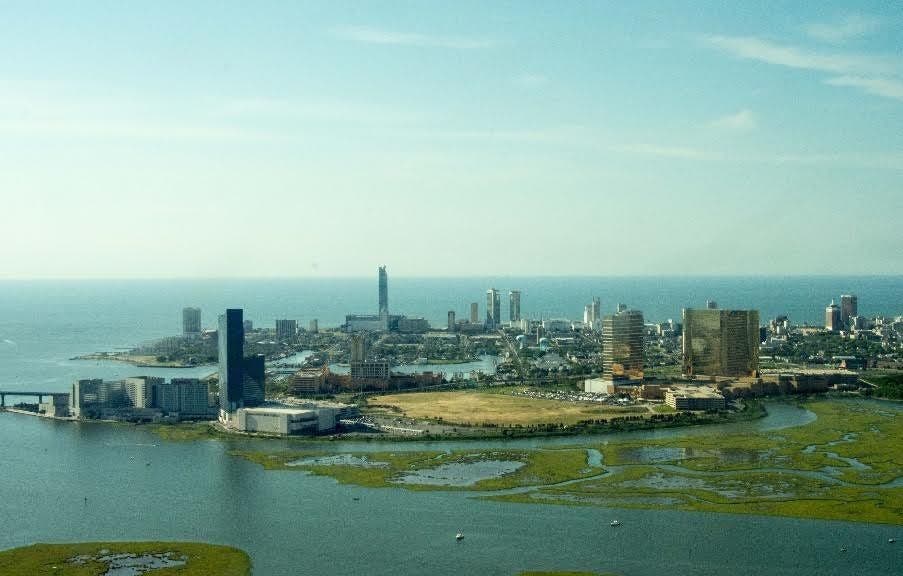
The New Jersey Department of Environmental Protection (NJDEP) and he U.S. Army Corps of Engineers are asking for input from the public for a comprehensive study that will evaluate ways to better protect back bays and other tidal coastal areas from storms and flooding.
They are launching a $3 million, three-year Back Bays Flood Risk Management feasibility study in an effort to assess a wide range of structural and non-structural approaches to mitigate the impacts of storm surge and flooding from estuaries and other coastal water bodies, NJDEP announced this week.
The study was authorized by Congress, and the cost will be shared by NJDEP and the federal government.
Find out what's happening in Ocean Cityfor free with the latest updates from Patch.
They will collect input from the public during a meeting on Thursday, Dec. 1, at Stockton University’s Galloway campus at 101 Vera King Farris Drive, 6 p.m.-8 p.m.
The meeting will take place in the theater, which is on the main level of the Campus Center. Free parking is available directly in front of the Campus Center at lots 2 and 3.
Find out what's happening in Ocean Cityfor free with the latest updates from Patch.
“The U.S. Army Corps of Engineers has been a strong partner in making New Jersey safer, stronger and more resilient,” NJDEP Commissioner Bob Martin said. “This back bay study process is an important component of the Christie Administration’s comprehensive strategy to protect lives, property and infrastructure in our coastal communities, which are so important to the state’s economy and identity.”
At the conclusion of the study, the Army Corps will issue a recommended plan. The plan requires Congressional approval before design and construction can begin. This will happen as funding becomes available.
The study was developed out of the Army Corps’ North Atlantic Coast Comprehensive Study, which was undertaken after Superstorm Sandy slammed the Mid-Atlantic and Northeast in October 2012.
The study area encompasses 950 square miles and nearly 3,400 miles of bays, rivers, creeks, lagoons, coastal lakes and other tidal shorelines in Atlantic, Burlington, Cape May, Ocean and Monmouth counties.
Solutions under consideration include structural solutions such as storm surge barriers, tide gates, levees, floodwalls and drainage improvements.
Ecosystem-based solutions such as marsh restoration, beach and dune restoration, and creation of living shorelines, which are areas planted with native marsh grasses and shellfish to provide natural flood buffers are also under consideration.
“We strongly encourage the public, local officials and all stakeholders to attend this meeting to learn more about this important framework for the future,” NJDEP Assistant Commissioner for Engineering and Construction David Rosenblatt said. “We recognize that protection of back bay and other tidal areas is not going to be a one-size-fits-all proposition, and that, in fact, multiple integrated strategies may be most appropriate in any given community or adjoining communities.”
The DEP has worked closely with the Army Corps in constructing a statewide system of engineered beaches and dunes as well as flood-control projects for coastal communities and inland waterways.
In response to Sandy, the DEP is financing projects that harden water and wastewater infrastructure, while also moving willing homeowners from flood-prone areas, conducting pilot studies of saltmarsh restoration projects, implementing stricter elevation standards for houses built or rebuilt in coastal areas, and developing a major project to protect the Hudson River waterfront.
For more information, visit: http://www.nap.usace.army.mil/Missions/Civil-Works/New-Jersey-Back-Bays-Coastal-Storm-Risk-Management/
For more information on DEP’s Engineering and Construction program, visit: http://www.nj.gov/dep/ec/
The attached image was provided by NJDEP.
Get more local news delivered straight to your inbox. Sign up for free Patch newsletters and alerts.