Politics & Government
For County Mosquito Control, It's A Losing Battle
Program uses fish to combat mosquitoes



Pete Rendine waded into the waters of Bridleway Swamp, a forest pool hiding just behind the in Paramus.
It was June 24. It had been a rainy week, and the water was murky, but he pointed to a cascade of ripples on the surface. The ripples were created by gambusia affinis, also known as mosquito fish.
A few weeks before this visit, Rendine had deposited about 2,000 of the fish into the swamp, setting them loose to consume any mosquito larvae in the water. And judging from the number of ripples, they were thriving.
Find out what's happening in Paramusfor free with the latest updates from Patch.
Rendine is the chief inspector at the , and he's in charge of putting gambusia in tucked-away pools of water where mosquitos can breed.
"Instead of going there every two or three weeks, these fish are devouring," he said.
Find out what's happening in Paramusfor free with the latest updates from Patch.
Many people attending this weekend's fireworks at the Sports Complex aren't aware that there's a swamp so close by, and they certainly aren't aware of the work Mosquito Control does—that's the idea. But Rendine and the 18 other employees at the Mosquito Control Program battle with mosquitoes in all 70 of the county's towns, in a fight that gets harder with every rain.
"Usually after an inch or two of rain, you get a new brood," Rendine said.
The fish help. Rendine gets them from a hatchery in Hackettstown run by the state Division of Fish and Wildlife.
Bob Kent, administrator of the state mosquito control agency, said the fish are a more permanent and environmentally friendly solution to a mosquito problem than pesticides.
"When using insecticides [on a body of water] you might have to check it again half a dozen or 10 times a season," Kent said.
The fish can only be deployed in bodies of water that don't drain, though. In many cases, the county uses an insecticide called Bacillus thuringiensis israelensis.
But BTI is only the least harmful of what are still toxic chemical solutions to the mosquito problem. Their use is tolerated because of the alternative.
Aside from being irritating, mosquito bites can also spread diseases like West Nile Virus, which at its mildest can cause a fever, but is occasionally fatal.
As Rendine will often say, it's a losing battle. Mosquito Control takes dozens of calls each week from residents. The source of the pestilence is usually unattended standing water, in a bucket of water, a bird bath or even something smaller.
"Mosquitoes can breed in a bottle cap of water," Rendine said.
Rendine visits Michael Grotticelli in Mahwah twice a year. Grotticelli, a Jahn Court resident, has a pond in his backyard he says is home to a snapping turtle, as healthy population of gambusia.
On a recent visit, Rendine reminded Grotticelli to replace the water in his bird bath, but mostly just played catch-up with him. The gambusia have been doing their jobs, Grotticelli said.
"Before it was like a swamp out here," Grotticelli said.
***
As Rendine left Bridleway Swamp, he stopped. At the extreme east end of the parking lot near the entrance to the woods, a blue tarp covered a pile of dirt.
Tiny pools of water had formed in the depressions of the tarp.
"This is why you fight a losing battle," Rendine said.
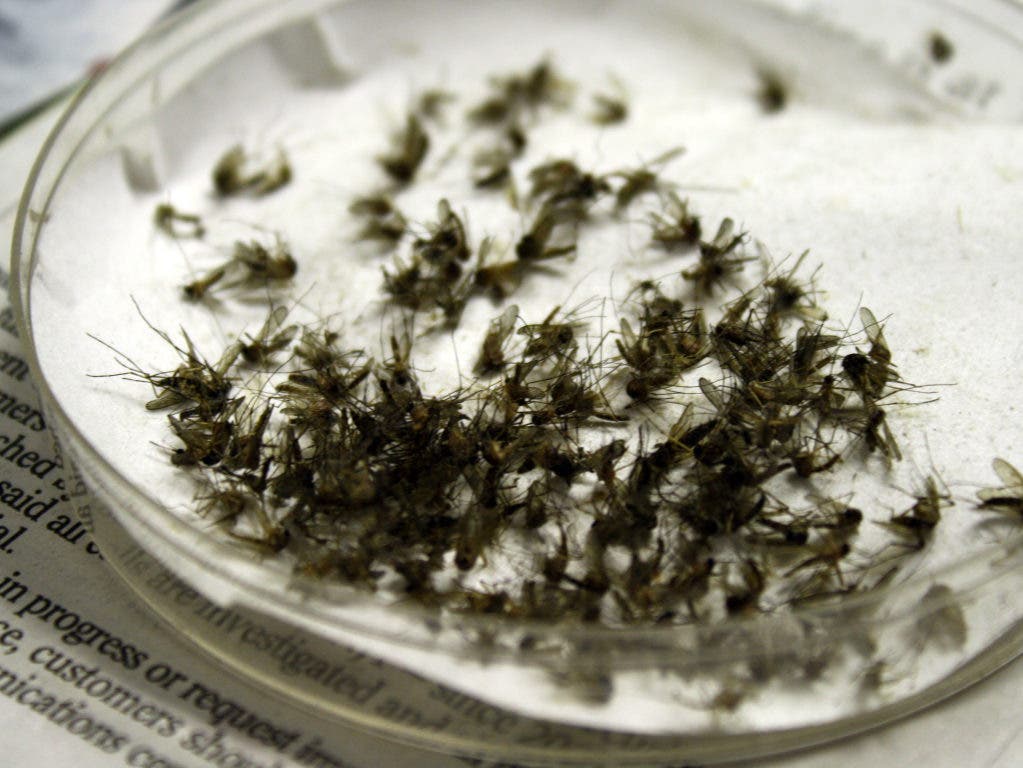
He took out a dipper, a glorified soup ladle that mosquito control workers use to check for larvae, and ran it through the water. Dozens of black dots swarmed in the bowl.
"There was no breeding in a half-acre swamp and we found 500 mosquitoes on a tarp 10 yards away," he said.
Rendine grabbed the tarp by its edge and dumped the water out, leaving the mosquitos to die in the dirt.
Get more local news delivered straight to your inbox. Sign up for free Patch newsletters and alerts.