Schools
BOE Considers Money-Saving Energy Plan
Under proposed energy program, schools could pay for improvements with the money they save


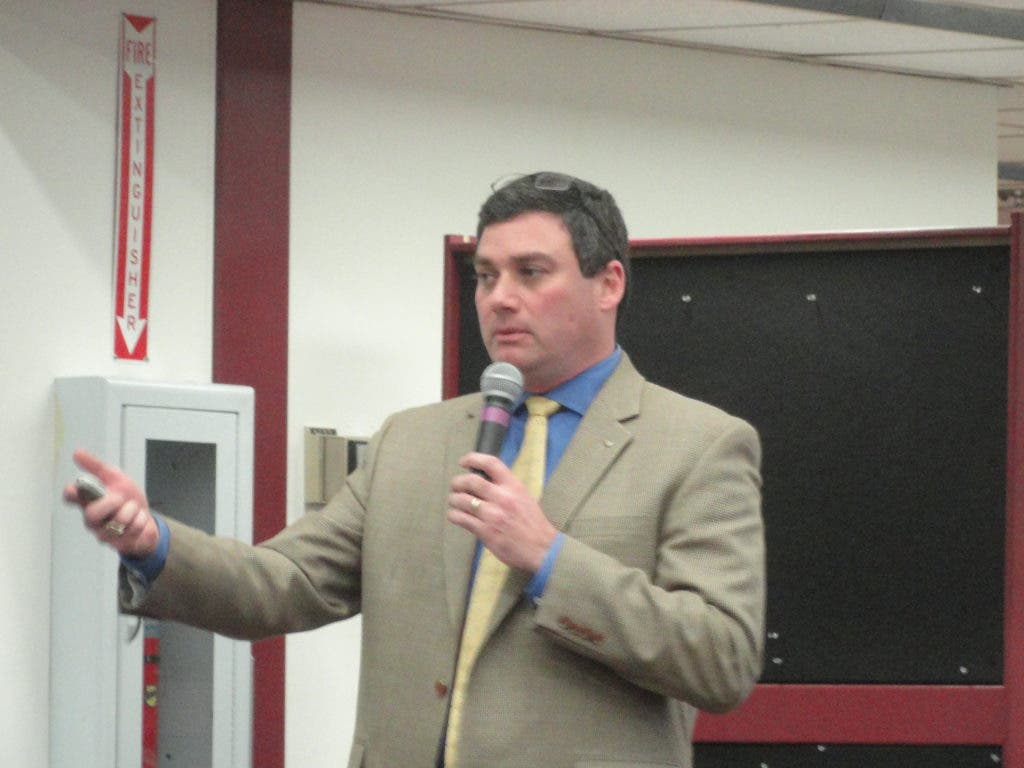
The Parsippany-Troy Hills Board of Education explored a cost-cutting energy plan at its Feb. 8 meeting.
Greg Somjen, of energy firm Parette Somjen, gave a presentation on an energy savings program that he said would allow the district to make capital improvements without having to raise taxes.
Somjen told the board that legislation enacted in 2009 permits government agencies to make energy-related improvements to their facilities and pay for the costs using the value of energy savings that result from the improvements.
Find out what's happening in Parsippanyfor free with the latest updates from Patch.
"If you install new energy-efficient equipment, you pay less on utility bills," Somjen explained. "You would use that savings to pay for new equipment, [which means] no increase in taxes."
Somjen said this is possible through a multi-step plan.
Find out what's happening in Parsippanyfor free with the latest updates from Patch.
First, he said a district would need to undergo an independent energy audit, which is mandated by law, so that any possible energy savings could be identified. Somjen noted that Parsippany has already had its audit.
Next, the district would create a request for proposals to pre-qualify energy service companies.
Those that respond would have their proposals reviewed by the school board.
"The primary job is to create an energy plan [that] will identify projects the district should undertake to save money on operational expense," said Somjen. "The district can discuss which projects are ideal (and their construction value) and projects that aren't."
Ultimately, he said the goal is to find projects that have savings on the operational side to cover their costs.
He added that as part of checks and balances built into the process, an independent professional must be brought on board to verify that the numbers in terms of costs and savings work for the district and that the energy plan is a workable document.
Once the numbers are verified, the plan goes to the school board for approval. If pieces of the plan aren't working, it may be adjusted or scrapped. However, if the board wants the plan to move forward, at this point bids may be taken and the job assigned to the company with the lowest responsible bid.
"If you decide to move forward after verification, the plan moves forward the same way," said Somjen, noting that this method works well for replacement of things such as lights, boilers, fans, motors and exhausts.
And he said it's all paid for through savings on electric and oil and gas bills.
"Energy bills continue to rise and cost a lot of money when using inefficient equipment," Somjen said. "There are also maintenance costs on boilers that are decades old."
Under the cost-cutting program, he said the total cost being spent on energy today will not change—it just gets divided differently.
"Because you put in new energy-efficient equipment, maintenance costs go down," he explained. "The balance of monies saved goes to paying for the improvements. Taxes do not get increased."
He said the plan is a godsend for districts because their ability to as communities for tax increases to raise money during tough economic times is "difficult."
"There are many districts using this plan, but because it's only a few years old and the process takes time, there have been only one or two that have gone through the entire process," Somjen said.
He added, however, that several dozens are in the process of getting audits done and another dozen or so that have gotten through the verification state. He said the process takes about six months for districts with completed audits.
Board member Anthony Mancuso said he was skeptical that savings would be immediate.
"You don't see savings in year one," Somjen replied. "The district has to borrow money for the energy savings plan through energy bonds. The legislation allows you to do that because you have up to 15 years to pay it back.
"For 10 years, you bond. Savings pay the bond, and afterward, you still have the savings."
Somjen told the board that under law, the energy service company hired for the job must guarantee the savings, noting that the median savings realized is about 20-25 percent.
He added that the program, which he called "a funding mechanism," assures the public entity is protected. He said the energy service companies receive a percentage of what's made for managing the project and for acting as general contractors. The low bidding firm reports to the energy company, which is "on the hook for the money."
"If the energy service company goes belly up, there are mechanisms in place—insurance, courts—to protect the public entity," he said. "Parsippany is an ideal candidate because you pay so much in the way of energy and maintenance costs."
Board member Fran Orthwein reminded her colleagues that capital reserves and capital projects are the first places that experience cuts during a tough budget process.
She said Somjen's proposal might be the answer for the district.
"Our buildings are old and we need to make continued improvement," she said.
"I think this is a great opportunity for the district," said Co-Vice President Frank Neglia, at the presentation's end, which led to no decision.
"I really would like the board to consider this. At a time we're asked to look at things out of the box to save money, we have a really good thing here."
Get more local news delivered straight to your inbox. Sign up for free Patch newsletters and alerts.