Health & Fitness
Development in Parsippany: A Constant
From farmland, to housing developments, to apartments, to industrial parks, Parsippany's location near New York City is the reason development has continued. Now the question is "What next?"
Parsippany-Troy Hills has been greatly changed by development in the last 50 years. This is partly because of the amount of open land that existed at the start of the 1950s when the town was dominated by large dairy farms and chicken farms, and large estates owned by Geraldine R. Dodge, the Ballantine family, and the McAlpin family.
Farms in Parsippany supplied vegetables, milk and eggs to the New York market. The short distance to the city was important before widespread refrigeration. Most of these large tracts of land became housing developments in the 1950s, as people moved out of more urban areas in search of back yards and better schools.
Morris County also became an important summer destination for people escaping the heat and crowding of cities. Parsippany’s population grew in the summer as lake communities were developed in the 1930s, but more and more houses in these communities were winterized and converted into year-around residences in the ‘40s and ‘50s.
Find out what's happening in Parsippanyfor free with the latest updates from Patch.
As the population grew, need for services grew as well: more schools, better roads, a police force, fire departments. Town government recognized the need to diversify the development and welcomed industry, which contributed ratables to the tax-base.
As a result of that decision, Parsippany taxes are low for Morris County—40 percent are paid for by industrial and corporate entities. Between 1960 and 1970, 7,000 apartment units were added. Interstates 287 and 80 were constructed.
Find out what's happening in Parsippanyfor free with the latest updates from Patch.
All that growth in such a short period resulted in a patch-work of buildings and areas. As old roads were widened, many older houses were demolished. Some were neglected, as old families died off and houses were not maintained.
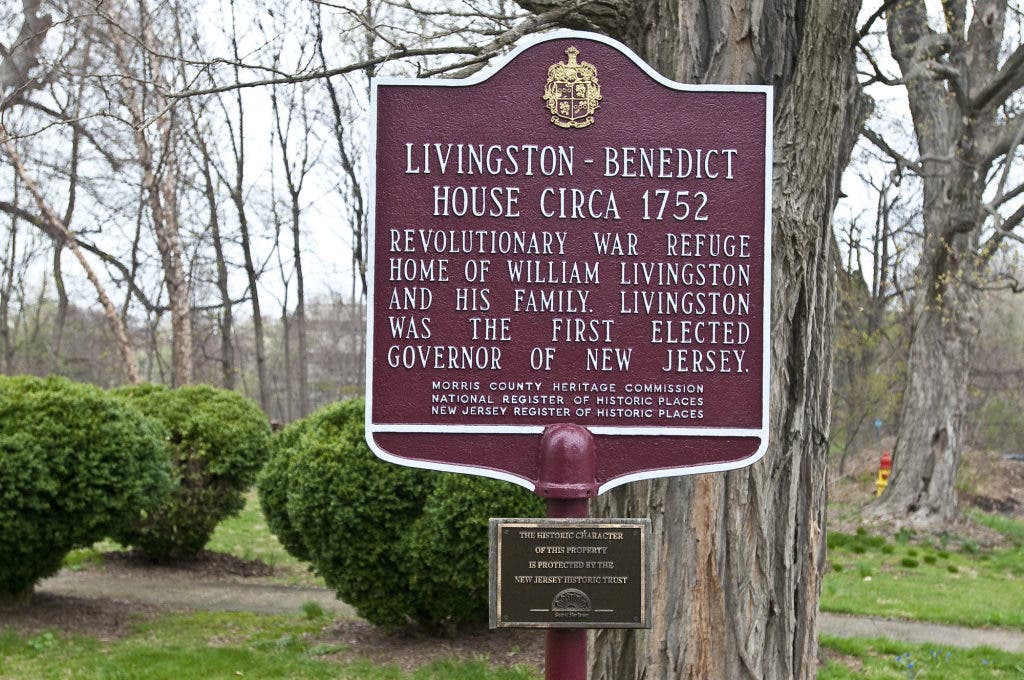
Development pressures threatened Craftsman Farms. Highway development impacted Beverwyck mansion, and the Livingston Benedict House. The Condit House stood vacant for several years, until an agreement between the town and Hunting Ridge allowed for its restoration.
As the oldest roads became the major roads in the township, they needed to be widened, increasing impact on the oldest churches and houses.
In the Parsippany of today, little of the past remains. The buildings that do remain, do so because of the commitment of private owners and groups of people in the Parsippany Historic and Preservation Society, the Parsippany Troy Hills Preservation Advisory Committee, and a group called SOHHO (Society of Historic House Owners). These groups are currently working to insure that the revised Master Plan will aid preservation efforts in Parsippany.
Development decisions are made by the Planning Board, whose job it is to develop and enforce the Master Plan, and the Zoning Board of Adjustment, which serves in the capacity of an appeals boards about land use decisions. Decisions are being made now which will determine the Parsippany-Troy Hills of the future. Ten or 12 years may elapse between the time a building is given a permit and the time it is actually built.
What should the Parsippany of the future look like? What parts of the past will we choose to continue to preserve?