Politics & Government
Expect To See More Spotted Lanternflies In Parsippany's Future: Officials
The invasive species arrived in Parsippany just in time for its reproductive season. Officials spoke with Patch about its local presence.


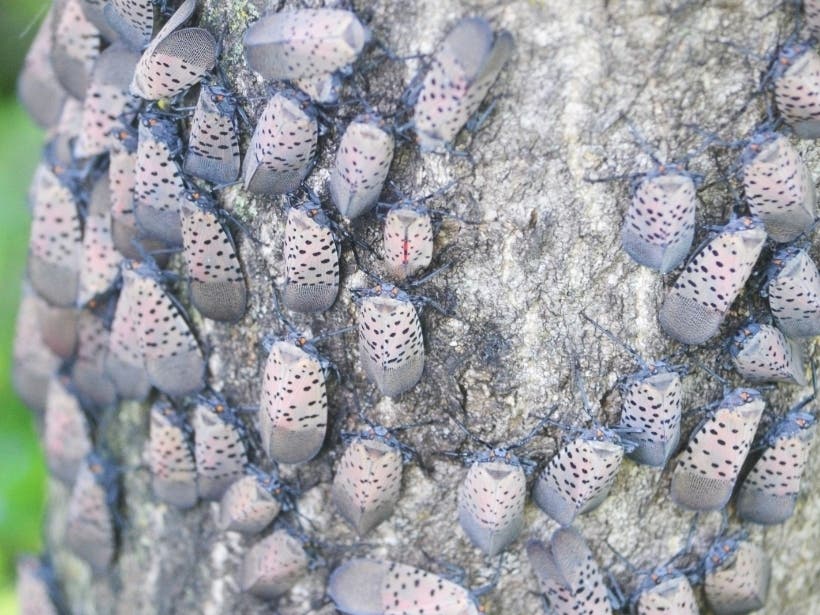

PARSIPPANY, NJ — It's rare that environmental officials would tell you to kill an animal. But the unique presence of the spotted lanternfly calls for such a solution, especially since the issue may worsen in Parsippany, according to Environmental Advisory Committee Chairperson Laura McCluskey.
The township announced Aug. 13 that a few residents reported sightings of the spotted lanternfly. The creature doesn't harm humans or animals, but it can cause serious damage to trees, crops and other plants. Additionally, spotted lanternflies excrete a sugary substance, called honeydew, that encourages the growth of a sooty mold, which also damages plants.
Parsippany residents began seeing the spotted lanternfly just in time for its reproductive season, which takes place in the fall. And that could mean greater issues for Parsippany in the future.
Find out what's happening in Parsippanyfor free with the latest updates from Patch.
"The problem right now is that September is egg-laying season," McCluskey told Patch. "It’s really hard to tell where (the issue is) going to be at. But once they start being spotted, we’re going to have to assume that there’s going to be an infestation of them."
Officials first identified the spotted lanternfly — native to Asia — in the United States in 2014 in Berks County, Pennsylvania. But the creature is a skilled hitchhiker and can travel on almost any surface for several miles, which has allowed it to spread to several states.
Find out what's happening in Parsippanyfor free with the latest updates from Patch.
The issue has become more prevalent recently in much of New Jersey, including Morris County. The agricultural department added Morris County in August to its "quarantine" list. Residents in the quarantine area are "required to use a checklist" before moving the articles included here, the state said. These include dozens of outdoor items ranging from play equipment to tools, lumber, snowmobiles, tanks and grills.
Read more: Spotted Lanternfly: 5 NJ Counties Added To Quarantine Zone
It's unclear how many have been cited in Parsippany, since those who spot the lanternfly report it to the state instead of municipal agencies. But McCluskey says Parsippany isn't in a bad spot.
"We might have some small farms with crops, but we don’t have a big economy of, say, wine grapes," McCluskey said. "The lanternfly only really harms two species — the tree of heaven and then grapes. Aside from that, it can do some damage to things like birch trees and maple trees. But it’s not devastating. It doesn’t kill them."
But McCluskey echos the advice of state agricultural agencies: if you see the spotted lanternfly, kill it. If you see egg masses, scrape them off, double bag them and throw them away, the New Jersey Department of Agriculture says.
The spotted lanternfly is pretty quick, according to McCluskey. So stomp from right on top of them, or they might hop away.
Additionally, report any sightings to the state agricultural department.
McCluskey is also awaiting word on the use of Neonicotinoids — an insecticide — which can potentially get injected into trees and kill lanternflies as they feed on them.
The problem isn't as prevalent in Parsippany compared to other areas. Parts of Pennsylvania have trees covered in spotted lanternflies. But it's up to Parsippany to ensure the issue doesn't worsen.
"We have to assume the worst," McCluskey said. "Once it comes into an area, it multiplies very quickly."
Thanks for reading. Learn more about posting announcements or events to your local Patch site. Have a news tip? Email josh.bakan@patch.com. Subscribe to your local Patch newsletter and follow the Parsippany Patch Facebook page
Get more local news delivered straight to your inbox. Sign up for free Patch newsletters and alerts.