Neighbor News
For This Hackensack Meridian Nurse, the Walk for Mental Health Across the Victory Bridge is Personal
The annual Walk for Mental Health is co-sponsored by the City of Perth Amboy, Raritan Bay Medical Center and Old Bridge Medical Center.
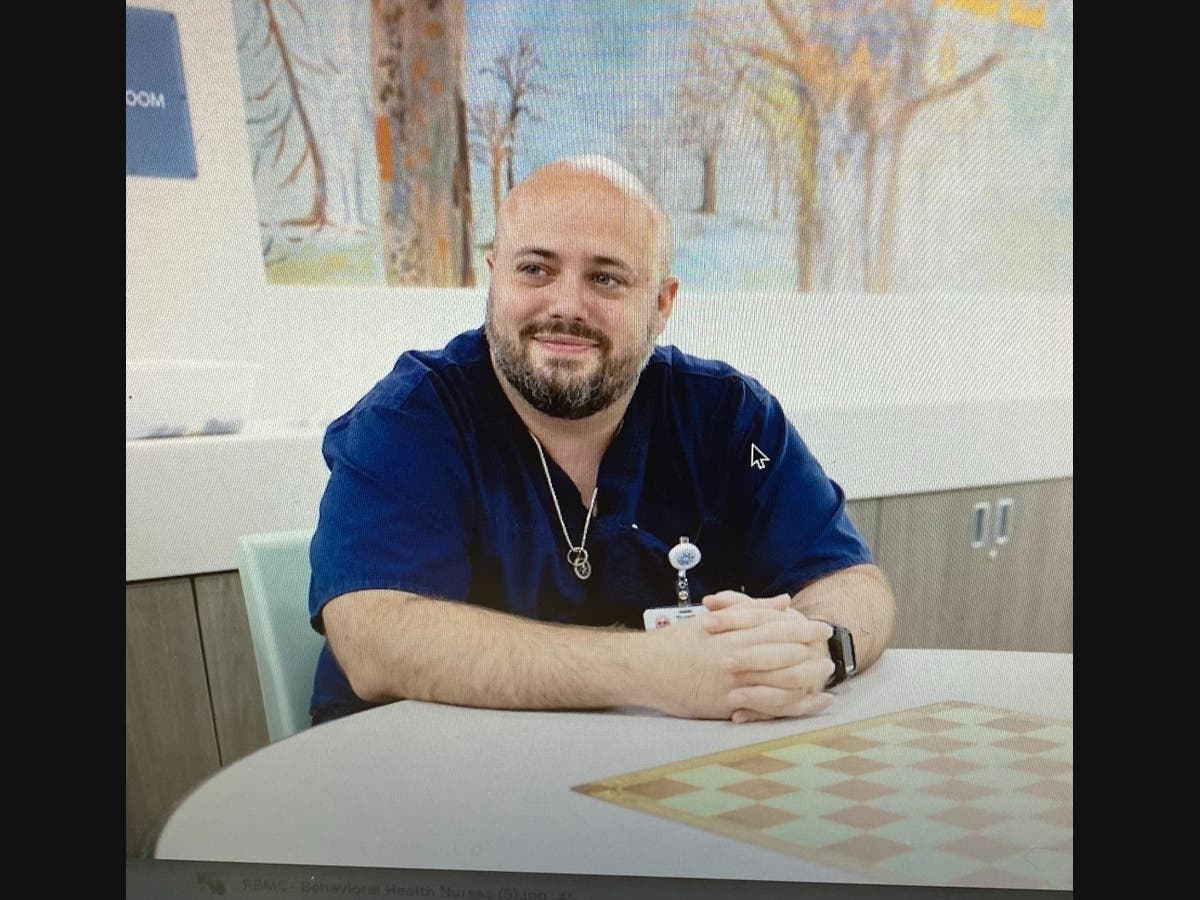
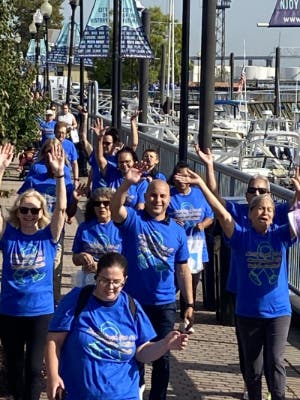
PERTH AMBOY — For most of the people who will lace up their sneakers on Sept. 26 for the annual Walk for Mental Health, the Victory Bridge they will cross is just a span of concrete and steel over the Raritan River, a scenic stretch of roadway connecting Perth Amboy to Sayreville.
For Shawn Reilly, it is the place where his father once stopped his car and got out, intending to end his life.
"My father was actually in a police chase to that spot where he got out of the car," said Reilly, 42, the inpatient psychiatric nurse manager in the Orange/Gold unit at Raritan Bay Medical Center. "Threatening to jump off. But they were able to talk to him and then brought him to the hospital."
Find out what's happening in Perth Amboyfor free with the latest updates from Patch.
That crisis happened around the time Reilly's daughter was born. Now she is 16, his father is gone — he died of lung cancer a few years after working to get sober — and Reilly is one of the people who will walk that same bridge during the Walk for Mental Health, the annual mental health and suicide awareness walk co-sponsored by Raritan Bay Medical Center and Old Bridge Medical Center.
Suicide was responsible for 48,824 deaths in the United States in 2024, according to the Centers for Disease Control and Prevention.
Find out what's happening in Perth Amboyfor free with the latest updates from Patch.
New Jersey averages about 720 suicide deaths a year. In 2024, there were 682 deaths by suicide in New Jersey, about 6.7 for every 100,000 people, among the lowest rates in the nation. Suicide was the 11th leading cause of death in the U.S. and 16th among New Jerseyans in 2023.
“The Walk for Mental Health is a powerful reminder that no one has to face their darkest moments alone,” said Patricia Carroll, president of Raritan Bay Medical Center and Old Bridge Medical Center. “By coming together on the Victory Bridge, we are working to break the stigma surrounding mental illness and bring hope to those who are silently suffering. Our hospitals remain deeply committed to providing compassionate, comprehensive behavioral health care to ensure the mental health needs of the communities we serve are met every single day.”
Reilly hopes the Walk for Mental Health sparks discussions and inspires everyone to realize that there are better tomorrows, and to check out the highly trained specialists and treatment programs that can help them get through their toughest challenges.
In particular, he hopes the message reaches men–one group that Reilly notes is particularly reluctant to reach for help.
Men like his father. Men like his childhood friend. Men, he admits, like himself.
Reilly didn't learn the truth about the long scar on his father's forearm until he was in his 20s.
"I thought it was weird. You know, he used to be a firefighter, or he got hurt working," Reilly said. "And lo and behold, it happened back when my father was a teenager that he had attempted suicide."
His father got medical help, but nothing beyond that.
"My dad grew up in a family where mental health wasn't a big thing back then. It was just, you know, suck it up, move on, do what you got to do."
His father grew up in an abusive household and never talked about it. He became, in Reilly's words, "a very bad alcoholic," which led to his parents' divorce. Later, trying to get sober while dealing with chronic knee pain, he traded one dependency for another.
"There were times that he would finish a 30-day supply of pain medication in a week and then pay out of pocket for the next round," Reilly said.
The medication left his father deeply paranoid at around the time Reilly welcomed his baby girl into the world.
"He wasn't the greatest father," Reilly said. "If it was his weekend, he would go out drinking and leave me at like 12 years old to take care of my brother at his apartment. It's just stuff that I got used to with him."
By the time Reilly turned 21 and the two could go out for a beer together, his father would sometimes end the night threatening to fight him.
What saved him, he says, was his mother — who took a very different view of mental health than his father's family did. She started him in counseling after the divorce when he began having night terrors and couldn't sleep.
"She was very pro-mental health," Reilly said. "I didn't see it then, but I appreciate it now."
She was also, in a coincidence that still amazes him, the unit secretary on the very hospital floor he now runs, back when it was called the Center for Living.
"My mother actually worked on my unit on Orange Gold when she was pregnant with me," Reilly said. She later moved to the hospital's addictions unit.
Reilly grew up in Old Bridge and has worked at Raritan Bay Medical Center since high school, starting in dietary services at 18.
He became a behavioral health assistant on the unit he now manages.
He is mindful about how he uses his own lived experience at work.
"You never tell someone that you understand where they're coming from," he said. "I might have a similar experience to theirs, but I might not understand in that moment what they're going through. But I have more of an empathy toward it."
A few years ago, a man Reilly grew up with — whose mother is his mother's best friend — died by suicide. The two had reconnected, and Reilly found himself impressed by the strength the man exuded even as he went through a divorce.
"He would always tell me, you know, it's [going to get] so much better. You got to move on. You got to take care of yourself," Reilly said.
To hear the positivity in his friend, Reilly said, “You never would have thought anything” dark was tugging at him.
His friend was a father of two, and to Reilly's knowledge had never been diagnosed with anything. "We've all been, especially my generation and men before, we don't really talk about it," he said. "If we complain or whine a little bit, we're not men."
The loss was, he said, an eye-opener. He had started to feel himself drifting somewhere dark, replaying his father's history and his friend's death. And he thought about his daughter.
"I spent so much time trying to break the cycle of what my father did to me, and his father before that, that I never focused on myself," Reilly said. "I was more worried about my daughter. And then I realized that I've got to start taking care of myself in order to take care of my daughter."
As the Walk for Mental Health across the Victory Bridge draws near, he reflects on what he says may be the simplest, yet most important message it represents.
That message, Reilly says, is: "It's okay to be upset sometimes. And it’s OK to ask for help. And that's what I hope for other men, especially men my age."
The Walk for Mental Health is co-sponsored by the City of Perth Amboy and Raritan Bay Medical Center and Old Bridge Medical Center. The community awareness walk is scheduled to take place on Saturday, September 26, 2026, from 9 a.m. to 11 a.m. in recognition of Suicide Prevention Awareness Month. Starting location: 590 Smith Street, Perth Amboy, NJ (beginning at Smith Street and Convery Boulevard). Registration for the walk is free for all. If you can join us, please register here.
The event will bring together residents, families, healthcare professionals, community organizations, and local leaders to raise awareness, share resources, and support ongoing prevention efforts within our community.
If you or someone you know is struggling, call or text 988 to reach the 988 Suicide & Crisis Lifeline, available 24 hours a day. The 988 Lifeline is available for anyone facing mental health struggles, emotional distress, alcohol or drug use concerns or who just needs someone to talk to.