Politics & Government
Report Shows Hundreds Of NJ Towns 'Soon' Could Be Under Water
See how hundreds of NJ communities would be impacted by climate change predicted in a report from the state and Rutgers University.


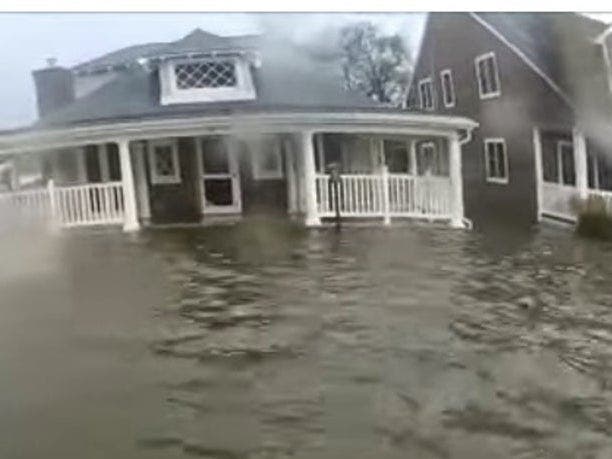

NEW JERSEY – A new Rutgers University and Department of Environmental Protection report shows climate change is moving at such a rapid pace that the oceans could rise nearly 4 feet by 2070, perhaps plunging hundreds of New Jersey communities into the water in the process (see map below).
The DEP released a new study this past week projecting a dramatic sea-level rise in New Jersey. According to the report, the sea level in New Jersey could rise from 2000 levels to up to 1.1 feet by 2030, 2.1 feet by 2050, nearly 4 feet by 2070 and and 6.3 feet by 2100.
The DEP said the report underscores the urgency of the Murphy administration’s work to make the state more resilient to the effects of climate change. The report also shows that New Jersey has already been disproportionately affected by climate change, since sea-level rise projections in New Jersey are more than two times the global average, the DEP says.
Find out what's happening in Point Pleasantfor free with the latest updates from Patch.
Other reports have made similar claims.
Related:
Find out what's happening in Point Pleasantfor free with the latest updates from Patch.
- Report Shows How At Least 19 NJ Towns 'Soon' Could Be Under Water
- These 9 NJ Communities Will 'Soon' Be Under Water, Report Says
The Rising Seas and Changing Coastal Storms study, commissioned by DEP and prepared by Rutgers University and climate change experts, was released this week during the first meeting of the newly formed Interagency Council on Climate Resilience.
“New Jersey is extremely vulnerable to the impacts of climate change and we must work together to be more resilient against a rising sea and future storms,” said Gov. Phil Murphy. “The data presented in this report will not only guide the Interagency Council’s decisions, but will also advise future generations of leaders on how to best mitigate the devastating effects of climate change.”
A map using information from the report shows that nearly all of the Jersey Shore south of Point Pleasant Beach, as well as areas of Essex, Hudson, Passaic, Union, Cumberland and Salem counties, could be under water by 2070:

The report, prepared by Rutgers experts with input from other scientists, updates a 2016 Rutgers report on future sea-level and storm changes affecting New Jersey, and reflects the most recent climate science.
Key updates in the 2019 report include: the addition of historical sea-level rise information for New Jersey; consideration of the latest information related to ice sheet changes and their effect on sea-level rise; and assessment of increasing tidal flooding under sea-level rise.
Here are some of the report’s findings, according to a Rutgers summary.
- The sea level rose 17.6 inches (1.5 feet) along the New Jersey coast from 1911 to 2019, compared with a 7.6-inch (0.6 feet) increase in the global average sea-level.
- New Jersey coastal areas are likely to experience a sea-level rise of 0.5 to 1.1 feet between 2000 and 2030, and 0.9 to 2.1 feet between 2000 and 2050.
- Under a high greenhouse gas emissions scenario this century, New Jersey coastal areas are likely to see sea-level rise of 1.5 to 4 feet between 2000 and 2070, and 2.3 to 6.3 feet between 2000 and 2100.
- New Jersey residents have experienced more days with high tide floods in the absence of a storm in recent years. High tide flooding –otherwise known as “sunny day flooding” – can have detrimental impacts on infrastructure and communities in the absence of a major storm.
Between 2007 and 2016, Atlantic City averaged eight high-tide flood events per year. The average was less than one per year in the 1950s, according to the report. Based on the likely range of sea-level rise projections, Atlantic City will experience 17 to 75 days of expected high-tide flooding in 2030, and 45 to 255 days in 2050.
“New Jersey has much to lose if we do not act quickly and decisively to adapt to the realities of climate change,” DEP Commissioner Catherine R. McCabe said. “This study illustrates the sobering reality that our coastal landscape will change drastically, and we must act with urgency to ensure the long-term viability of our coastal and waterfront communities. These projections now serve as important baselines for developing policy directions, including changes to land use regulation, that New Jersey must adopt to address these challenges.
Get more local news delivered straight to your inbox. Sign up for free Patch newsletters and alerts.