Politics & Government
Now NJ Gov. Murphy Sets His Own Marijuana Legalization Deadline
Watch New Jersey Gov. Phil Murphy say he may have to take a big and different step if action isn't taken soon.


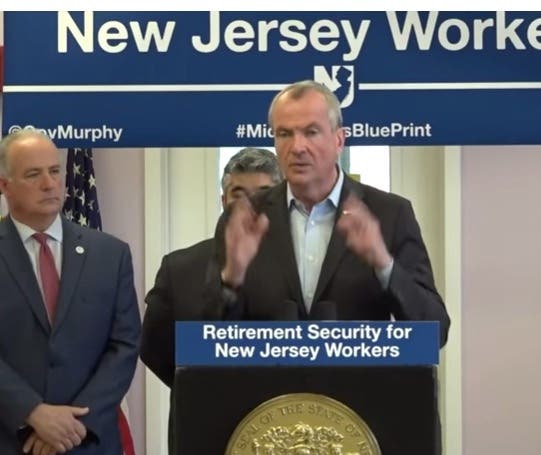
Now New Jersey Gov. Phil Murphy is setting his own deadline for legalizing marijuana.
The only question is: What happens if the state still can't pass it by then?
In the below video, Murphy said he wants something done by "the edge" of May, noting he is getting pressure from advocates of medical marijuana who don't believe their cause should be slowed down by the push to legalize recreational usage.
Find out what's happening in Point Pleasantfor free with the latest updates from Patch.
"I'm prepared to hold off for a short amount of time and I would say the month of May would be the edge of that," he said.
Murphy did hint strongly that he'll move forward on something he's been meaning to do for a while: Launch a big expansion of the state's medical marijuana program, a move that could quadruple the size of it to serve as many as 200,000 patients.
Find out what's happening in Point Pleasantfor free with the latest updates from Patch.
Murphy has agreed to hold off, sources told Patch, because lawmakers have expressed concern that they would lose leverage in getting as many as five Democrats to change their minds and agree to vote in favor of legalizing marijuana.
Murphy, however, said he's heard from the parents of Jake Honig of Howell, a 7-year-old who died from brain cancer in January and whose usage of medical marijuana helped him during his suffering.
The Honig family has been fighting for a law to increase the amount of medical marijuana allowed to patients like Jake. Medical marijuana patients are allowed just 2 ounces of the plant per month — which, in Jake's case, was turned into a liquid. Read more: Pass Medical Marijuana Compassionate Use Act, Howell Dad Says
"We're holding back enormous demand for more access to the medical regime and Jake's parents are right: We've gotta get on with that," he said. "I'm still confident that we can get it done legislatively."
Murphy's remarks on the matter begin at the 27:00 mark:
New Jersey lawmakers canceled a vote on marijuana legalization last month after it became clear that there weren't enough votes to pass it. Read more: New Jersey Cancels Vote On Marijuana Legalization
Murphy has signaled that he will try again. "History is rarely made at the first attempt," he said. "History is often a bumpy road."
Senate President Stephen Sweeney said he was "disappointed" that the bill couldn't be passed, but he said he remains commited to passing it in the future.
"The legalizaton of adult-use marijuana will get passed in the state of New Jersey, one way or another," Sweeney said during a press conference.
Sweeney has said that, if the bill failed to get support now, the legislation could be reintroduced after the November state Legislature elections or in the form of a public referendum.
Murphy, however, said he prefers to push the issue "legislatively," and not through a public referendum – despite polls showing strong public support for marijuana legalization.
Murphy and legislative leaders were reportedly five votes short of securing enough votes in the state Senate that would legalize adult-use marijuana and create an expungement process for individuals convicted of low-level marijuana offenses.
Democrats have 26 members in the 40-member Senate, and it's not clear if any Republicans were expected to cross party lines to support the legslation.
One "hard-no" Democrat, Sen. Ronald L. Rice, said: "We should have learned a lesson about the process of legalizing recreational marijuana, which is much different than medical marijuana."
"The public has not properly been educated on the topic of recreational marijuana," Rice said. "People don't realize, particularly people in urban communities, how it will affect their lives. In urban communities, neighborhoods will struggle against the spread of marijuana bodegas disguised as dispensaries."
Rice said the state should be pushing for legislation on the decriminalization of recreational marijuana.
"We should be promulgating for it, especially if it's not about money and all about social justice like the governor says it is," he said. "I believe if we put together a decriminalization bill, it will receive 120 votes in the Legislature. This is what we should be putting our time and effort into passing."
Indeed, the legislation could undergo wholesale changes to gain approval of senators who are on the fence. The bill already has undergone some reshaping since the draft of the legislation was released almost two weeks ago.
Sweeney clarified – if not changed – one provision of the bill that said employers would not be able to discriminate against marijuana users or prior offenders in their hiring decisions.
Soon afer the draft was released, Sweeney sought to reassure an angry business community by telling them that you may be denied a job, or lose a job, if you test positive for marijuana.
Read more: 16 Things To Know About NJ Legal Marijuana Bill Before It's Law
Also, Senate Bill 2703 – and its companion, Assembly Bill 4497 – included a provision that would make "null and void" any ordinances that have been passed in towns across the state to ban the sales of either or both.
Any municipality that wanted to ban sales, facilities, growing operations or manufacture of marijuana products — for either adult recreational use or for medicinal purposes — would have 180 days following the enactment of marijuana legalization to do that. Read more: Wall Marijuana Sale Ban Would Be 'Null And Void' Under State Bill
Provisions in the bill would have established an expedited expungement process for individuals convicted of low-level marijuana offenses, but would have prevented offenses that happen in certain areas – such as educational facilities and subsidized housing – from being discarded.
Additionally, there were a number of provisions that aimed to ensure broad-based participation in the industry for minority and women-owned business enterprises, low- and middle-income individuals and disadvantaged communities across the state.
Under the terms of an agreement between Murphy and top lawmakers, adult-use marijuana would have been subject to an excise tax of $42 per ounce, which would have been imposed when marijuana was to be cultivated, lawmakers said. New Jerseyans would have paid possibly the lowest marijuana tax in the country, coming in around 10 percent.
Adult-use marijuana would have been governed by a Cannabis Regulatory Commission, composed of five members. Three members would have been appointed by the governor, with the governor's initial appointments to serve terms of at least four years and not be subject to Senate confirmation.
Two other members would have been appointed by the governor, upon the recommendations of the Speaker and Senate President. The commission would have promulgated all regulations to govern the industry and would have overseen the applications for licensing of adult-use marijuana dispensaries, lawmakers say.
Get more local news delivered straight to your inbox. Sign up for free Patch newsletters and alerts.