Health & Fitness
Zika Cases Rise Sharply In New Jersey, State Says
New Jersey Zika cases have risen sharply in recent weeks, and the state has identified where the cases have been reported.


Cases of Zika have risen sharply in New Jersey in recent weeks, according to data from the state Department of Health.
There are now 27 confirmed cases of the virus in New Jersey, nearly a 50 percent increase over the first few weeks of June, according to the data.
Nicole Mulvaney, a spokeswoman for the health department, said the latest data was reported on June 10, showing an increase of seven cases from the previous week.
Find out what's happening in Point Pleasantfor free with the latest updates from Patch.
New Jersey's Zika cases include a baby recently born to a 31-year-old woman from Honduras at Hackensack University Medical Center.
The child was the third infant delivered in the United States with microcephaly linked to the Zika virus.
Find out what's happening in Point Pleasantfor free with the latest updates from Patch.
The New Jersey data differs from what was reported by the Centers for Disease Control and Prevention, which says 17 cases from New Jersey have been reported.
CDC spokesman Benjamin Haynes said he's not sure where the discrepancy is, explaining that the CDC number is based on what is laboratory-confirmed and reported to ArboNET.
"It’s possible they didn’t report by the time we pulled for this week’s update," he told Patch. "In any case, I would go with the state number."
Mulvaney said the state data is updated on a weekly basis. "We have our most up-to-date total," she said.
The state also broke down the data by county, noting that all cases were travel-related. Mulvaney said certain areas, such as Bergen County, have a higher number of cases based on population, particularly if people have family and connections to Zika-affected countries.
Here are the New Jersey cases:
- Bergen 7
- Passaic 4
- Burlington 3
- Union 3
- Monmouth 2
- Morris 2
- Middlesex 2
- Camden 1
- Essex 1
- Hudson 1
- Hunterdon 1
The CDC has confirmed that the virus is responsible for causing severe defects in unborn children, including microcephaly, which leaves babies with abnormally small heads and often with brains that do not develop properly.
In total there are 756 confirmed cases of the Zika virus in the United States; 234 of those cases are among pregnant women.
Zika is a mosquito-borne illness that is characterized by a fever, rash and joint pain. While the illness typically resolves within a week, some severe cases may require hospitalization. Aside from mosquitoes, Zika can be spread through sexual contact in some cases, the CDC notes.
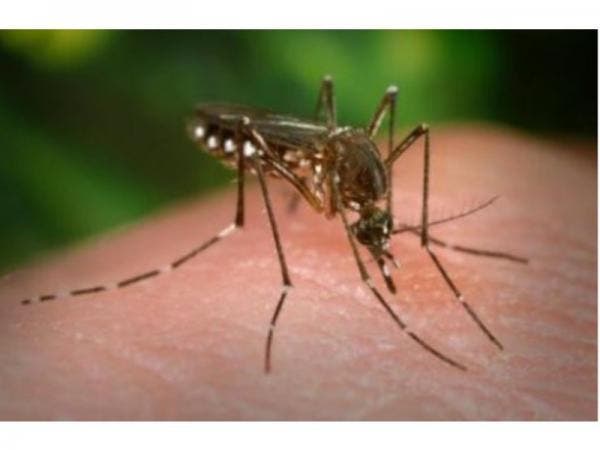
Meanwhile, authorities are scrambling to prevent the spread of the disease in the United States. Zika is spread by a specific type of mosquito — the Aedes aegypti mosquito. There is currently no vaccine for the virus.
Aedes aegypti mosquitoes were once thought to be a threat to only the southern areas of the United States. But the CDC maps shows the possibility of that mosquitoes species reaching as far as New York City, New Jersey and Pennsylvania this year.
The CDC offers these tips to prevent the spread of the disease:
- Wear long-sleeved shirts and long pants.
- Stay in places with air conditioning and window and door screens to keep mosquitoes outside.
- Take steps to control mosquitoes inside and outside your home.
- Sleep under a mosquito bed net if you are overseas or outside and are not able to protect yourself from mosquito bites.
- Use Environmental Protection Agency (EPA)-registered insect repellents with one of the following active ingredients: DEET, picaridin, IR3535, oil of lemon eucalyptus or para-menthane-diol.
- To prevent the spread of sexually transmitted Zika, condoms should be used properly. "We do not know how long the virus can stay in the semen of men who have had Zika, and how long the virus can be spread through sex," the CDC says.
Get more local news delivered straight to your inbox. Sign up for free Patch newsletters and alerts.