Health & Fitness
Parts Of Pa. Now 'Within Range' Of Zika Virus Mosquitoes: CDC
Mosquitoes that can transmit Zika may live in a larger area than previously thought, extending to parts of Pennsylvania, the CDC says.


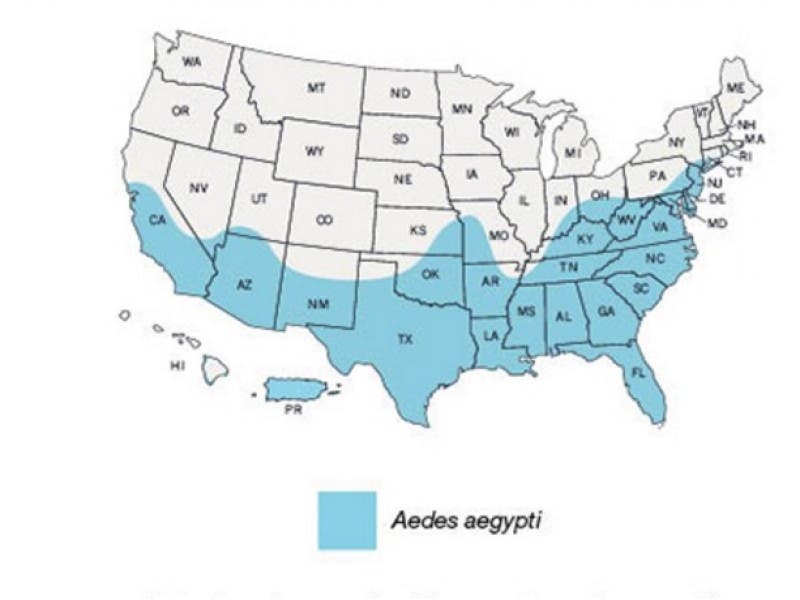
Mosquitoes that can transmit the Zika virus may live in a much larger area than previously thought, extending to parts of Pennsylvania, according to new information from health officials.
The Centers for Disease Control and Prevention posted new maps of the estimated range of Aedes aegypti mosquitoes on its website, showing that Eastern Pennsylvania and some areas in the south central part of the state could become home to the potentially dangerous insect. (See maps.)
Aedes aegypti mosquitoes, which are most likely to be able to spread the virus, were once thought to be a threat to only the southern areas of the United States. But the CDC maps shows the mosquitoes reaching as far as New York City, New Jersey and Pennsylvania.
Find out what's happening in Doylestownfor free with the latest updates from Patch.
Shaded areas on the map do not necessarily mean that there are infected mosquitoes in that area, it just shows the CDC’s best estimate of the potential range of the Aedes aegypti mostquito.
The Zika virus has been linked to birth defects, and pregnant women have been identified as a group that's particularly at-risk.
Find out what's happening in Doylestownfor free with the latest updates from Patch.
The CDC has reported 312 cases in the United States. There have been no reported cases of Zika transmitted in the United States through a mosquito bite, according to the agency.
In order for Zika to be transmitted in the United States, a mosquito would have to bite an infected person first before transmitting it to another person, health officials told NorthJersey.com.
The maps also show the mosquito's cousin, Aedes albopictus, reaching all of New Jersey and as far north as Maine. The maps are not meant to represent risk for spread of disease, the CDC cautions.
Many cases involved people coming from people who traveled to Zika-affected countries. Six cases were transmitted sexually, according to CDC statistics.
Pennsylvania has had 11 cases of Zika, which is sixth highest. All were travel-related, according to the CDC.
According to the CDC:
These maps show CDC’s best estimate of the potential range of Aedes aegypti and Aedes albopictus in the United States. These maps include areas where mosquitoes are or have been previously found. Maps are not meant to represent risk for spread of disease. Aedes aegypti mosquitoes are more likely to spread viruses like Zika, dengue, chikungunya and other viruses than other types of mosquitoes such as Aedes albopictus mosquitoes.
Zika-affected countries have included: Colombia, Barbados, Bolivia, Brazil, Colombia, Dominican Republic, Ecuador, El Salvador, French Guiana, Guadeloupe, Guatemala, Guyana, Haiti, Honduras, Martinique, Mexico, Panama, Paraguay, Saint Martin, Suriname, Venezuela and Puerto Rico.
The Zika virus could become a problem in the region once the weather warms, Dina Fonseca, an entomologist and director of the Invasive and Emerging Disease Vectors Laboratory at Rutgers University, told nj.com.
Mosquito larvae start hatching in May, Fonseca told the publication, and the females should reach the stage in their reproductive cycle by July when they require a “blood meal” from a mammal.
“It all cases, it takes a mosquito that is willing to bite humans,” Fonseca told nj.com, “and most mosquitoes don’t even consider a human is something to bother with.”
Get more local news delivered straight to your inbox. Sign up for free Patch newsletters and alerts.