Kids & Family
A Q&A with Bestselling Author Jennifer Weiner
Weiner recently stopped by Princeton Public Library to discuss her new book and answer fans' questions.
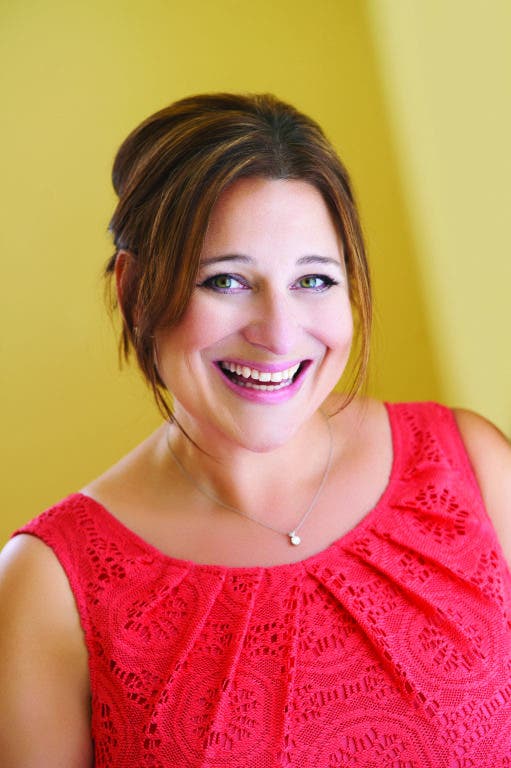
Best-selling author Jennifer Weiner, author of Good in Bed and In Her Shoes and Princeton University graduate, came to the library Wednesday to talk to an audience of her fans about her new book, The Next Best Thing, which follows the success and tribulations of a screenwriter in Hollywood.
Patch spoke to Weiner after the event for a brief Q&A. One of our prepared questions was asked during the event, so we included Weiner's answer to that too.
Find out what's happening in Princetonfor free with the latest updates from Patch.
What distinguishes The Next Best Thing from some of your earlier novels?
Find out what's happening in Princetonfor free with the latest updates from Patch.
I think it’s set at a very specific place and millieur, if I can use a fancy word. I think the heroine is going to feel very familiar to people who like my books, where she is sort of the outsider girl – she is not the beauty, she is not necessarily the girl that everyone’s eyes in the room go to. But I think there’s a lot of really, to me, at least, interesting, behind-the-scenes stuff in how the Hollywood sausage gets made. That’s what I think makes the difference.
I think a lot of your books are semi-autobiographical. Have you ever considered straying from that style?
I don’t know if I’d say "semi-autobiographical." I think that I write about women who feel real and maybe feel like they could feel like they could be a real person, even if it’s not me – even if it’s a best friend, or a sister, or a mom or a cousin. But, I don’t know. I’ve thought about doing nonfiction, I’ve thought about doing YA [young adult fiction], but I don’t know. I guess we’ll just have to see. There’s a very famous quote... about how the writer does not choose a book; the book chooses a writer. I don’t know how much control writers ever really get. I think you just sort of wait and see what comes.
So you’ve considered a change in targeted age demographic. A lot of your books are geared towards women – what about a change in targeted gender demographic?
In Best Friends Forever, there were sections written from a guy’s point of view, so you know, there could be another guy along the way. But, I don’t know, I feel a little bit like if I wrote a male character, it would be seen as, 'Oh, this is Jennifer Weiner’s bid for literary credibility.' You don’t want to write and worry about what people are going to think of it. Again, I’m going to have to see what pops up – and maybe it’ll be a guy.
As a mother and as a bestselling author, do you find it difficult to balance career and motherhood?
I think any mom with any kind of job that takes her out of the house worries – more than men do. I think that with men, it’s just expected. You’re going to work outside of the home, you’re going to do your nine to five thing – maybe you get to leave early for a soccer game or a doctor’s appointment, but I don’t think men trouble themselves so much. But women – we make ourselves crazy.
I try not to make myself crazy. I definitely worry, are my daughters going to remember me as this woman who was always like, 'Okay kids, mommy had to go work now” - close the door. I hope that what they’ll remember is that their mom had work she loved. She had a job that fulfilled her and made her happy. I hope that they’ll find work that they love too, and figure out a way to be parents and have jobs that mean something to them. But yeah, this week, I’m on the road for an entire week. The girls are with their dad – they’re doing historical Williamsburg, to which I say, better them than me.
The other thing is, I really do believe in the whole “it takes a village” thing, and I have a village. I have my mom, I have my sister, who comes in the summer to help out, and I have a fantastic, fantastic babysitter and assistant. It was interesting – I thanked them both in the acknowledgements, and I heard, on Twitter, from a lot of nannies saying, “Thank you so much for thanking your babysitter.” And I’m like, it would never occur to me not to, because I couldn’t write a book without her. There are so many who make my writing life possible, and I wanted to thank them all.
How did you decide you wanted to be a writer? (Question from Lawrenceville resident Irene Conelly)
Well, I always was a reader... I remember reading my dad’s medical textbooks because there were naked people in them. Then I picked up The Bell Jar by Sylvia Plath when I was like 8. My mom was like, 'Jenny, what’s that book about?' And I was like, 'Oh, my God, it is a very sad lady named Saliva Plath.' So, I was always was a reader and I was always a writer. I mean, I remember my first-grade teacher giving me extra paper and letting me stay in for recess so I could write and not have to deal with the other kids who were mean to me. And I was always, always, always writing. It was always the thing I loved, it was always the thing I was good at.
I was an English major in college. I got to read all the classics, and then I went and I was a newspaper reporter. John McPhee, who was probably one of the most influential professors I had, said, “Go get a job; go work at a small town paper; go live somewhere completely out of your comfort zone. You’re going meet all kinds of people; you’re going to learn a lot about how people talk and dress and stand and move and look and – and notice everything. And that was the best education I could have had in terms of dialogue and in terms of description and in terms of economy and in terms of not fussing about writer’s block. Because when you’re a newspaper reporter, you can’t really say to your editor, “You know that story about the sewage board hearing that was due at 6? Yeah, I didn’t finish it because my muse didn’t speak to me.” That’s how you get to be an unemployed reporter.
So reader, English major, reporter – and then I got dumped when I was 28, and I was like, what do I know how to do? I know how to tell a story. So I said, I am going to tell a story where the girl is a lot like me, and the guy is a lot like Satan and I am going to give that girl a happy ending. And that’s how it started. A lot of people believe they have book in them, and I think a lot of people do. And I think the difference between people who think they can write a book and the people who actually get published is sheer persistence. Just putting your butt in the seat every single day and making yourself do it.