Health & Fitness
Let's Bring Marriage Equality to New Jersey
May has been a busy month for marriage. Delaware, Rhode Island and Minnesota have all passed laws legalizing same-sex marriages. It's time for New Jersey to get on board. Learn how.
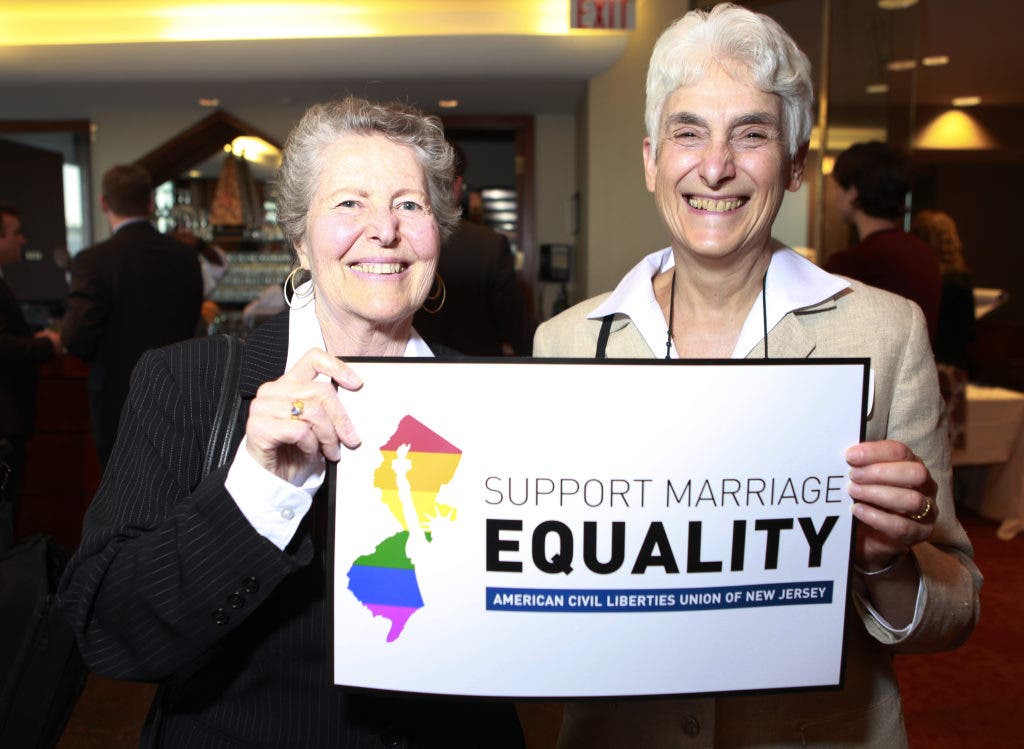
By Udi Ofer
Executive Director of the ACLU of New Jersey
New Jersey has always disliked being bested by its neighbor across the Hudson – New York. This month, however, New Jersey was upstaged by its neighbor to the south – Delaware, which became the 11th state to pass marriage equality into law.
Find out what's happening in Princetonfor free with the latest updates from Patch.
Come July 1, same-sex couples can get married in Newark, Delaware. But in Newark, New Jersey, that same couple could just get civil union-ed.
It doesn’t have quite the same ring to it, and there’s a reason. Since the legislature created civil unions in New Jersey in 2006, they have revealed themselves as a shoddy substitute for marriage. In 2012, New Jersey had a chance to be one of the leaders of the marriage equality movement when the state legislature passed a bill, A1/S1, giving same-sex couples the freedom to marry. Hours after people celebrated in the statehouse, Governor Chris Christie took out his pen and vetoed equality.
Find out what's happening in Princetonfor free with the latest updates from Patch.
Since then, Washington, Maine, Maryland, Delaware, Rhode Island and Minnesota have marched past New Jersey, onto the right side of history, joining the majority of Americans who support the freedom to marry.
This year, organizations throughout the Garden State are working to make New Jersey the next state to call committed relationships between people of the same sex by their rightful name: marriages. We need every supporter of equality to join the fight to override the governor’s veto. That effort starts right now and right here, in Princeton.
All three of Princeton’s state legislators – Senator Christopher Bateman, Assemblyman Jack Ciattarelli and Assemblywoman Donna Simon – voted “no” on legislation guaranteeing marriage equality in 2012. It’s up to you, their constituents, to convince them to change their vote to a “yes” to override the veto of equality.
On Tuesday, May 28, at the Princeton Unitarian Universalist Congregation, the American Civil Liberties Union of New Jersey, along with Garden State Equality and the Unitarian Universalist Legislative Ministry, will hold a citizen-lobby training in Princeton, where we’ll lay the groundwork for marriage supporters to take your concerns to your elected officials in Trenton.
Delaware’s approval of marriage is only the latest milestone in a nationwide movement toward equal treatment of lesbian, gay, bisexual and transgender communities. Nationwide, support for marriage equality has reached an all-time high, and every day that support continues to grow. In New Jersey, 64 percent of residents support the freedom to marry for same-sex couples, and support among younger voters between the ages of 18 to 29 is even stronger, with 80 percent in favor of marriage equality.
Even bigger strides may be on the horizon. In March, the U.S. Supreme Court heard oral arguments in the case of Edie Windsor, a widow and ACLU client challenging the federal Defense of Marriage Act, or DOMA. While grieving the death of Thea Spyer, her wife, the federal government sent her a tax bill on Spyer’s estate. She owed hundreds of thousands of dollars because they were both women. As Windsor likes to say, “If Thea were Theo, I would not have to pay” – she would have owed the federal government nothing.
While it’s impossible to predict Supreme Court decisions, it became clear in March that the government’s policy of discrimination stands on shaky ground. When DOMA is struck down or repealed, the 1,100 federal rights and benefits that come with marriage will suddenly apply to same-sex couples in Delaware, New York, and 10 other states. Couples in civil unions, in contrast, would be treated by the federal government the way it treated Windsor and Spyer: as strangers. If the federal government denies same-sex couples in New Jersey the benefits entitled to married couples, New Jersey legislators who voted “no” on marriage will share some of the blame.
The last day of New Jersey’s 215th legislative session is Jan. 14, 2014. Lawmakers in New Jersey need to think about their role in history. Do they want to be a leader and bring New Jersey forward with the rest of the country? Will they forge ahead and vote to override Gov. Christie’s veto of marriage equality? Or will they sit idly and wait for the tides of change to sweep them into doing the right thing or out of office? It’s time for them to decide.
Attend the Marriage Equality Lobby Training and Issue Forum at the Princeton Unitarian Universalist Center at 50 Cherry Hill Road at 7 p.m. on Tuesday, May 28. RSVP online at https://www.aclu.org/secure/nj-marriage-equality-lobby-training.