Health & Fitness
Learning By Doing: Princeton's Young Scientists Display Results
A science research program for elementary school students yields some impressive results.
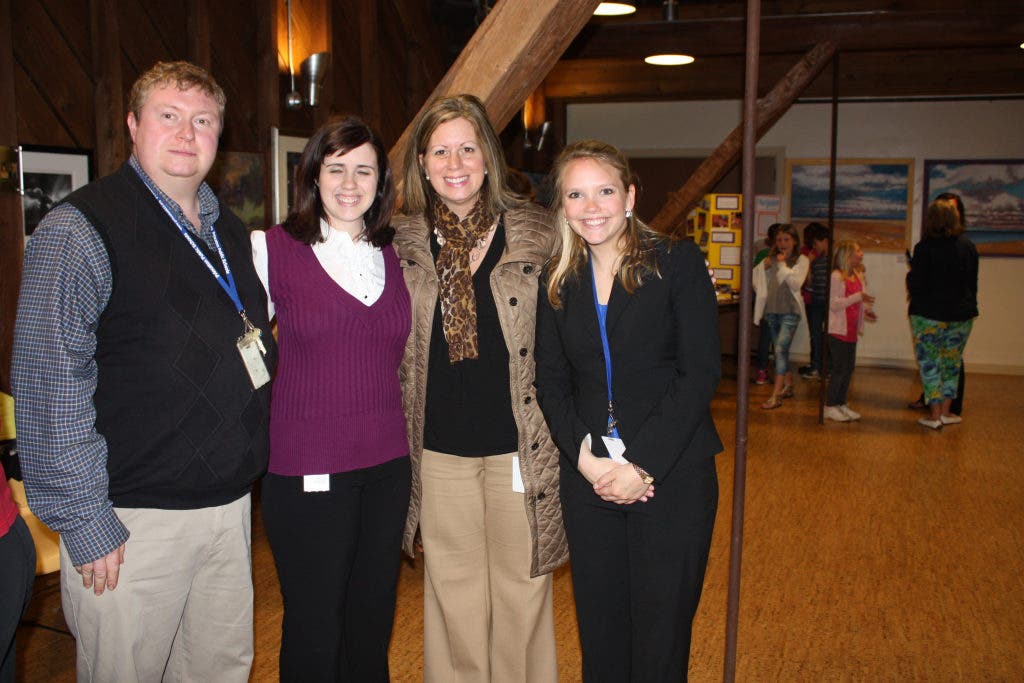


Not all science fairs are created equal. The exhibitions on display at the Johnson Education Center last week were part of the Student Investigative Project Symposium, featuring projects that were conceived, researched and presented by students.
“This is a rewarding day for students, administrators, teachers and parents," said Roberta Hunter, research resident with the SIP (Student Investigative Project) program. "You are all scientists now," she added, addressing students who were presenting their projects at the D&R Greenway's Johnson Education Center. "You have discovered your results all by yourself. It gives me goose bumps."
The recent presentations of projects were a milestone for a successful program that has changed the way students in kindergarten through fifth grade study science at Community Park, Johnson Park and Riverside schools (because of a scheduling conflict Riverside students did not display their projects at the symposium).
Find out what's happening in Princetonfor free with the latest updates from Patch.
The program has grown every year for the last five years. Last year 17 elementary school classes participated; this year the number jumped to 28 classes.
The Student Investigative Project embraces a hands-on, inquiry approach to learning science. Self-selected kindergarten through fifth-grade teachers work with Ms. Hunter to facilitate students in designing their own investigations.
Find out what's happening in Princetonfor free with the latest updates from Patch.
Students decide on the topic of study and develop questions that will focus their investigation. They gather background information on their selected topics, develop the methods of experimentation, complete the research model and then report on the scientific research results. According to Cherry Sprague, Science Supervisor for Princeton Public Schools, this method involves a different set of classroom dynamics between teachers and students.
According to Ms. Hunter, it requires a high level of enthusiasm and energy from teachers and a certain amount of faith that given appropriate parameters students will find their own way. “The Princeton Public Schools teachers have been fantastic,” said Ms. Hunter, who provides professional development for teachers in this area and serves as a mentor. “This is very different from the way things are usually taught.”
Given that the projects are "student directed" rather than, as is more common, shaped primarily by teachers, how sophisticated are the results? Very sophisticated, judging by the presentations this week. The projects on display ranged from kindergarten topics such as electric circuits to fifth grade projects that included “How does storm run-off and pollution affect the temperature of water?” and “How many organisms can we keep in a tabletop ecosystem?” and “Can we build structures, natural or man-made, that will protect New Jersey coastlines and low-lying areas from hurricane destruction?”
The Student Investigative Projects have been so successful at Community Park that the program has been expanded every year since it started.
"This has been a great year for Student Investigative Projects," says Dineen Gruchacz, Community Park principal. "We've expanded the program and this year a group of fifth graders has used iPads, provided by the Princeton Education Foundation, to make iMovies. It's been a very successful integration of technology and learning experiences."
The iMovies documented differences in plants after using various liquids for irrigation. But the movies were only one part of a large and detailed exhibition, which had some intriguing results, including some very healthy plants that had been watered using root beer. "The liquid used to irrigate the plants affected the size and color of the leaves," explained Raisa Rubin-Stankiewicz. "We think the root beer plants might have been so healthy because of the sugar in root beer. "
"Our symposium has expanded so much that this year we needed two sessions for presentations," said Ms. Hunter. "I like the fact that the students see students and projects from other schools. And this week has been a tremendous success.”