Neighbor News
How Long Do Cold Sores Last? A Dentist Explains the Healing Timeline
A cold sore can seemingly appear overnight. You may first notice a little tingling or burning near your lip, followed by a blister.

How Long Do Cold Sores Last? A Dentist Explains the Healing Timeline
A cold sore can seemingly appear overnight. You may first notice a little tingling or burning near your lip, followed by a blister that becomes increasingly noticeable and uncomfortable.
One of the first questions patients ask is: How long will this cold sore last?
Find out what's happening in Princetonfor free with the latest updates from Patch.
Most uncomplicated cold sores heal within approximately 7 to 14 days. However, healing time can vary depending on the severity of the outbreak, your immune response, irritation to the area, and how early treatment begins.
Understanding the different stages of a cold sore can help you recognize what is normal—and when a sore may need professional evaluation.
Find out what's happening in Princetonfor free with the latest updates from Patch.
What Causes Cold Sores?
Cold sores, sometimes called fever blisters, are usually caused by herpes simplex virus type 1 (HSV-1).
Once someone acquires HSV-1, the virus can remain dormant in the body and reactivate later.
Common triggers may include:
- Emotional or physical stress
- Illness
- Fatigue
- Sun exposure
- Hormonal changes
- A weakened immune system
- Trauma or irritation around the lips
Some people experience frequent outbreaks, while others may go years without developing another visible cold sore.
How Long Do Cold Sores Usually Last?
.jpg)
For most people, a cold sore lasts about one to two weeks.
A typical outbreak progresses through several stages.
Stage 1: Tingling and Burning
Before you see anything on your lip, you may notice:
- Tingling
- Itching
- Burning
- Tightness
- Tenderness
This early period is sometimes called the prodrome stage.
It is also an important time to begin treatment. Antiviral medications generally work best when started at the earliest signs of an outbreak.
Stage 2: Blister Formation
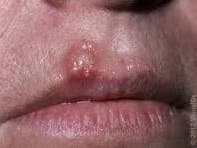
Small, fluid-filled blisters may appear around the lips.
Sometimes there is only one blister. In other cases, several small blisters develop close together.
Cold sores are contagious during this stage, so avoid touching or intentionally popping the blister.
Stage 3: The Blister Opens
The blister may eventually rupture and release fluid.
The exposed area can feel raw or painful. Because HSV-1 can spread through direct contact, careful handwashing and avoiding close oral contact are particularly important.
Stage 4: Crusting and Scabbing
As the lesion begins healing, a crust or scab develops.
The scab may look yellow, brown or reddish. This appearance does not necessarily mean the area is infected.
Try not to pick at the scab. Removing it too early can reopen the skin, cause bleeding and potentially delay healing.
Stage 5: New Skin and Healing
Eventually, the scab comes away and new skin develops underneath.
The skin may temporarily appear pink or slightly red even after the lesion has healed.
A cold sore is generally considered healed when there is no longer an active blister, open wound, drainage or scab and the skin surface has closed.
Are Cold Sores Still Contagious When They Scab?
Yes. You should not assume that a cold sore is no longer contagious simply because it has formed a scab.
Avoid kissing and other close oral contact while a cold sore is developing or visibly present.
During an active outbreak, it is also wise to avoid sharing:
- Drinks
- Eating utensils
- Lip balm or lipstick
- Towels or personal items that contact the affected area
Wash your hands after touching your face, particularly if you accidentally touch the cold sore.
Even after visible healing, HSV-1 transmission risk is not absolutely zero because the virus can sometimes be shed without visible symptoms.
Can You Make a Cold Sore Heal Faster?
There is currently no cure that eliminates HSV-1 from the body. However, treatment can help manage outbreaks.
Depending on the individual, management may include antiviral medication, topical products, cold compresses and measures that prevent the lips from becoming excessively dry or cracked.
One of the most important factors is timing.
If you regularly experience cold sores and recognize the familiar tingling sensation before the blister develops, contacting your healthcare provider early may allow treatment to begin sooner.
You should also avoid picking, squeezing or repeatedly touching the sore.
Should You Go to the Dentist With a Cold Sore?
This depends on the stage of the cold sore and the dental treatment you need.
When a cold sore is actively blistering, leaking or extremely uncomfortable, stretching the lips during an elective dental procedure can irritate the area.
Your dental office may recommend postponing certain elective procedures until the lesion heals.
A dental emergency is different. If you have significant dental pain, swelling, trauma or another urgent problem, contact your dentist rather than simply delaying care.
When Should a Cold Sore Be Checked?
Most uncomplicated cold sores resolve without complications.
However, consider professional evaluation if:
- The sore has not healed within approximately two weeks
- The lesion continues to enlarge
- You experience frequent outbreaks
- Pain becomes severe
- The area repeatedly bleeds
- You develop significant swelling or pus
- You have difficulty eating or drinking
- You have a weakened immune system
- The lesion develops near your eye
- You are not sure whether the lesion is actually a cold sore
This last point is particularly important.
Not every sore around the mouth is a cold sore. Persistent or unusual lesions should be examined by a dentist, dermatologist or physician to determine the correct diagnosis.
The Bottom Line
For most people, cold sores heal within approximately 7 to 14 days.
The typical progression moves from tingling and burning to blister formation, crusting, scabbing and finally new skin.
Avoid picking at the lesion, practice careful hand hygiene and avoid kissing or sharing items that contact the mouth while an active lesion is present.
Most importantly, if a sore does not heal as expected or looks different from your usual cold sores, have it evaluated rather than assuming it is HSV-1.
For a more detailed explanation of the stages, contagious period and treatment options, read Dent Blanche Dental's complete guide:
How Long Do Cold Sores Last? Complete Healing Guide
https://dentblanchedental.com/how-long-cold-sores-last/
About Dent Blanche Dental
Dent Blanche Dental provides comprehensive, cosmetic, restorative and advanced digital dental care for patients in Princeton and surrounding New Jersey communities. The practice is led by Dr. Radwa Saad and focuses on combining modern dental technology with personalized patient care.
Schedule an Appointment
Concerned about a persistent sore, unusual oral lesion, dental pain or another oral health problem?
Dent Blanche Dental is accepting new patients.
3640 Lawrenceville Rd, Princeton, NJ, 08540
Call 609-890-1888 to schedule an appointment or visit:
Online appointment scheduling is also available through the Dent Blanche Dental website.