Business & Tech
Making the World Better with Fair Trade
Princeton's Shop the World is a business with a conscience.
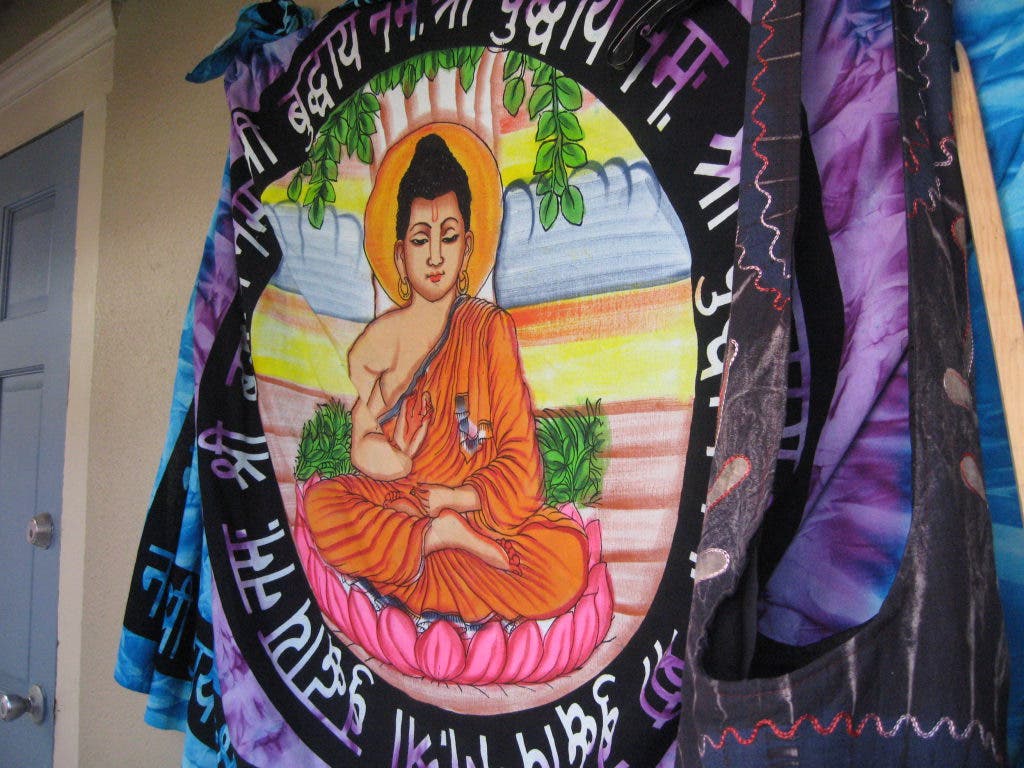


Shop the World is an eye-catching stores in Princeton; on any given day, passersby may be drawn to the shop by a colorful array of waving flags, tie-dyed T-shirts, and intriguing, sparkling bits of jewelry and gifts from all over the world.
Before Jill Carpe opened her fair trade store in on Spring Street 19 years ago, she had the best preparation possible—she ran a gift shop in the Central American country of Belize.
Find out what's happening in Princetonfor free with the latest updates from Patch.
“I had a little store on an island and I sold bathing suits, T-shirts, lots of little treasures for tourists, woven things from Guatemala, things like that,” she said. “I started traveling all over Central America and establishing relationships with cooperatives in neighboring countries like El Salvador, Guatemala and Honduras.”
In her travels and her talks with people, Carpe made an important realization. She started to understand what cooperatives did and how much of a role they played in improving the lives of their members.
Find out what's happening in Princetonfor free with the latest updates from Patch.
“They allow people, artisans, to work cooperatively and get a fair price for their goods instead of working in a factory,” she explained. “Each cooperative works according to the needs of the artisans. For example, I’ve been to Thailand where they weave these beautiful wallets. This kind of embroidery is difficult to do, so the younger women will do the detailed weave and the older women will make the rest. They live in the community together, work together and take care of each other.”
But the person who made the biggest impact on Carpe was a 23-year-old woman she met in Nicaragua.
“She had six children and they lived in a little hut where you could see through the walls,” remembered Carpe. “Her husband had left because he couldn’t find a job, and she was making these clay necklaces, firing them in a kiln. I looked at her and saw how she was doing her part to take care of children, and I felt like I had a part too.”
Carpe takes the biggest pride in the fact that nothing in her store is mass produced in a factory. “As a merchant I have a choice. I can make a lot of money from factories where things are mass-produced or have a modest income but feel good about what I do.”
Nearly every continent is represented at Shop the World, which features items from countries like Thailand, Nepal, India, Tibet, Peru, Ecuador, Bolivia, Guatemala, El Salvador, Nicaragua, Vietnam, Korea and Kenya, as well as items made by local artisans in New Jersey.
Carpe imports handmade finger puppets from Peru made by women in their homes. “They can have their children with them and they don’t have to leave them to go sit in a factory," Carpe said. "You can be pregnant or have an infant you are taking care of and not have to be out on the streets hustling for work.”
In her 19 years in her fair trade business, Carpe has maintained relationships with cooperatives all over the world, keeping her ties with old friends and establishing new ones. Her clients in Princeton also help her make connections around the globe.
“This is a worldly community,” Carpe said. “We have lots of people who travel and spend time helping people in developing nations. Often there’s a craft or artisan connection, so I’ve been fortunate. I get customers who come back and
they say they’ve just come back from India. They tell me about someone who makes hand-block printed scarves and they hand me a card with their information.”
Carpe says her customers care about the world as a global community. “They are not just concerned about themselves. There’s a commitment to taking care of each other.”
She said Princeton has an official sister city relationship with the town of Grenada in Nicaragua. Carpe has visited several times and made donations to places like the women’s health clinic there.
While Carpe still travels to discover new treasures in new places, the rise of the online business has made it easier for her to make contact with artisans in remote places.
“In the early years, I’d get these phone calls from Nepal in the middle of the night. Now that same person sends me an email and sends me a picture to check quality control so that I can see it and measure it to know exactly what I’m getting.”
As a mother of four, Carpe takes pride in her business not only as a way to make a living, but as a way to make a positive impact on other people.
“By buying fair trade you are creating more common ground," she said. "It’s making sure that the people who design and make the item get a fair price for it, that the lady who beads the bracelet in Uganda doesn’t have to spend all her money on a bus to get to the city to sell it and then has nothing left over. With my business, I’ve been blessed to meet a lot of people who care about the little guy and not the masses, people who want to make a difference.”