Neighbor News
Members of the NJ Legislative Disability Caucus
And Advocates from the Disability Community Discuss Innovative Housing Solutions for Individuals with Disabilities at Quarterly Meeting
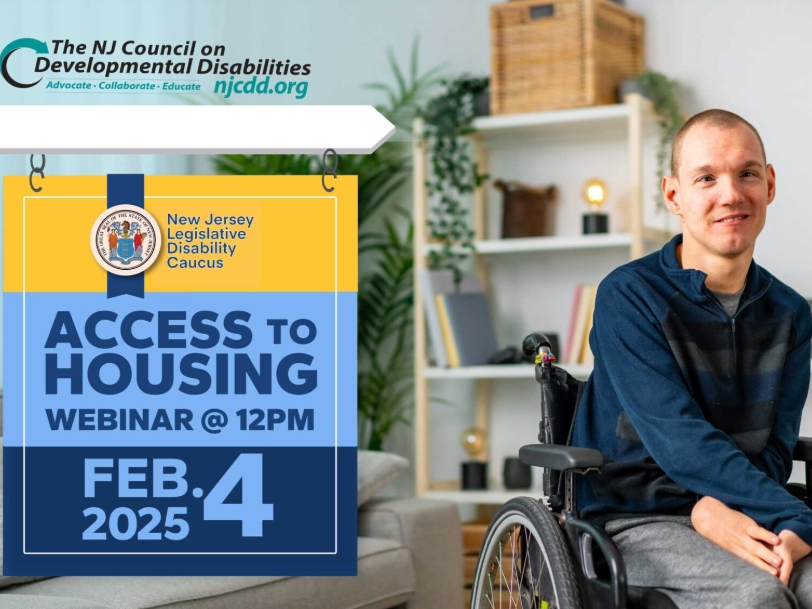
Last week, the bipartisan New Jersey Legislative Disability Caucus met virtually to discuss the challenges individuals with disabilities face in accessing supportive housing, with thousands waiting years for affordable housing. The Caucus explored innovative solutions to expand affordable housing options across the state. Assembly Majority Leader and Caucus Co-Chair Lou Greenwald who has been a champion in this space led the discussion, beginning with an overview of two bills he is sponsoring to address the issue. The first, the New Jersey Housing Opportunity Act (A4956), offers municipalities various options to build affordable housing, including Accessory Dwelling Units (ADUs)—small, separate living spaces on the same property as a main home. The second bill, A2757 , authorizes the conversion of certain office parks and retail centers into mixed-use developments, enabling affordable housing for individuals with disabilities near transportation, healthcare, and other essential services.
“While the group home model works for many, the reality is that adults with disabilities and their families are waiting far too long—on average, over five years—to access housing services,” said Caucus Co-Chair Assembly Majority Leader Greenwald. “The housing crisis has forced families to make impossible decisions—placing loved ones in nursing homes that aren’t designed to meet their needs or keeping them at home without adequate support. We need to expand our housing capacity and increase flexibility to meet the growing demand. From allowing Accessory Dwelling Units (ADUs) that allow individuals to live independently while staying close to family, to converting vacant malls and office parks into mixed-use developments that integrate housing with jobs and amenities, or allowing campus-style settings that provide centralized services with higher levels of care and support, we need to leverage these innovative housing solutions to ensure our communities are equipped to serve the needs of all.”
Jonathan Seifried, Assistant Commissioner of the Division of Developmental Disabilities at the New Jersey Department of Human Services, outlined the state’s approach to providing housing assistance and efforts to reduce waiting list times, including the introduction of portable housing subsidies. He clarified what types of housing are allowed under Centers for Medicaid Services (CMS) regulations, addressing confusion around the definition of “congregate housing,” which the Assembly Majority Leader is concerned may be hindering development of new kinds of housing for people with disabilities in some communities.
Find out what's happening in Princetonfor free with the latest updates from Patch.
Princeton Council President Mia Sacks shared Princeton’s experience as the first municipality in New Jersey to adopt an ordinance allowing ADUs on residential properties. As a key advocate for the initiative, she explained how the program is thriving despite initial concerns and pushbacks from some residents. On a personal note, Sacks described how building an ADU on her own property has allowed her severely disabled elderly mother to stay with the family and avoid institutional care.
Rosy Dafonseca, Assistant Director of Multifamily/Supportive Housing and Lending at the New Jersey Housing and Mortgage Finance Agency (NJHMFA), discussed the challenges of securing capital for affordable housing development and highlighted the state’s programs designed to incentivize it. These include the Special Needs Housing Trust Fund and the Special Needs Housing Subsidy Loan Program, which provide financing to develop permanent supportive housing and community residences for individuals with special needs. She also described the Money Follows the Person Housing Partnership Program (MFPHPP), a collaboration between NJHMFA and the New Jersey Department of Human Services' Division of Aging Services. This program offers capital subsidies to eligible developers to reserve housing units for individuals transitioning from nursing facilities to community-based settings.
Find out what's happening in Princetonfor free with the latest updates from Patch.
“Accessing available, affordable and accessible housing remains a major obstacle for individuals with disabilities, with waitlists continuing to grow at an alarming rate. This discussion brought forward practical, creative solutions that can help address this crisis. The leadership of Assembly Majority Leader Greenwald, along with the other Caucus co-chairs and members, demonstrates a strong commitment to advancing real, actionable reforms that could expand housing options and reduce these long delays. I’m so grateful for this Caucus and its important work to find real policy solutions centered on enhancing the lives of those with disabilities in New Jersey,” said Mercedes Witowsky, Executive Director of New Jersey Council on Developmental Disabilities, the lead supporting agency of the Caucus.
To view a recording of the February 4 Caucus Meeting visit: https://youtu.be/BKMSLeHNKKg.
About the New Jersey Legislative Disability Caucus: The Caucus was formed December 1, 2020, and serves as a bipartisan forum within the New Jersey Legislature for lawmakers and their staff to consider the impact on the disability community when shaping ALL public policies in the Garden State. The Caucus is co-chaired by Senate Majority Leader Teresa Ruiz (D-29), Assembly Majority Leader Lou Greenwald (D-6), Senator Anthony Bucco (R-25) and Assemblywoman Aura Dunn (R-25). Participation in the Caucus is open to all legislators who agree to be champions for individuals with disabilities in New Jersey by meeting with them in their district offices; participate in the quarterly education forums; and promote policies to improve the lives of people with disabilities and their families. People with disabilities, their families and organizations that serve, support and advocate for people with disabilities in the Garden State serve as a resource for the NJ Legislative Disability Caucus. For more information about the Caucus and to get involved, visit https://njcdd.org/legislative-disability-caucus/.