Politics & Government
NJ Closer To Legalizing Assisted Suicide As Gov. Signs 3 Bills
The "Aid in Dying" bill is closer to becoming NJ law as Gov. Phil Murphy also signed 3 unrelated bills, one putting panic alarms in schools.


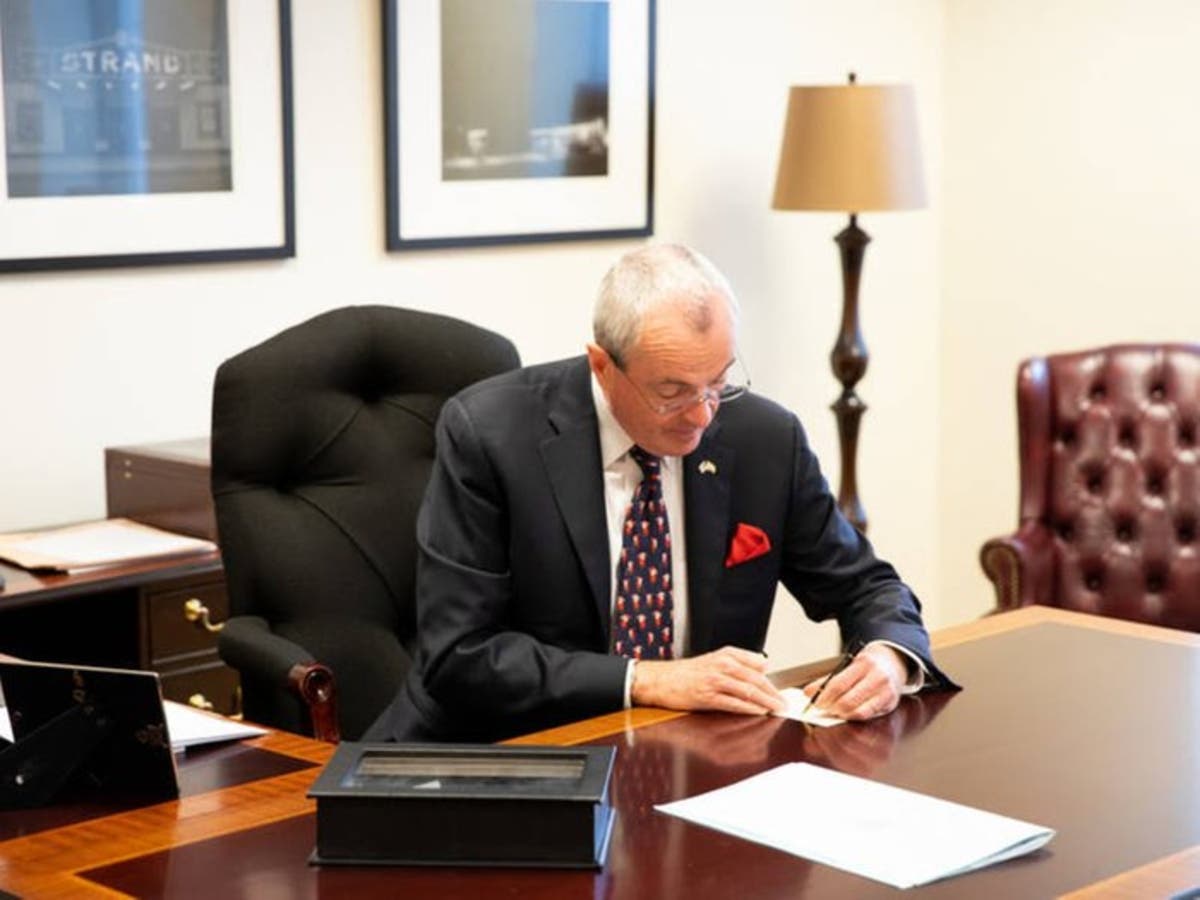
New Jersey moved much closer to legalizing assisted suicide this week just as Gov. Phil Murphy also signed three unrelated bills into law, including one that would install panic alarms in schools.
A Senate committee approved legislation sponsored by Sens. Nicholas Scutari and Richard Codey Thursday that would create a process for terminally ill patients with less than six months to live to seek medical assistance to end their lives.
The legislation comes as Murphy also signed three bills that include "Alyssa's Law," which was named after a Bergen County native who was one of 17 people murdered in the Florida shooting at Majory Stoneman Douglas High School in February 2018. Read more: Murphy Signs 'Alyssa's Law,' Named After Murdered Ex-Bergen Girl
Find out what's happening in Princetonfor free with the latest updates from Patch.
"Alyssa's Law" requires silent panic alarms in schools that will alert law enforcement during emergencies, including active shooter situations like the one that killed Alyssa Alhadeff, a former Woodcliff Lake resident. (see list of bills below).
The assisted suicide bill, S-1072, entitled the “Medical Aid in Dying for the Terminally Ill Act,” would allow adults to end their lives as long as they have the capacity to make health care decisions. Their physicians also have to determine if they are terminally ill.
Find out what's happening in Princetonfor free with the latest updates from Patch.
The legislation, which says that patients may self-administer the medication to assist in the process, was approved by the Senate Health, Human Services & Senior Citizens Committee vote by a 6-3 vote. The bill needs the full Legislature's approval and Murphy's signature in order to become law.
"This is the humane and dignified process that respects the free will of terminally ill patients," said Scutari, D-Union. "We should permit qualified patients to make the decision to end their own life in a dignified manner. There is no good reason for them to be forced to prolong their pain and suffering or to prolong the grief of their loved ones if they make that choice."
The bil was approved during an emotional hearing on Thursday.
The bill contains numerous safeguards and procedures to ensure the integrity and safety of the process, lawmakers say, including:
- A patient must have a prognosis of six months or less to live to request and be prescribed medication under the bill.
- The bill defines a "terminal disease" as an irreversible disease that has been medically confirmed and will result in a patient's death within six months.
- It would cover: an adult resident of New Jersey who is capable and has been determined by the patient's attending physician and consulting physician to be suffering from a terminal disease, and has voluntarily expressed a wish to die.
- The bill would require patients suffering from a terminal disease to first verbally request a prescription from their attending physician, followed by a second verbal request at least 15 days later.
- The attending physician would have to offer the patient a chance to rescind the request.
- A consulting physician would then be called upon to certify the original diagnosis and reaffirm the patient is capable of making a decision.
- It would also require one request in writing signed by two witnesses. A valid request for medication must be signed and dated by the patient and witnessed by at least two individuals who, in the patient's presence, attest that the patient is capable and is acting voluntarily to sign the request.
- Only the patient would be permitted to administer the drug to themselves. At least one of the witnesses must be a person who is not: 1) a relative of the patient; 2) entitled to any portion of the estate of the patient; 3) an owner, operator, or employee of a health care facility where the patient is receiving treatment, or 4) the patient's physician.
- The bill requires that the patient's attending physician recommend that the patient participate in a consultation concerning additional treatment opportunities, palliative care, comfort care, hospice care, and pain control options, and provide the patient with a referral to a health care professional qualified to discuss these options.
- The attending physician would be required to document the recommendation in the patient's medical record, and indicate whether the patient chose to participate in the consultation, and whether the patient is receiving palliative, comfort or hospice care.
Assisted suicide is currently permitted in seven other states and the District of Columbia. This bill was modeled after the Oregon “Death with Dignity Act,” which has been in effect for 15 years. The overwhelming majority of patients who requested medications in the other states were in hospice care, lawmakers say.
“This bill will allow people to make the most informed decision at the most pivotal moment of their lives,” said Codey, D-Essex. “Rather than waiting for the inevitable in pain and misery, this bill gives terminally ill patients the choice to meet their end on their own terms. We cannot prevent them from dying, but we can at least allow them to do it with dignity."
Besides "Alyssa's Law," here are the other two bills that Murphy signed into law:
- A4841 (Pintor Marin/Sweeney) – Extends transmittal date deadline for fiscal year 2019-2020 gubernatorial budget message to Legislature from fourth Tuesday in February to March 5, 2019.
- S1057 w/GR (Van Drew, Gopal/Houghtaling, Andrzejczak, Mazzeo, Taliaferro) – Requires EDA, in consultation with Department of Agriculture, to establish loan program for certain vineyard and winery capital expenses.
Governor Murphy photo
Get more local news delivered straight to your inbox. Sign up for free Patch newsletters and alerts.