Schools
Princeton Schools Moving To Ban Cell Phones, Including Smartwatches, Under State Law
A voluntary app that freezes devices during school hours is under consideration alongside a progressive discipline policy.


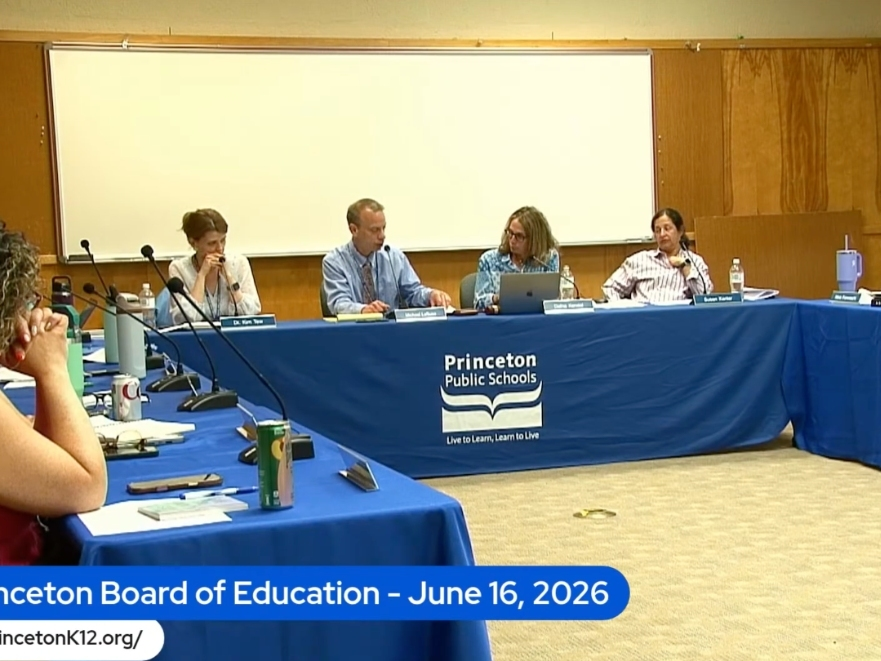
PRINCETON, NJ — Princeton Public Schools is moving to extend its cell phone ban district-wide in response to New Jersey's new internet-enabled device law, Superintendent Mike LaSusa told the Board of Education at its Tuesday meeting.
The state law prohibits all internet-enabled devices — including smartwatches or any watch capable of connecting to the internet — from public schools during the school day. The law uses the phrase "belt to belt" to describe the full school day, from the time a student enters the building to the time they leave.
Basic flip phones that cannot connect to the internet may be exempt, though LaSusa said he wanted to reread the law before confirming that interpretation after a board member raised the question.
Find out what's happening in Princetonfor free with the latest updates from Patch.
Princeton already enforces a strict no-cell-phone policy in its pre-K through eighth-grade schools. Students caught using a device are disciplined. LaSusa said the intent is now to extend that same standard through grades 9-12 at Princeton High School, creating a consistent district-wide policy for the first time.
The high school, however, presents a different set of enforcement challenges than the younger grades. LaSusa noted that the school has approximately 1,500 students moving through its hallways at any given point in the day. Unlike elementary and middle school students, many high schoolers are legally adults. They also have greater freedom during the school day, including an unsupervised lunch period the school calls "break," during which monitoring device use is particularly difficult.
Find out what's happening in Princetonfor free with the latest updates from Patch.
"It's more challenging at the high school," LaSusa said, adding that the district has had extensive internal discussions about how best to manage the transition.
The approach the district is moving toward mirrors what is already in place for younger grades: educating students and partnering with parents to set clear expectations before the school year begins, then disciplining students who are found with their devices. The high school has drafted a progressive discipline scale for violations. By the second or third offense, a student would face in-school suspension. LaSusa said the policy is still being finalized and will go through the board's policy committee over the summer before anything is formally enacted.
The district is also evaluating a voluntary technological supplement to the policy — an app that would effectively lock a student's phone for the duration of the school day. Under the model being considered, a student who opts in, with parental permission, would scan their phone upon entering the building. The device would then be locked, or "frozen," and would automatically unlock at 3:21 p.m. when the final bell rings. If a student needed to use the phone in an emergency, they could manually unlock it — but doing so would trigger a notification to an administrator.
LaSusa was careful to frame the app as entirely optional and not yet approved. "We are continuing to evaluate whether there are other tools that could serve us on a voluntary basis," he said, noting the app had already been presented to faculty and parents over the past month. The idea, he said, is to give students who struggle with the temptation to check their phones a tool to help them stay off their devices — not to add a layer of mandatory surveillance.
A board member noted that students will likely attempt to work around any ban, including by bringing in basic or "burner" phones not covered by the law, and acknowledged the policy will involve trial and error as the technology landscape continues to evolve.
The cell phone policy appeared on the June 16 agenda as a first reading. Board President Dafna Kendal confirmed the next board meeting is scheduled for July 20, at which point the policy would come up for a second reading. If approved at that meeting, it would take effect ahead of the fall school year. Community members with questions or comments are encouraged to reach out to the district before the July 20 meeting.
Have a correction or news tip? Email sarah.salvadore@patch.com
Get more local news delivered straight to your inbox. Sign up for free Patch newsletters and alerts.