Health & Fitness
Princeton University Grads, Staff Create Novel PPE For Hospitals
Students, faculty and researchers came together to create innovative PPE for hospital staff. They have since delivered more than 3,000 PPEs.


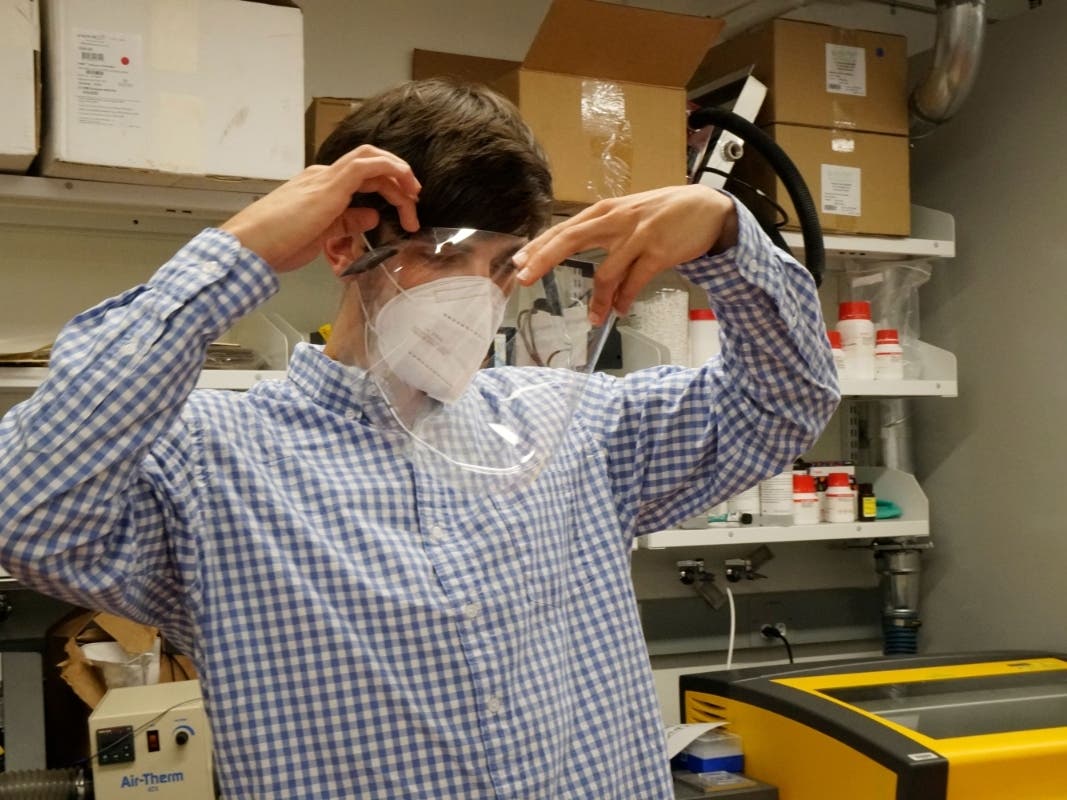

PRINCETON, NJ – When the coronavirus pandemic first began sweeping across the United States, a few researchers in Princeton began to look at solutions to help overwhelmed hospital staff.
Princeton University faculty, students and research staff came together to create innovate face shields and PPE for healthcare workers.
Princeton University labs have created more than 3,000 reusable face shields for medical workers, as well as 1,500 specialized covers for the powered air purifying respirators (PAPRs) used in high-risk environments.
Find out what's happening in Princetonfor free with the latest updates from Patch.
These PPE and PAPR designs are cheaper and more easily assembled than standard equipment.
Princeton faculty Daniel Cohen and Daniel Notterman pivoted from their usual research and assembled research groups from across departments to focus on the pandemic.
Find out what's happening in Princetonfor free with the latest updates from Patch.
“I teach biomedical engineering and, like many people, I was looking for a way to help,” Cohen, an assistant professor of mechanical and aerospace engineering, said in a statement.
Cohen’s graduate student Matt Heinrich created an a prototype of an innovative face shield for workers in the critical care unit of hospitals. The team used alternate plastics, like binder covers, for the shields. They were able to make and assemble them quickly and deliver them to hospitals.
The PAPR project on the other hand was more complex. Medical workers in high-risk areas wear self-contained breathing systems or powered air purifying respirators. These PAPRs are similar to full-face scuba masks and are safer to use than standard face shields.
To be effective, PAPRs must integrate seamlessly with an eye, nose and chin cover elastically sealed from the neck up to the ears.
Each PAPR cover has a clear plastic visor and a fully bonded, stretchable membrane that seals all around the wearer’s face. Cohen’s team took about a week to replicate the design with reusable and available parts, including materials already in their lab.
The team sent their prototype to the Penn Medicine Princeton Medical Center, who asked if they could get some immediately.
“We buy silicone for the lab, and it turns out the silicone is shipped between protective plastic sheets that are the same kind of plastic used in the visors,” Cohen said.
“As this material by itself was in extremely short supply across the world, we used the packaging plastic for the visors and we turned the silicone into the bonded face-and-neck gaskets,” he explained.
The team shared their design with the Penn Medicine system, in New Jersey and Pennsylvania, so they can be replicated.
Since COVID numbers have been increasing, the team at Princeton is currently busy making PAPR covers.
“The supply of PPE across the country is stressed as we enter the winter months and COVID-19 cases continue to rise. We have enough PPE to ensure the safety of our team here at Penn Medicine Princeton Health right now, but we want to be sure we remain prepared,” Kari Mastro, director of practice, innovation and research at Princeton Medical Center, said in a statement.
Thank you for reading. Have a correction or news tip? Email sarah.salvadore@patch.com
Get breaking news alerts on your phone with our app. Download here. Sign up to get Patch emails so you don't miss out on local and statewide news.
Get more local news delivered straight to your inbox. Sign up for free Patch newsletters and alerts.