Neighbor News
Common Recycling Mistakes
In America, nearly 260 million tons of municipal solid waste (MSW) are generated annually.

Only about 35% of municipal solid waste, which is almost 90 million tons is recycled or composted.
That is a lot better than it used to be decades ago, but we all need to pitch in to get that rate near 100%.
Americans don't only throw recyclable items in the trash, they also throw items in their recycling that are not recyclable.
Find out what's happening in Ramseyfor free with the latest updates from Patch.
Certain non-recyclable items may end up contaminating entire loads of recyclables that would otherwise have gone on to other valuable uses.
During a visit to Denver's recycling facility and waste management sorting facility, The Denver Post identified some of the top recycling mistakes.
Find out what's happening in Ramseyfor free with the latest updates from Patch.
Six of the Top Recycling Mistakes:
Recycling requirements vary by municipality, but in general you can use these suggestions from Denver, Colorado to determine if you're making common recycling mistakes. To verify the recycling guidelines in your area, contact your local facility.
1. Plastic Bags Shouldn't Go Into Your Recycling Bin
Municipal recycling facilities often do not recycle plastic bags, which can get caught in their machinery causing damage. Many grocery stores, however, have collection bins where you can drop off plastic bags to be recycled.
2. Avoiding Putting Your Recyclables Into Trash Bags
If you put your recyclables into closed trash bags, they'll get thrown straight into the trash. This is because sorters don't have time to open them, and they're also considered to be a safety hazard.
3. Greasy, Wet or Food-Soiled Items Cannot Be Recycled
Grease, liquids (even water) and food are considered contaminants. If they make it down the sorting line without being tossed out, they can contaminate an entire load of recyclables, causing it to be thrown out. Examples of items that cannot be recycled include:
- Foil potato chip bags
- Greasy pizza boxes (if you rip off the unsoiled cardboard lid, that can be recycled)
- Foil lids from yogurt containers (however foil food trays and pie tins may be accepted as long as you remove as much food as possible)
- Paper cups with shiny coatings, such as hot-serve coffee cups
- Paper food bowls with plastic lining (such as those used for Chipotle burrito bowls)
4. Very Small Items Cannot Be Recycled
The Denver Post described it as "anything smaller than a Post-it note" cannot be recycled, because it's too small to be sorted properly. This includes plastic bottle caps, unless you screw them onto the bottle (be sure to empty all liquid out first, or the bottle will be discarded).
5. Don't Flatten Milk Cartons
Waxy milk cartons can be recycled, but if they're missed via hand sorting an infrared optical sorter will pick them out (and certain other three-dimensional items) from the mix. If you crush the cartons, they may be missed.
* Note - In Ramsey, they are not recycled
6. These Items Can't Be Recycled
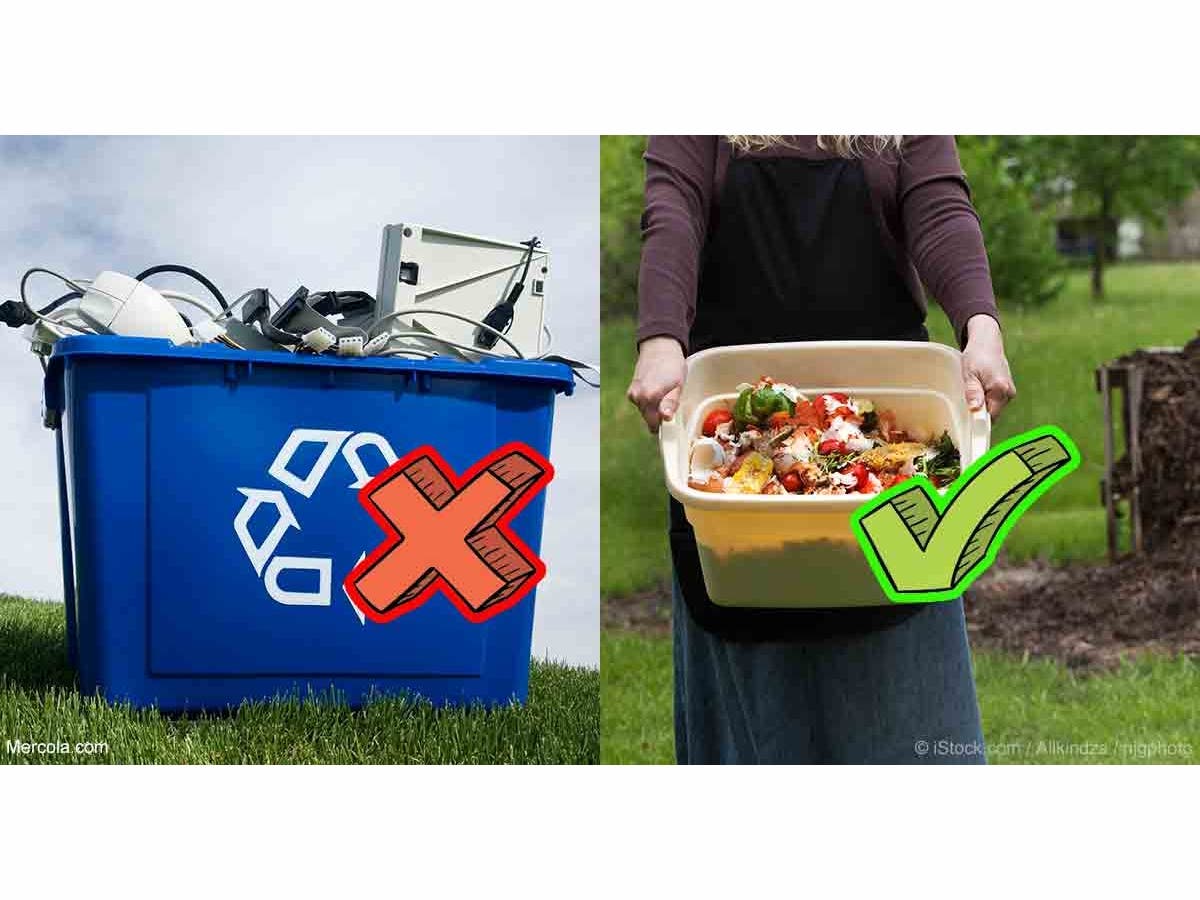
Anything that enters a recycling center that cannot be recycled is considered a contaminant and will be thrown out. If too many contaminants are found in a bundle of recyclables, it runs the risk of being rejected. Examples of non-recyclable items in Denver include: Scrap metal, Plastic that does not hold a shape, Christmas tree lights, Wire hangers, Electronics (there are specialized centers for this), Auto parts, Propane tanks, Mattresses, Bowling balls and Bicycles.
7 . I added this one
Many recycling centers, including Ramsey, don't recycle all items with recycling numbers on them. For example, only accepting items with a the1, 2 or 5 recycling classification numbers on them. This can be very frustrating to the residents. It also bothers me that Styrofoam isn't recycled in many municipalities.
What Do Those Recycling Classification Numbers Mean?
This link explains what each recycling classification number mean.
Reducing Food Waste Via Composting Is Another Form of Recycling:
Organic waste, such as food and yard clippings can be composed.
Food waste alone amounts to more than 30 million tons of waste entering U.S. landfills every year.
Composting, is becoming more common across America. Residential food composting programs are currently being tested in a number of U.S. cities, including New York City, Austin and Milwaukee, and more than 180 communities collect food waste from residences.
Many people are now composting themselves right in their backyard and using the compost for their gardens and to fertilize their yard vegetation.
Tips on composting are included in the link below.