Neighbor News
Does a Full Moon Disrupt Sleep?
Tonight's full moon is a "Supermoon", will appear as the largest and the brightest moon in the sky since 1948!

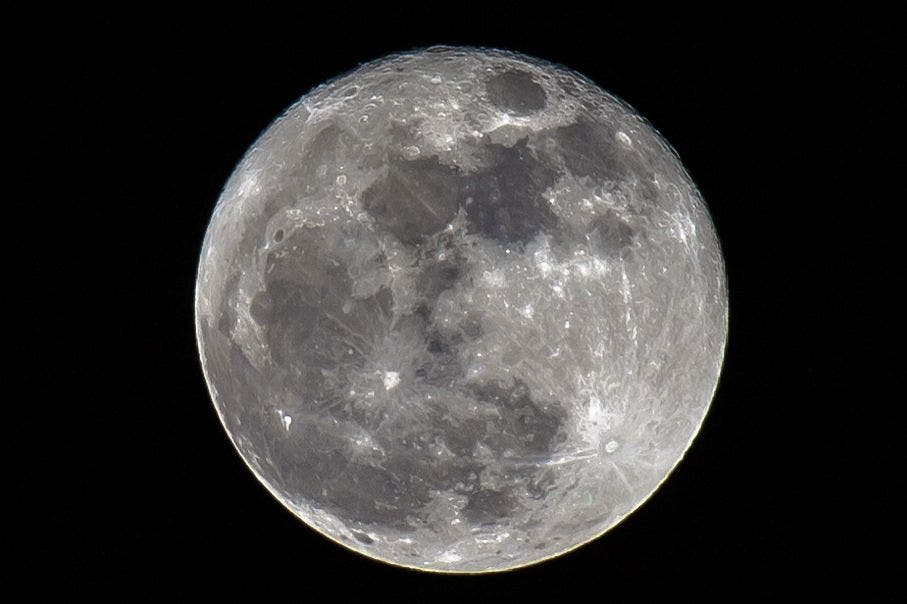
If any full moon could disrupt a good night's sleep, tonight's full moon would be it!
The moon has a powerful effect on the oceans and seas, causing the high and low tides, as it pulls the water of the oceans and the seas, across the face of the earth.
Since the average person is made up of about one half to two thirds water, it is reasonable to assume that the moon may have some type of an impact on our body water too.
Find out what's happening in Ramseyfor free with the latest updates from Patch.
Historically, it was observed that human behavior can also be influenced by a full moon. This correlation has been observed by law enforcement and in emergency rooms. Many statistical analyses have been done to indicate there is no correlation, but statistics can sometimes show whatever you are intending to show.
The word "lunatic", comes from the Latin word "lunaticus", which originally referred to madness that was thought to be caused by the moon. Scientists call the effect of the moon on the human body, "the lunar effect".
Find out what's happening in Ramseyfor free with the latest updates from Patch.
A study in the journal Current Biology, suggests that the moon may have a detrimental effect on your sleep quality and sleep pattern.
Their data showed the following:
1. The participants in the study got 20 minutes less sleep during the full moon.
2. The participants took five more minutes to fall asleep during a full moon.
3. The participants experienced 30% less deep sleep, than they did on nights when there wasn't a full moon.
They researchers theorized the lunar effect on sleep may be related to the increased amount of light that the participants were exposed to before sleep on nights of a full moon, or related to a an undiscovered "lunar clock", similar to a circadian clock, which synchronizes daily functions.
The results of this study also found a reduction in melatonin levels produced by the sleep study participants during a full moon. Melatonin is a hormone that is a key factor in your ability to sleep soundly throughout the night.
A side note - Although the menstrual cycle in humans tends to be 28 days, the same length as the lunar cycle, no research has demonstrated women start or stop their menstrual cycles in tandem with the lunar cycle.