Neighbor News
Ebola Update
The Whitehouse and the FDA are locking horns with the state governors over Ebola quarantines.

The Whitehouse and the FDA are locking horns with the state governors, where the 5 designated US airports of entry from West Africa are located.
On one hand, the Whitehouse and the FDA don’t want to deter doctors and aid workers from going to West Africa. They feel a 21 day mandatory quarantine is a deterrent and the battlefield to stop Ebola is in West Africa.
On the other hand the governors feel that they must protect Americans and that the 21 day quarantine is the only way to protect Americans from potential Ebola exposure.
This issue isn’t an easy one and it has been described as a “slippery slope”. The main question is if your civil rights should stop when you potentially endanger others?
Find out what's happening in Ramseyfor free with the latest updates from Patch.
The Name “Ebola”
One of the first identified outbreaks of Ebola occurred in 1976, near the Ebola River in Zaire. That is how the disease was named. The Ebola River had formerly been known as the Zaire River.
Find out what's happening in Ramseyfor free with the latest updates from Patch.
What is Ebola?
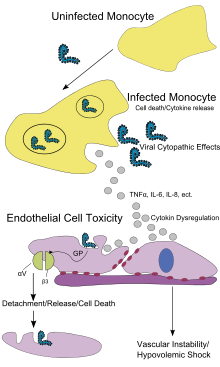
Ebola is a disease of humans and other primates caused by the Ebola virus. Signs and symptoms typically start between two days and three weeks after contracting the virus, which include a fever, sore throat, muscle pain and headaches. Then, vomiting, diarrhea and a rash usually follows, along with decreased function of the liver and kidneys. At this time, generally, some people begin to bleed both internally and externally. Death, if it occurs, is typically six to sixteen days after symptoms appear and is often due to low blood pressure from fluid loss.
How Do You Catch Ebola?
The virus is acquired by contact with blood or other body fluids of an infected human or other animal. This may also occur by direct contact with a recently contaminated item. Spreading through the air has not been documented in the natural environment. Entry points include the nose, mouth, eyes, or open wounds, cuts and abrasions. Contact with objects contaminated by the virus, particularly needles and syringes, may also transmit the infection. The virus is able to survive on objects for a few hours in a dried state and can survive for a few days within body fluids.
Fruit bats are believed to be the normal carrier in nature, able to spread the virus without being affected.
Prevention of Ebola
Prevention includes decreasing the spread of disease from infected animals to humans and from human to human. Washing your hands when around a person with the disease and not coming in contact with body fluids is vital. Samples of body fluids and tissues from people with the disease should be handled with special caution. The virus may persist in body fluids such as semen and breast milk for several months. If caring for an infected individual, wearing protective clothing, such as a biological Hazmat suit is preferable. Care must be taken when putting on and taking off the suit, since there may be viruses on the suit itself. Disinfecting the outside of the suit, prior to removal is preferable.
Treatment
No specific treatment for the disease is yet commercially available. Experimental drugs have not yet been released for public use. Efforts to help those who are infected are supportive and include giving either oral rehydration therapy(slightly sweetened and salty water to drink) or intravenous fluids. This supportive care improves outcomes. The disease has a high risk of death, killing between 25% and 90% of those infected with the virus, averaging out at 50%.
Diagnosis
The diagnosis of Ebola is confirmed by the PCR or an ELISA blood test. The test results can be negative early on, prior to the virus proliferating. Detecting antibodies against the virus works best late in the disease and in those who recover. Electron microscopy is also useful for diagnostic purposes, but that is not practical in remote areas of Africa.
Vaccines
Many Ebola vaccine candidates have been developed in the past decade. As of October 2014, none had yet been approved by the United States Food and Drug Administration (FDA) for clinical use in humans.