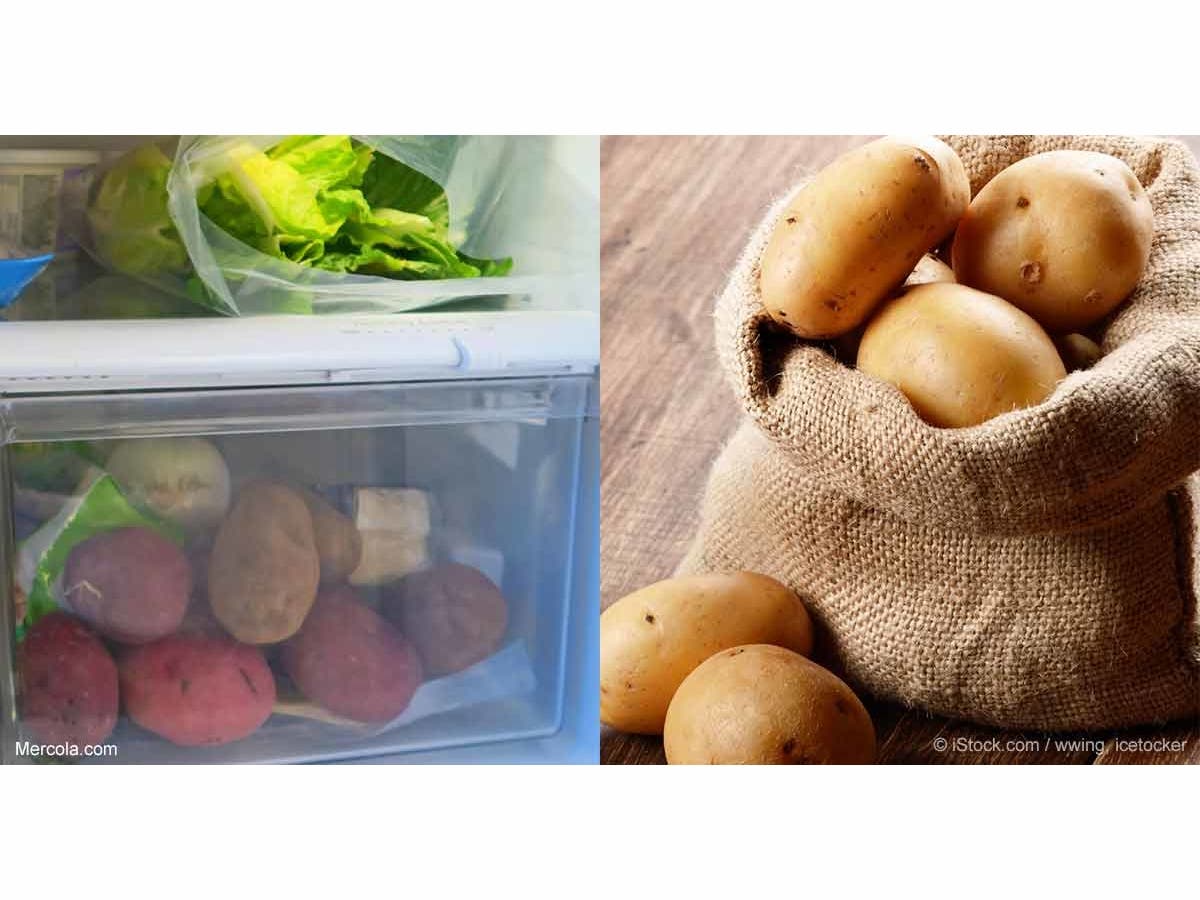
It may seem logical to store potatoes and other vegetables in a cool or cold place. When potatoes get chilled, the starch in them turns into sugar and they can become tough. They might look fine to the eye, but when they're cooked, they may then contain a higher level of acrylamide, which is a carcinogenic substance.
When potatoes are chilled:
1. An enzyme called invertase breaks down the sucrose into fructose and glucose.
Find out what's happening in Ramseyfor free with the latest updates from Patch.
2. Fructose and glucose can then combine with the amino acid asparagine in the potatoes and form acrylamide when the potatoes are cooked. The higher the temperature, the more acrylamide is formed.
This doesn't happen to the same extend with frozen potatoes, since the sucrose isn't broken down at freezing temperatures.
Find out what's happening in Ramseyfor free with the latest updates from Patch.
"Prevent Disease" explains:
"Acrylamide is made by something called the Maillard reaction, which browns cooked foods and gives them their pleasing flavor. As sugars and amino acids react together, they produce thousands of different chemicals.
Particularly high levels of acrylamide are found in starchy foods, like potatoes and bread, when cooked at temperatures over 250 Degrees F. The chemical can also be present in breakfast cereals, biscuits and coffee."
This can also occur with baked, grilled, sautéed or roasted starchy vegetables, but not boiled.
In 2002, the Swedish National Food Authority changed the classication of acrylamide from a potential genotoxic carcinogen, which was linked to an increased risk of cancer, to a confirmed carcinogen.
Acrylamide converts in your body to glycamide, which studies show can bind to your DNA and cause mutations.
The U.S. Food and Drug Administration (FDA) claims that acrylamide can be found in as much as 40% of the calories consumed by the average American. Acrylamide occurs the most in processed foods. Potato chips are a prime example.
Eating mostly raw vegetables, not only provides the greatest health benefits, but also helps you to avoid acrylamide. Lightly cooking vegetables will also greatly reduce acrylamide exposure. You can further reduce acrylamide formation by soaking raw potatoes in water, for 15 to 30 minutes before cooking.