Neighbor News
How to Improve Soil Health With Ocean Minerals
Ocean minerals may hold the key for improving the nutrient density of crops.

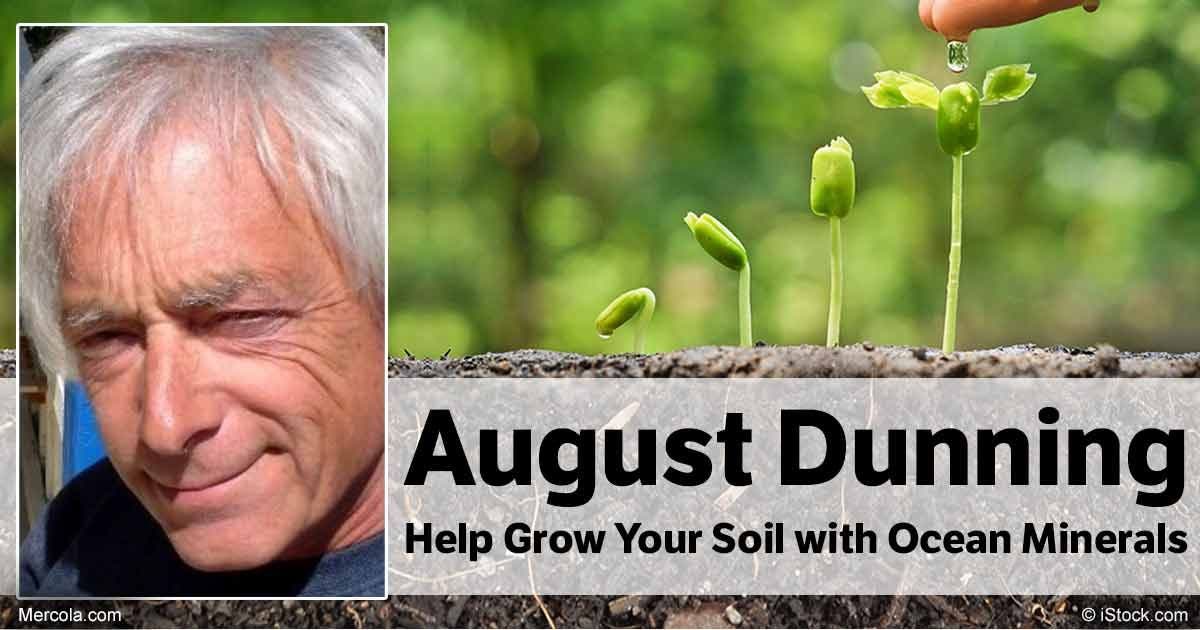
The mineral density of much of our farmland has much to be desired. The virgin soils of yesteryear are virtually non-existent.
Wouldn't it be nice if there were a simple soil supplement that could radically improve the quality and health of crops, while simultaneously increasing their nutrient density?
The good news is there is! Science researcher August Dunning, chief science officer and co-owner of Eco Organics, has developed a product called Ionic Ocean Minerals.
Find out what's happening in Ramseyfor free with the latest updates from Patch.
Dunning also works as a visiting associate professor at California Institute of Technology (Caltech), where he received his training in chemistry and physics.
His previous work history includes working for the National Aeronautics and Space Administration (NASA) on the International Space Station program as system engineer. After that, he studied elemental particle physics and molecular physics at the University of Chicago, before ultimately starting Eco Organics.
Find out what's happening in Ramseyfor free with the latest updates from Patch.
The ocean contains nearly all of the ionic minerals of the periodic table of elements. Dunning developed a process to extract these minerals from seawater without getting any of the salt.
Their minerals are in a highly absorbable ionic form and the separation process removes nearly all the salt from the ocean water. Salt buildup in the soil will kill live organisms and is not healthy for the plants, so you definitely do not want any salt in the mixture.
Healthy Soil Makes for Healthy Food:
If the soil is healthy, the plants grown in it will be healthy too. The increased nutrient content may even make the food more medicinally useful.
Mineral-depleted soils produce mineral-depleted fruits and vegetables. Just how depleted have our soils gotten since the introduction of mechanized and chemical farming in the 1930s? Dunning's research shows that iron content in apples has gone down from 4.3 milligrams (mg) per apple in 1950 to 0.18 mg in 1998, to 0.12 mg today.
You now need to eat 36 apples to get the iron content you used to get from a single apple a mere 55 years ago. Just imagine where we'll be another decade or two from now if we don't make soil regeneration a focus of farming?